

Product
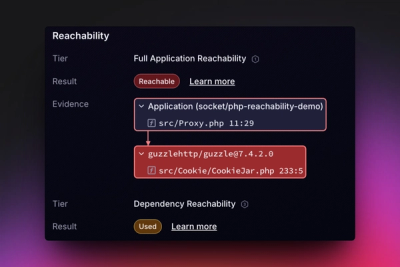
Introducing Reachability for PHP
Reachability analysis for PHP is now available in experimental, helping teams identify which vulnerabilities are actually exploitable.
By Benjamin Barslev - Apr 24, 2026
github.com/elastic/go-elasticsearch/_examples/bulk
Advanced tools
default.goThe default.go example demonstrates how to properly operate the Elasticsearch's
Bulk API.
The example intentionally doesn't use any abstractions or helper functions, to demonstrate the low-level mechanics of working with the Bulk API:
meta/data pairs,go run default.go -count=100000 -batch=25000
# Bulk: documents [100,000] batch size [25,000]
# ▁▁▁▁▁▁▁▁▁▁▁▁▁▁▁▁▁▁▁▁▁▁▁▁▁▁▁▁▁▁▁▁▁▁▁▁▁▁▁▁▁▁▁▁▁▁▁▁▁▁▁▁▁▁▁▁▁▁▁▁▁▁▁▁▁
# → Generated 100,000 articles
# → Sending batch [1/4] [2/4] [3/4] [4/4]
# ▔▔▔▔▔▔▔▔▔▔▔▔▔▔▔▔▔▔▔▔▔▔▔▔▔▔▔▔▔▔▔▔▔▔▔▔▔▔▔▔▔▔▔▔▔▔▔▔▔▔▔▔▔▔▔▔▔▔▔▔▔▔▔▔▔
# Successfully indexed [100,000] documents in 3.423s (29,214 docs/sec)
indexer.goThe indexer.go example demonstrates how to use the esutil.BulkIndexer
helper for efficient indexing in parallel.
go run indexer.go -count=100000 -flush=1000000

# BulkIndexer: documents [100,000] workers [8] flush [1.0 MB]
# ▁▁▁▁▁▁▁▁▁▁▁▁▁▁▁▁▁▁▁▁▁▁▁▁▁▁▁▁▁▁▁▁▁▁▁▁▁▁▁▁▁▁▁▁▁▁▁▁▁▁▁▁▁▁▁▁▁▁▁▁▁▁▁▁▁
# → Generated 100,000 articles
# ▔▔▔▔▔▔▔▔▔▔▔▔▔▔▔▔▔▔▔▔▔▔▔▔▔▔▔▔▔▔▔▔▔▔▔▔▔▔▔▔▔▔▔▔▔▔▔▔▔▔▔▔▔▔▔▔▔▔▔▔▔▔▔▔▔
# Successfully indexed [100,000] documents in 1.909s (52,383 docs/sec)
The helper allows you to Add() bulk indexer items, and flushes each batch based on the configured threshold.
client, err := elasticsearch.New()
if err != nil {
	log.Fatalf("Error creating the client: %s", err)
}
defer client.Close(context.Background())

indexer, err := esutil.NewBulkIndexer(esutil.BulkIndexerConfig{Client: client})
if err != nil {
	log.Fatalf("Error creating the indexer: %s", err)
}
defer indexer.Close(context.Background())

if err := indexer.Add(
	context.Background(),
	esutil.BulkIndexerItem{
		Action: "index",
		Body:   strings.NewReader(`{"title":"Test"}`),
	},
); err != nil {
	log.Fatalf("Unexpected error: %s", err)
}
typed.goThe typed.go example demonstrates how to use the typed Bulk API to build a bulk request by appending operations (for example IndexOp) and then executing it with Do().
go run -tags bulk_typed typed.go -count=100000 -batch=1000

# Typed Bulk: documents [100,000] batch size [1,000]
base64.goThe base64.go example demonstrates indexing dense vectors using base64 encoding
with the typed Bulk API and a public Elasticsearch Rally track dataset.
go run base64.go -count=20000 -batch=500

# Bulk Base64: documents [20,000] batch size [500]
# ▁▁▁▁▁▁▁▁▁▁▁▁▁▁▁▁▁▁▁▁▁▁▁▁▁▁▁▁▁▁▁▁▁▁▁▁▁▁▁▁▁▁▁▁▁▁▁▁▁▁▁▁▁▁▁▁▁▁▁▁▁▁▁▁▁
# → Loaded 20,000 documents
# ▔▔▔▔▔▔▔▔▔▔▔▔▔▔▔▔▔▔▔▔▔▔▔▔▔▔▔▔▔▔▔▔▔▔▔▔▔▔▔▔▔▔▔▔▔▔▔▔▔▔▔▔▔▔▔▔▔▔▔▔▔▔▔▔▔
# Successfully indexed [20,000] documents in 3.102s (6,446 docs/sec)
Please refer to the benchmarks folder for performance tests with different types of payload.
See the kafka folder for an end-to-end example of using the bulk helper for indexing data from a Kafka topic.
FAQs
Unknown package
Did you know?

Socket for GitHub automatically highlights issues in each pull request and monitors the health of all your open source dependencies. Discover the contents of your packages and block harmful activity before you install or update your dependencies.
Product
Reachability analysis for PHP is now available in experimental, helping teams identify which vulnerabilities are actually exploitable.
Product
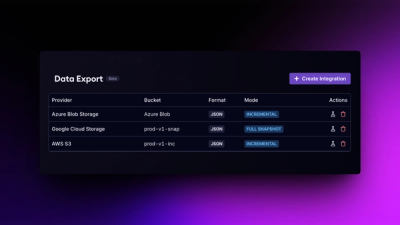
Export Socket alert data to your own cloud storage in JSON, CSV, or Parquet, with flexible snapshot or incremental delivery.
Research
/Security News
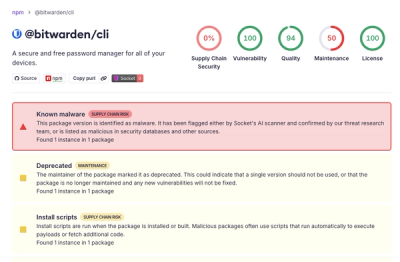
Bitwarden CLI 2026.4.0 was compromised in the Checkmarx supply chain campaign after attackers abused a GitHub Action in Bitwarden’s CI/CD pipeline.