

Product
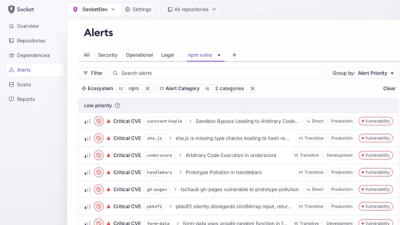
Introducing Custom Tabs for Org Alerts
Create and share saved alert views with custom tabs on the org alerts page, making it easier for teams to return to consistent, named filter sets.
By André Staltz - Jan 20, 2026
src.techknowlogick.com/nomad-driver-tart
Advanced tools
A task driver plugin for Nomad that allows scheduling and running Tart virtual machines on macOS hosts.
This driver enables Nomad to manage macOS virtual machines using Tart, providing native virtualization capabilities for Apple Silicon Macs.
# Clone repository
$ git clone git@gitea.com:techknowlogick/nomad-driver-tart.git
$ cd nomad-driver-tart
# Build the plugin
$ make build
# For testing or development, you can run Nomad with the plugin directory pointing to your build
$ nomad agent -dev -config=./example/agent.hcl -plugin-dir=$(pwd)
To use the Tart driver plugin with Nomad, you need to:
In your Nomad client configuration, you can specify the Tart driver plugin with optional settings:
plugin "tart" {
  config {
    tart_binary = "/path/to/tart" # Optional: specify the path to the tart binary
  }
}
Note about tart_binary: This configuration option allows you to specify a custom path to the Tart binary. This is useful if:
If not specified, the plugin will use tart and rely on it being available in the system PATH.
In another terminal, run the example job:
$ nomad run ./example/tart.nomad
$ nomad logs <ALLOCATION ID>
Here's a simple example of how to configure a Nomad job to use the Tart driver:
job "tart-demo" {
  datacenters = ["dc1"]
  type        = "service"

  group "demo" {
    task "vm" {
      driver = "tart"

      config {
        image     = "ghcr.io/cirruslabs/macos-sequoia-base:latest"  # Name of the Tart VM image
        cpu       = 2                 # Number of virtual CPUs
        memory    = 4096              # Memory allocation in MB
        disk_size = 50                # Disk size (in GBs)
        headless  = true              # Run VM without UI
        command   = "echo 'Hello from Tart VM'"  # Command to run inside the VM on first start
        suspendable = false            # Enable VM suspension support

        # Attach additional disks
        disk_mount {
          path    = "/path/to/disk.img"
          options = "ro"              # Read-only mode
        }

        # Share directories with the VM
        dir_share {
          name    = "source"          # Optional name for the mount point
          path    = "/path/to/source"
          options = "ro,tag=src"      # Read-only mode with custom mount tag
        }
      }
    }
  }
}
The Tart driver supports the following configuration parameters:
| Parameter | Required | Description |
|---|---|---|
image | Yes | Tart VM image name or path |
cpu | No | Number of virtual CPUs (default: 2) |
memory | No | Memory allocation in MB (default: 4096) |
disk_size | No | Disk size in GB (default: 50) |
command | No | Command to run inside the VM on first start |
headless | No | Run VM without UI (default: true) |
suspendable | No | Disables audio and entropy devices and switches to only Mac-specific input devices. Useful for running a VM that can be suspended via "tart suspend" (default: false) |
nested | No | Enable nested virtualization if possible (default: false) |
| Parameter | Required | Description |
|---|---|---|
ssh_user | No | SSH username for task communication (default: "admin"). Must match the username configured in the VM |
ssh_password | No | SSH password for authentication (default: "admin"). Must match the password configured in the VM |
ssh_port | No | SSH port (default: 22) |
Security Note: The default images from CirrusLabs (like
ghcr.io/cirruslabs/macos-sequoia-base:latest) use insecure default credentials (admin/admin). For production use, you should create custom images with secure credentials or use SSH keys for authentication.
disk_mount {
  path    = "/path/to/disk.img"    # Path to disk image or block device
  options = "ro,sync=none"         # Options for the disk attachment
}
The options parameter supports:
ro - Mount the disk in read-only modesync=none - Disable data synchronization with storagesync=fsync - Enable data synchronization without ensuring it was writtensync=full - Enable full data synchronization with storagedir_share {
name = "sharename" # Optional name for the mount point
path = "/path/to/directory" # Host path to share
options = "ro,tag=customtag" # Options for directory sharing
}
The options parameter supports:
ro - Mount the directory in read-only modetag=<TAG> - Custom mount tag (default: "com.apple.virtio-fs.automount")| Parameter | Required | Description |
|---|---|---|
root_disk_options | No | Options for the root disk (e.g., "ro", "caching=cached,sync=none") |
Root disk options support the same parameters as disk attachments, plus:
caching=automatic|cached|uncached - Control disk caching behavior| Parameter | Required | Description |
|---|---|---|
net_bridged | No | Interface name for bridged networking instead of shared (NAT) networking |
net_softnet | No | Use software networking provided by Softnet instead of shared (NAT) networking (default: false) |
net_softnet_allow | No | Comma-separated list of CIDRs to allow traffic to when using Softnet isolation |
net_softnet_expose | No | Comma-separated list of TCP ports to expose (e.g., "2222:22,8080:80") |
net_host | No | Restrict network access to the host-only network (default: false) |
A big thank you to the following existing driver codebases:
The Tart driver plugin includes several types of tests:
Run unit tests with:
$ go test ./tart -short
These tests do not require Tart to be installed and cover basic driver functionality.
Integration tests require Tart to be installed and test actual VM operations. Run them with:
$ NOMAD_TEST_TART_INTEGRATION=1 go test ./tart -v
You can specify a custom Tart VM image to use for testing:
$ NOMAD_TEST_TART_IMAGE="ghcr.io/cirruslabs/macos-sonoma-base:latest" NOMAD_TEST_TART_INTEGRATION=1 go test ./tart -v
Note When running tests for the first time or pulling fresh images, the download process can take a significant amount of time (potentially longer than 10 minutes depending on your connection). Tests may timeout and fail if the pull takes too long. It's recommended to pre-pull images in a separate process on your servers before running tests to avoid these timeouts:
# Pre-pull recommended images
$ tart pull ghcr.io/cirruslabs/macos-sequoia-base:latest
$ tart pull ghcr.io/cirruslabs/macos-sonoma-base:latest
The e2e directory contains scripts for testing the driver with a live Nomad agent:
$ ./e2e/run_tests.sh
These tests require both Nomad and Tart to be installed, and be run on macOS.
Important Disclaimer: Tart requires a license for use in commercial environments. Please review their licensing information for those details. Additionally, running macOS VMs may have specific End User License Agreement (EULA) requirements from Apple. Users are responsible for ensuring compliance with all applicable licenses and agreements.
As for the license of this codebase, I'm unsure of which license it should be, since the codebase includes a mixture of MPL, ASL2, and the specific code for interacting with tart. I'm sure there is probably a compatible license that I could apply to my changes, but I'm not a lawyer. If you are one, and want to give me advice, I'd be happy to listen. Until then, since the "default" license applies to my code, it's probably not able to be used in any manner, or to even to use the tart specific code elsewhere.
If you want orchestration of macOS VMs, I'd suggest using Orchard, an orchestration tool built by the same developers behind Tart.
FAQs
Unknown package
Did you know?

Socket for GitHub automatically highlights issues in each pull request and monitors the health of all your open source dependencies. Discover the contents of your packages and block harmful activity before you install or update your dependencies.
Product
Create and share saved alert views with custom tabs on the org alerts page, making it easier for teams to return to consistent, named filter sets.
Product
Socket’s Rust and Cargo support is now generally available, providing dependency analysis and supply chain visibility for Rust projects.

Security News
Chrome 144 introduces the Temporal API, a modern approach to date and time handling designed to fix long-standing issues with JavaScript’s Date object.