Trivial Package
Severity
Medium
Short Description
Packages less than 10 lines of code are easily copied into your own project and may not warrant the additional supply chain risk of an external dependency.
Suggestion
Removing this package as a dependency and implementing its logic will reduce supply chain risk.
Information
Socket flags trivial packages, those that are less than 10 lines of code, because they pose a number of risks due to their potential for malicious use, unnecessary complexity, and lack of maintenance.
1. Likelihood of Malicious Intent
- Typosquatting: Trivial packages are often used in typosquatting attacks, where an attacker creates a package with a name similar to a popular one, hoping that users will accidentally install it. These packages might contain harmful code, even if they seem harmless at first glance.
- Dependency Confusion: Attackers can also publish packages with the same name as internal packages used by companies, leading to "dependency confusion" where the malicious package gets installed instead of the intended one.
2. Unnecessary Bloat and Complexity
- Small packages that do very little can increase the number of dependencies in a project unnecessarily, adding bloat and making the dependency tree more complex. This complexity can make it harder to manage security across a project, as each dependency introduces potential vulnerabilities.
3. Lack of Maintenance
- Trivial packages may be less likely to be actively maintained, which can lead to security vulnerabilities if issues arise and are not promptly addressed.
4. Redundancy
- Many trivial packages perform tasks that could be easily implemented directly in your codebase without the need for an external dependency. Relying on such packages adds unnecessary dependencies to your project, increasing the attack surface without significant benefits.
Recommended actions
1. Evaluate Necessity
- Assess the package's purpose: Determine whether the package provides significant value to your project or if its functionality could be easily replicated with a few lines of code directly in your project.
- Consider removing the package: If the package is not essential or adds minimal value, consider removing it from your dependencies. This can reduce complexity and potential security risks.
2. Check for Malicious Intent
- Review the package's content: Carefully inspect the code for any signs of malicious behavior, such as hidden or obfuscated code, unexpected network requests, or other suspicious activities.
- Verify the publisher: Ensure the package is published by a reputable source. If the publisher is unknown or untrusted, it might be safer to remove the package.
3. Look for Alternatives
- Search for more established libraries: If the trivial package is necessary, consider replacing it with a more well-known and maintained alternative that offers similar functionality.
- Implement in-house: If the package's functionality is simple, consider implementing it directly within your codebase instead of relying on an external dependency.
4. Monitor for Updates
- Stay informed about security patches: If you decide to keep the package, monitor it for updates and security patches, and make sure it is actively maintained.
Examples
Here is an example of a trivial package that provides two basic mathematical operations: addition and multiplication. These operations are simple enough that they can be easily implemented directly in your code without the need for an external dependency. Relying on an external package for such basic functionality can be seen as unnecessary and adds bloat to your project.
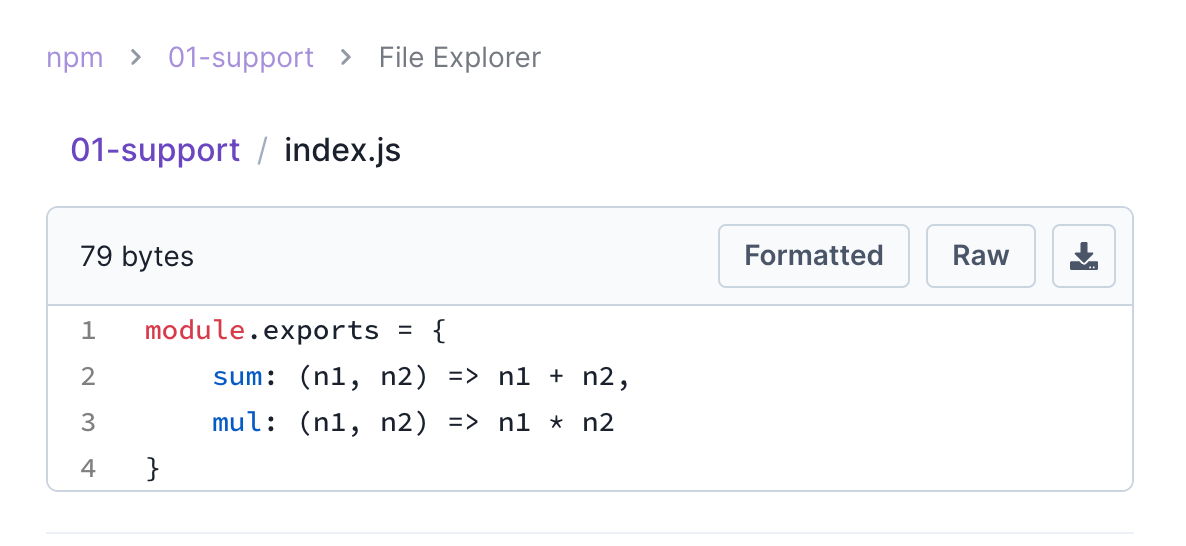
Every dependency you add to your project increases your attack surface, even if the package itself is small. By including trivial packages, you expose your project to potential supply chain attacks, such as typosquatting or dependency confusion, without significant benefit.
Trivial packages may also be redundant, as JavaScript’s native capabilities can handle these operations easily. Many of these packages are less likely to be actively maintained. If vulnerabilities are discovered, there may be delays in patching or updates.
Detection Method
This alert applies to the JavaScript ecosystem. Socket will flag packages that are less than 10 lines of code.
Additional resources
On the Untriviality of Trivial Packages: An Empirical Study of npm JavaScript Packages
Why do developers use trivial packages? an empirical case study on npm
Helping or not helping? Why and how trivial packages impact the npm ecosystem