

Product
Introducing Reachability for PHP
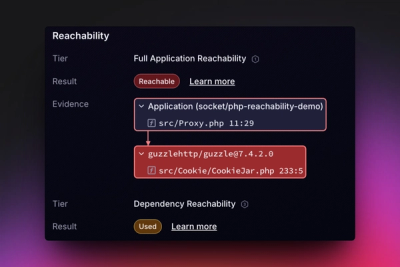
Reachability analysis for PHP is now available in experimental, helping teams identify which vulnerabilities are actually exploitable.
By Benjamin Barslev - Apr 24, 2026
@iflow-mcp/boilerplate-mcp-server
Advanced tools
TypeScript MCP server boilerplate with STDIO and HTTP transport support, CLI tools, and extensible architecture
A production-ready foundation for developing custom Model Context Protocol (MCP) servers in TypeScript. Provides a complete layered architecture pattern, working example implementation, and comprehensive developer infrastructure to connect AI assistants with external APIs and data sources.


Model Context Protocol (MCP) is an open standard for securely connecting AI systems to external tools and data sources. This boilerplate implements the MCP specification with a clean, layered architecture that can be extended to build custom MCP servers for any API or data source.
# Clone the repository
git clone https://github.com/aashari/boilerplate-mcp-server.git
cd boilerplate-mcp-server
# Install dependencies
npm install
# Build the project
npm run build
# Run in different modes:
# 1. CLI Mode - Execute commands directly
npm run cli -- get-ip-details 8.8.8.8
npm run cli -- get-ip-details # Get your current IP
npm run cli -- get-ip-details 1.1.1.1 --include-extended-data
# 2. STDIO Transport - For AI assistant integration (Claude Desktop, Cursor)
npm run mcp:stdio
# 3. HTTP Transport - For web-based integrations
npm run mcp:http
# 4. Development with MCP Inspector
npm run mcp:inspect # Auto-opens browser with debugging UI
TRANSPORT_MODE=stdio node dist/index.jsPORT env var)http://localhost:3000/mcphttp://localhost:3000/ → Returns server versionTRANSPORT_MODE=http node dist/index.jssrc/
├── cli/ # Command-line interfaces
│ ├── index.ts # CLI entry point with Commander setup
│ └── ipaddress.cli.ts # IP address CLI commands
├── controllers/ # Business logic orchestration
│ ├── ipaddress.controller.ts # IP lookup business logic
│ └── ipaddress.formatter.ts # Response formatting
├── services/ # External API interactions
│ ├── vendor.ip-api.com.service.ts # ip-api.com service
│ └── vendor.ip-api.com.types.ts # Service type definitions
├── tools/ # MCP tool definitions (AI interface)
│ ├── ipaddress.tool.ts # IP lookup tool for AI assistants
│ └── ipaddress.types.ts # Tool argument schemas
├── resources/ # MCP resource definitions
│ └── ipaddress.resource.ts # IP lookup resource (URI: ip://address)
├── types/ # Global type definitions
│ └── common.types.ts # Shared interfaces (ControllerResponse, etc.)
├── utils/ # Shared utilities
│ ├── logger.util.ts # Contextual logging system
│ ├── error.util.ts # MCP-specific error formatting
│ ├── error-handler.util.ts # Error handling utilities
│ ├── config.util.ts # Environment configuration
│ ├── constants.util.ts # Version and package constants
│ ├── formatter.util.ts # Markdown formatting
│ └── transport.util.ts # HTTP transport utilities
└── index.ts # Server entry point (dual transport)
The boilerplate follows a clean, layered architecture that promotes maintainability and clear separation of concerns:
src/cli/)get-ip-details [ipAddress] --include-extended-data --no-use-httpssrc/tools/)ip_get_details tool with optional IP address and configuration optionssrc/resources/)ip://8.8.8.8 resource providing IP geolocation datasrc/controllers/)src/services/)src/utils/)logger.util.ts: Contextual logging (file:method context)error.util.ts: MCP-specific error formattingtransport.util.ts: HTTP/API utilities with retry logicconfig.util.ts: Environment configuration management# Build and Clean
npm run build # Build TypeScript to dist/
npm run clean # Remove dist/ and coverage/
npm run prepare # Build + ensure executable permissions (for npm publish)
# CLI Testing
npm run cli -- get-ip-details 8.8.8.8 # Test specific IP
npm run cli -- get-ip-details --include-extended-data # Test with extended data
npm run cli -- get-ip-details --no-use-https # Test with HTTP
# MCP Server Modes
npm run mcp:stdio # STDIO transport for AI assistants
npm run mcp:http # HTTP transport on port 3000
npm run mcp:inspect # HTTP + auto-open MCP Inspector
# Development with Debugging
npm run dev:stdio # STDIO with MCP Inspector integration
npm run dev:http # HTTP with debug logging enabled
# Testing
npm test # Run all tests (Jest)
npm run test:coverage # Generate coverage report
npm run test:cli # Run CLI-specific tests
# Code Quality
npm run lint # ESLint with TypeScript rules
npm run format # Prettier formatting
npm run update:deps # Update dependencies
TRANSPORT_MODE: Transport mode (stdio | http, default: stdio)PORT: HTTP server port (default: 3000)DEBUG: Enable debug logging (true | false, default: false)IPAPI_API_TOKEN: API token for ip-api.com extended data (optional, free tier available).env File# Basic configuration
TRANSPORT_MODE=http
PORT=3001
DEBUG=true
# Extended data (requires ip-api.com account)
IPAPI_API_TOKEN=your_token_here
MCP Inspector: Visual tool for testing your MCP tools
npm run mcp:inspectDebug Logging: Enable with DEBUG=true environment variable
Create ~/.mcp/configs.json:
{
  "boilerplate": {
    "environments": {
      "DEBUG": "true",
      "TRANSPORT_MODE": "http",
      "PORT": "3000"
    }
  }
}
Create a new service in src/services/ following the vendor-specific naming pattern:
// src/services/vendor.example-api.service.ts
import { Logger } from '../utils/logger.util.js';
import { fetchApi } from '../utils/transport.util.js';
import { ExampleApiResponse, ExampleApiRequestOptions } from './vendor.example-api.types.js';
import { createApiError, McpError } from '../utils/error.util.js';

const serviceLogger = Logger.forContext('services/vendor.example-api.service.ts');

async function get(
	param?: string,
	options: ExampleApiRequestOptions = {}
): Promise<ExampleApiResponse> {
	const methodLogger = serviceLogger.forMethod('get');
	methodLogger.debug(`Calling Example API with param: ${param}`);

	try {
		const url = `https://api.example.com/${param || 'default'}`;
		const rawData = await fetchApi<ExampleApiResponse>(url, {
			headers: options.apiKey ? { 'Authorization': `Bearer ${options.apiKey}` } : {}
		});

		methodLogger.debug('Received successful response from Example API');
		return rawData;
	} catch (error) {
		methodLogger.error('Service error fetching data', error);

		if (error instanceof McpError) {
			throw error;
		}

		throw createApiError(
			'Unexpected service error while fetching data',
			undefined,
			error
		);
	}
}

export default { get };
Add a controller in src/controllers/ to handle business logic with error context:
// src/controllers/example.controller.ts
import { Logger } from '../utils/logger.util.js';
import exampleService from '../services/vendor.example-api.service.js';
import { formatExample } from './example.formatter.js';
import { handleControllerError, buildErrorContext } from '../utils/error-handler.util.js';
import { ControllerResponse } from '../types/common.types.js';
import { config } from '../utils/config.util.js';

const logger = Logger.forContext('controllers/example.controller.ts');

export interface GetDataOptions {
	param?: string;
	includeMetadata?: boolean;
}

async function getData(
	options: GetDataOptions = {}
): Promise<ControllerResponse> {
	const methodLogger = logger.forMethod('getData');
	methodLogger.debug(`Getting data for param: ${options.param || 'default'}`, options);

	try {
		// Apply business logic and defaults
		const apiKey = config.get('EXAMPLE_API_TOKEN');

		// Call service layer
		const data = await exampleService.get(options.param, {
			apiKey,
			includeMetadata: options.includeMetadata ?? false
		});

		// Format response
		const formattedContent = formatExample(data);
		return { content: formattedContent };

	} catch (error) {
		throw handleControllerError(
			error,
			buildErrorContext(
				'ExampleData',
				'getData',
				'controllers/example.controller.ts@getData',
				options.param || 'default',
				{ options }
			)
		);
	}
}

export default { getData };
Create a tool definition in src/tools/ following the registration pattern:
// src/tools/example.tool.ts
import { McpServer } from '@modelcontextprotocol/sdk/server/mcp.js';
import { z } from 'zod';
import { Logger } from '../utils/logger.util.js';
import { formatErrorForMcpTool } from '../utils/error.util.js';
import exampleController from '../controllers/example.controller.js';

const logger = Logger.forContext('tools/example.tool.ts');

// Define Zod schema for tool arguments
const GetDataSchema = z.object({
	param: z.string().optional().describe('Optional parameter for the API call'),
	includeMetadata: z.boolean().optional().default(false)
		.describe('Whether to include additional metadata in the response')
});

async function handleGetData(args: Record<string, unknown>) {
	const methodLogger = logger.forMethod('handleGetData');

	try {
		methodLogger.debug('Tool example_get_data called', args);

		// Validate arguments with Zod
		const validatedArgs = GetDataSchema.parse(args);

		// Call controller
		const result = await exampleController.getData({
			param: validatedArgs.param,
			includeMetadata: validatedArgs.includeMetadata
		});

		// Return MCP-formatted response
		return {
			content: [
				{
					type: 'text' as const,
					text: result.content
				}
			]
		};
	} catch (error) {
		methodLogger.error('Tool example_get_data failed', error);
		return formatErrorForMcpTool(error);
	}
}

// Registration function following the pattern used by existing tools
function registerTools(server: McpServer) {
	const registerLogger = logger.forMethod('registerTools');
	registerLogger.debug('Registering example tools...');

	server.tool(
		'example_get_data',
		`Gets data from the Example API with optional parameter.
Use this tool to fetch example data. Returns formatted data as Markdown.`,
		GetDataSchema.shape,
		handleGetData
	);

	registerLogger.debug('Example tools registered successfully');
}

export default { registerTools };
Create a CLI command in src/cli/ following the Commander pattern:
// src/cli/example.cli.ts
import { Command } from 'commander';
import { Logger } from '../utils/logger.util.js';
import exampleController from '../controllers/example.controller.js';
import { handleCliError } from '../utils/error.util.js';

const logger = Logger.forContext('cli/example.cli.ts');

function register(program: Command) {
	const methodLogger = logger.forMethod('register');
	methodLogger.debug('Registering example CLI commands...');

	program
		.command('get-data')
		.description('Gets data from the Example API')
		.argument('[param]', 'Optional parameter for the API call')
		.option('-m, --include-metadata', 'Include additional metadata in response')
		.action(async (param, options) => {
			const actionLogger = logger.forMethod('action:get-data');

			try {
				actionLogger.debug('CLI get-data called', { param, options });

				const result = await exampleController.getData({
					param,
					includeMetadata: options.includeMetadata || false
				});

				console.log(result.content);
			} catch (error) {
				handleCliError(error);
			}
		});

	methodLogger.debug('Example CLI commands registered successfully');
}

export default { register };
Update the entry points to register your new components:
// 1. Register CLI in src/cli/index.ts
import exampleCli from './example.cli.js';

export async function runCli(args: string[]) {
	// ... existing setup code ...

	// Register CLI commands
	exampleCli.register(program);  // Add this line

	// ... rest of function
}

// 2. Register Tools in src/index.ts
import exampleTools from './tools/example.tool.js';

// In the startServer function, after existing registrations:
exampleTools.registerTools(serverInstance);
The boilerplate includes a complete IP address geolocation example demonstrating all layers:
CLI Commands:
npm run cli -- get-ip-details                           # Get current public IP
npm run cli -- get-ip-details 8.8.8.8                  # Get details for specific IP
npm run cli -- get-ip-details 1.1.1.1 --include-extended-data   # With extended data
npm run cli -- get-ip-details 8.8.8.8 --no-use-https   # Force HTTP (for free tier)
MCP Tools:
ip_get_details - IP geolocation lookup for AI assistantsMCP Resources:
ip:// - Current IP detailsip://8.8.8.8 - Specific IP details# Optional - for extended data features
IPAPI_API_TOKEN=your_token_from_ip-api.com
# Development
DEBUG=true # Enable detailed logging
TRANSPORT_MODE=http # Use HTTP transport
PORT=3001 # Custom port
Customize Package Details:
{
  "name": "your-mcp-server-name",
  "version": "1.0.0",
  "description": "Your custom MCP server",
  "author": "Your Name",
  "keywords": ["mcp", "your-domain", "ai-integration"]
}
Update Documentation: Replace IP address examples with your use case
Test Thoroughly:
npm run build && npm test
npm run cli -- your-command
npm run mcp:stdio    # Test with MCP Inspector
Publish: npm publish (requires npm login)
The boilerplate includes comprehensive testing infrastructure:
tests/               # Not present - tests are in src/
src/
├── **/*.test.ts     # Co-located with source files
├── utils/           # Utility function tests
├── controllers/     # Business logic tests
├── services/        # API integration tests
└── cli/             # CLI command tests
*.util.test.ts)npm test # Run all tests
npm run test:coverage # Generate coverage report
npm run test:cli # CLI-specific tests only
FAQs
TypeScript MCP server boilerplate with STDIO and HTTP transport support, CLI tools, and extensible architecture
We found that @iflow-mcp/boilerplate-mcp-server demonstrated a healthy version release cadence and project activity because the last version was released less than a year ago. It has 2 open source maintainers collaborating on the project.
Did you know?

Socket for GitHub automatically highlights issues in each pull request and monitors the health of all your open source dependencies. Discover the contents of your packages and block harmful activity before you install or update your dependencies.
Product
Reachability analysis for PHP is now available in experimental, helping teams identify which vulnerabilities are actually exploitable.
Product
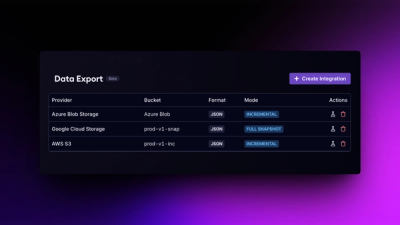
Export Socket alert data to your own cloud storage in JSON, CSV, or Parquet, with flexible snapshot or incremental delivery.
Research
/Security News
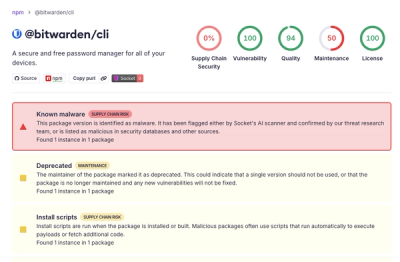
Bitwarden CLI 2026.4.0 was compromised in the Checkmarx supply chain campaign after attackers abused a GitHub Action in Bitwarden’s CI/CD pipeline.