

Product
Socket for Jira Is Now Available
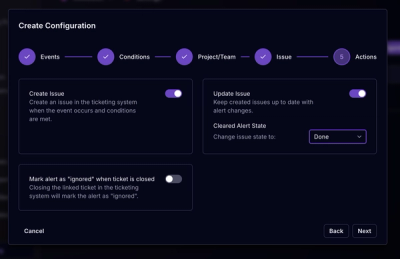
Socket for Jira lets teams turn alerts into Jira tickets with manual creation, automated ticketing rules, and two-way sync.
By Jeppe Hasseriis - Apr 20, 2026
@innerworks-me/iw-auth-sdk
Advanced tools

Innerworks Web SDK


Innerworks provides market-leading device fingerprinting and VPN detection.
True device fingerprinting enables platforms to detect and block repeat fraudsters, even if they change accounts, wallets, or even their location — all without adding user friction or compromising user privacy.
npm install @innerworks-me/iw-auth-sdk
yarn add @innerworks-me/iw-auth-sdk
bun add @innerworks-me/iw-auth-sdk
The Innerworks SDK uses a dynamic loading mechanism to keep the core metrics collection system always up to date to ensure the most accurate results and browser compatibility.
[!NOTE]
By default, browser CSP rules are permissive. If your website does not enforce a Content Security Policy, no additional configuration is required. The Innerworks SDK uses a dynamic loading mechanism to fetch the latest SDK-Core logic from our CDN at runtime. This ensures you always have access to the most up-to-date detection capabilities without requiring manual SDK updates
If your website enforces strict CSP rules, you must whitelist our CDN domain as a trusted JavaScript source. Add sdk-cdn.prod.innerworks.me to your script-src or default-src directive.
Example CSP header with script-src:
Content-Security-Policy: script-src 'self' https://sdk-cdn.prod.innerworks.me;
Example CSP header with default-src:
Content-Security-Policy: default-src 'self' https://sdk-cdn.prod.innerworks.me;
Example meta tag:
<meta http-equiv="Content-Security-Policy" content="script-src 'self' https://sdk-cdn.prod.innerworks.me;">
If you are using both directives, add the domain to script-src as it takes precedence over default-src for script loading.
The innerworks SDK must be instantiated after page load with you project id.
import { InnerworksMetrics } from "@innerworks-me/iw-auth-sdk";

function InnerworksComponent() {
  const [innerworksMetrics, setInnerworksMetrics] = useState<InnerworksMetrics|null>();

  useEffect(() => {
    setInnerworksMetrics(
      new InnerworksMetrics({
        appId: 'your-project-id'
      })
    );
  }, []);

  return <div></div>
}
import { InnerworksMetrics } from "@innerworks-me/iw-auth-sdk";

class MyComponent implements AfterViewInit {
  innerworksMetrics: InnerworksMetrics | null = null;

  ngAfterViewInit(): void {
    this.innerworksMetrics = new InnerworksMetrics({
      appId: 'your-project-id',
    });
  }
}
You can embed the Innerworks SDK without significant modifications to your codebase by simply embedding an iframe.
See docs.innerworks.me/iframe for more information.
Once the SDK is initialised, data must be sent at the point at which you want to analyse the user's session.
if (innerworksMetrics) {
  await innerworksMetrics.send('user-id');
}
The user-id is used to associate data with a user on your platform. This is typically a UUID that you have access to. Examples include web3 wallet addresses, and usernames.
[!WARNING] Avoid using any personal data for the user-id, including but not limited to email addresses, names, or other identifiers that can be used to identify an individual. Innerworks does not agree to process personal data entered here.
For fingerprinting, you can use the requestId to retrieve the fingerprint and any additional data via an additional request.
const {
  result,
  requestId,
} = await innerworksMetrics.send('user-id');
if (result === 'success') {
  // use the requestId from your backend
}
See the API Access docs for how to use this requestId.
[!IMPORTANT] For security reasons, the fingerprint is not provided directly to the frontend in the response, and should be requested separately from the backend.
VPN results are returned directly from the SDK via a JWT. For more information on how to validate the JWT, see our JWT Verification guide.
import { InnerworksResponse } from "@innerworks-me/iw-auth-sdk";
import { jwtDecode } from "jwt-decode";

const { result, detectionResult }: InnerworksResponse = await innerworksMetrics.send('user-id');
if (result === 'success') {
  const data = jwtDecode(detectionResult);
  const {
    vpnIsEnabled,
    trueGeoLocationName,
    trueGeoLocationCode,
    vpnLocationCode,
    stateUS,
  } = data.detection_result
}
FAQs
<center> </center>
We found that @innerworks-me/iw-auth-sdk demonstrated a healthy version release cadence and project activity because the last version was released less than a year ago. It has 2 open source maintainers collaborating on the project.
Did you know?

Socket for GitHub automatically highlights issues in each pull request and monitors the health of all your open source dependencies. Discover the contents of your packages and block harmful activity before you install or update your dependencies.
Product
Socket for Jira lets teams turn alerts into Jira tickets with manual creation, automated ticketing rules, and two-way sync.
Company News
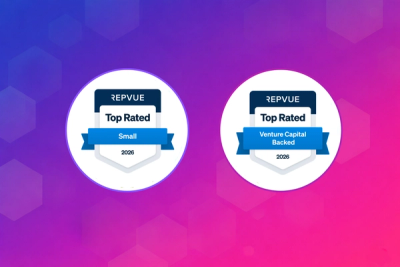
Socket won two 2026 Reppy Awards from RepVue, ranking in the top 5% of all sales orgs. AE Alexandra Lister shares what it's like to grow a sales career here.

Security News
NIST will stop enriching most CVEs under a new risk-based model, narrowing the NVD's scope as vulnerability submissions continue to surge.