

Product
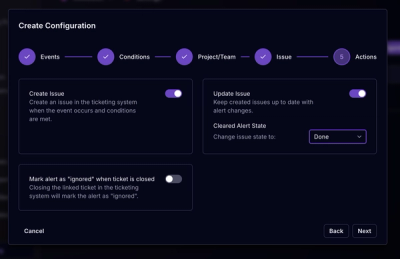
Socket for Jira Is Now Available
Socket for Jira lets teams turn alerts into Jira tickets with manual creation, automated ticketing rules, and two-way sync.
By Jeppe Hasseriis - Apr 20, 2026
@fusebit/apimeter
Advanced tools

This project contains an Express middleware that implements a simple HTTP API metering solution for Node.js apps based on Google Cloud's BigQuery. Read more about the background of the project in the API Metering and Analytics for Early Stage Startups blog post.
If you have an Express app you want to instrument, you can do it in under 10 minutes. Let's go!
First, set up a BigQuery table in Google Cloud using the instructions here.
Next, create a Google Cloud service account with permissions to the BigQuery table, add API keys to that account, and export them to a JSON file using the instructions here. Set the environment variable to point to the JSON file with those credentials:
export GOOGLE_APPLICATION_CREDENTIALS={full-path-to-credentials-file}
Next, build the module and run the sample HTTP API server:
git clone git@github.com:fusebit/apimeter.git
cd apimeter
npm install
npm run build
nmp run sample
NOTE If you have selected Google Cloud project name, dataset name, or table name different from the ones in the setup instructions, make sure to update respective names in sample/server.js before running the sample server.
Lastly, issue some test requests to the sample HTTP API server:
curl http://localhost:3000/api/cat
curl http://localhost:3000/api/cat/123
curl http://localhost:3000/api/cat -X POST
curl http://localhost:3000/api/cat/456 -X PUT
Finally, head over to the Google Cloud Console for BigQuery and query the metering results:

Once your metering data is in BigQuery, it is easy to create reports and visualizations over it using Google's free Data Studio.
To use the default configuration, add apimeter as the global middleware for all routes of your app:
const app = require("express")();
const { apimeter } = require("@fusebit/apimeter");

app.use(apimeter());
The default configuation:
apimeter Google Cloud project, dwh dataset, and apicalls BigQuery table.GOOGLE_APPLICATION_CREDENTIALS environment variable.You can customize the Google Cloud projectId and BigQuery dataset and table names where records will be sent:
app.use(apimeter({
  projecId: "apimeter",
  dataset: "dwh",
  table: "apicalls",
}));
You can provide Google Cloud service account credentials programmatically instead of the GOOGLE_APPLICATION_CREDENTIALS environment variable:
const credentials = require("./credentials.json");

app.use(apimeter({
  credentials
}));
You can adjust the maximum batch size or the frequency of uploads to BigQuery:
app.use(apimeter({
  maxBatchSize: 500,
  flushIntervalMilliseconds: 5000,
}));
You may choose to capture additional information from the request or response to store in the BigQuery table. For example, you could capture the response status code or the request processing time using this mechanism.
NOTE Every field you return must have a corresponding column in the BigQuery table.
const { apimeter, defaultGetApiMeterRecord } = require("@fusebit/apimeter");

app.use(apimeter({
  getApiMeterRecord: (req, res) => ({
    ...defaultGetApiMeterRecord(req, res),
    issuer: req.user.jwt.iss,
    subject: req.user.jwt.sub,
    status: res.status,
  })
}));
You can be called whenever the upload to BigQuery has finished either successfuly or with an error. Useful for logging.
app.use(apimeter({
  onFlush: (records, error) => {
    console.log('BigQuery upload finished', records.length, error);
  }
}));
FAQs
Simple API metering for Express apps using BigQuery
The npm package @fusebit/apimeter receives a total of 7 weekly downloads. As such, @fusebit/apimeter popularity was classified as not popular.
We found that @fusebit/apimeter demonstrated a not healthy version release cadence and project activity because the last version was released a year ago. It has 3 open source maintainers collaborating on the project.
Did you know?

Socket for GitHub automatically highlights issues in each pull request and monitors the health of all your open source dependencies. Discover the contents of your packages and block harmful activity before you install or update your dependencies.
Product
Socket for Jira lets teams turn alerts into Jira tickets with manual creation, automated ticketing rules, and two-way sync.
Company News
Socket won two 2026 Reppy Awards from RepVue, ranking in the top 5% of all sales orgs. AE Alexandra Lister shares what it's like to grow a sales career here.

Security News
NIST will stop enriching most CVEs under a new risk-based model, narrowing the NVD's scope as vulnerability submissions continue to surge.