

Product
Introducing Reports: An Extensible Reporting Framework for Socket Data
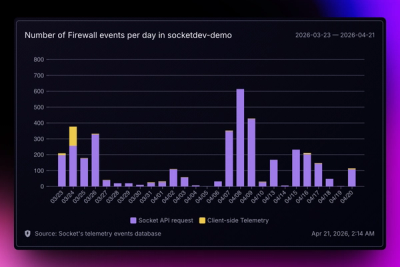
Explore exportable charts for vulnerabilities, dependencies, and usage with Reports, Socket’s new extensible reporting framework.
By André Staltz - Apr 21, 2026
@graphcms/rich-text-html-renderer
Advanced tools
Render Rich Text content from Hygraph in any application.
You can get it on npm or Yarn.
# npm
npm i @graphcms/rich-text-html-renderer
# Yarn
yarn add @graphcms/rich-text-html-renderer
To render the content on your application, you'll need to provide the array of elements returned from the Hygraph API to the astToHtmlString function. The content has to be returned in raw (or json) format as the AST representation. For more information on how to query the Rich Text content, check our documentation.
import { astToHtmlString } from '@graphcms/rich-text-html-renderer';

const content = {
  children: [
    {
      type: 'paragraph',
      children: [
        {
          bold: true,
          text: 'Hello World!',
        },
      ],
    },
  ],
};

const html = astToHtmlString({
  content,
});
The content from the example above will render:
<p>
  <b>Hello world!</b>
</p>
By default, the elements won't have any styling, despite the IFrame, which we designed to be responsive. If you need to customize the elements, you can do it using the renderers argument.
import { astToHtmlString } from '@graphcms/rich-text-html-renderer';

const content = {
  /* ... */
};

const html = astToHtmlString({
  content: inlineContent,
  renderers: {
    bold: ({ children }) => `<strong>${children}</strong>`,
  },
});
If needed, you can also import the defaultElements from the package and use it as a base for your custom renderers.
import {
  astToHtmlString,
  defaultElements,
} from '@graphcms/rich-text-html-renderer';

const content = {
  /* ... */
};

const html = astToHtmlString({
  content: inlineContent,
  renderers: {
    bold: props => defaultElements.bold(props),
  },
});
Below you can check the full list of elements you can customize, alongside the props available for each of them.
a
children: string;href: string;className: string;rel: string;id: string;title: string;openInNewTab: boolean;class
children: string;className: string;img
src: string;title: string;width: number;height: number;mimeType: ImageMimeTypes;altText: string;video
src: string;title: string;width: number;height: number;iframe
url: string;width: number;height: number;h1
children: string;h2
children: string;h3
children: string;h4
children: string;h5
children: string;h6
children: string;p
children: string;ul
children: string;ol
children: string;li
children: string;table
children: string;table_head
children: string;table_header_cell
children: string;table_body
children: string;table_row
children: string;table_cell
children: string;blockquote
children: string;bold
children: string;italic
children: string;underline
children: string;code
children: string;code_block
children: string;The Rich Text field allows you to embed assets. By default, we render images, videos and audios out of the box. However, you can define custom components for each mime type group. Below you can see the complete list of mimeType groups.
audioapplicationimagevideofontmodeltextWe don't have components to render fonts, models, text and application files, but you can write your own depending on your needs and project. If you need, you can also have a custom renderer for a specific mimeType. Here's an example:
import { astToHtmlString } from '@graphcms/rich-text-html-renderer';

const content = [
  {
    type: 'embed',
    nodeId: 'cknjbzowggjo90b91kjisy03a',
    children: [
      {
        text: '',
      },
    ],
    nodeType: 'Asset',
  },
  {
    type: 'embed',
    nodeId: 'ckrus0f14ao760b32mz2dwvgx',
    children: [
      {
        text: '',
      },
    ],
    nodeType: 'Asset',
  },
];

const references = [
  {
    id: 'cknjbzowggjo90b91kjisy03a',
    url: 'https://media.graphassets.com/dsQtt0ARqO28baaXbVy9',
    mimeType: 'image/png',
  },
  {
    id: 'ckrus0f14ao760b32mz2dwvgx',
    url: 'https://media.graphassets.com/7M0lXLdCQfeIDXnT2SVS',
    mimeType: 'video/mp4',
  },
];

const html = astToHtmlString({
  content,
  references,
  renderers: {
    Asset: {
      video: () => `<div>custom VIDEO</div>`,
      image: () => `<div>custom IMAGE</div>`,
      'video/mp4': () => {
        return `<div>custom video/mp4 renderer</div>`;
      },
    },
  },
});
As mentioned, you can write renderers for all mimeType groups or to specific mimeType.
References are required on the astToHtmlString function to render embed assets.
id, mimeType and url are required in your Asset query.
Query example:
{
  articles {
    content {
      json
      references {
        ... on Asset {
          id
          url
          mimeType
        }
      }
    }
  }
}
Imagine you have an embed Post on your Rich Text field. To render it, you can have a custom renderer. Let's see an example:
import { astToHtmlString } from '@graphcms/rich-text-html-renderer';

const content = [
  {
    type: 'embed',
    nodeId: 'custom_post_id',
    children: [
      {
        text: '',
      },
    ],
    nodeType: 'Post',
  },
];

const references = [
  {
    id: 'custom_post_id',
    title: 'Hygraph is awesome :rocket:',
  },
];

const html = astToHtmlString({
  content,
  references,
  renderers: {
    embed: {
      Post: ({ title, nodeId }) => {
        return `
          <div className="post">
            <h3>${title}</h3>
            <p>${nodeId}</p>
          </div>
        `;
      },
    },
  },
});
References are required on the astToHtmlString function. You also need to include your model in your query.
id is always required in your model query. It won't render if it's not present.{
articles {
content {
json
references {
... on Asset {
id
url
mimeType
}
# Your post query
... on Post {
id # required
title
slug
description
}
}
}
}
}
The Rich Text Field also supports Link Embeds, which work similarly to normal embeds. Based on the model name, you can have a custom renderer for it. Example:
import { astToHtmlString } from '@graphcms/rich-text-html-renderer';

const content = [
  {
    type: 'link',
    nodeId: 'post_id',
    children: [
      {
        text: 'click here',
      },
    ],
    nodeType: 'Post',
  },
];

const references = [
  {
    id: 'post_id',
    slug: 'hygraph-is-awesome',
  },
];

const html = astToHtmlString({
  content: contentObject,
  references,
  renderers: {
    link: {
      Article: ({ slug, children }) => {
        return `<a href="/${slug}">${children}</a>`;
      },
    },
  },
});
By default, we remove empty headings from the element list to prevent SEO issues. Other elements, such as thead are also removed. You can find the complete list here.
If you are using TypeScript in your project, we recommend installing the @graphcms/rich-text-types package. It contains types for the elements, alongside the props accepted by them. You can use them in your application to create custom components.
If you need to type the content from the Rich Text field, you can do so by using the types package. Example:
import { ElementNode } from '@graphcms/rich-text-types';

type Content = {
  content: {
    raw: {
      children: ElementNode[];
    };
  };
};
Depending on your reference query and model, fields may change, which applies to types. To have a better DX using the package, we have EmbedProps and LinkEmbedProps types that you can import from @graphcms/rich-text-types (you may need to install it if you don't have done it already).
In this example, we have seen how to write a renderer for a Post model, but it applies the same way to any other model and Asset on your project.
import { astToHtmlString } from '@graphcms/rich-text-html-renderer';
import { EmbedProps, LinkEmbedProps } from '@graphcms/rich-text-types';

type Post = {
  title: string;
  slug: string;
  description: string;
};

const content = {
  /* ... */
};

const references = [
  /* ... */
];

const html = astToHtmlString({
  content,
  references,
  renderers: {
    embed: {
      Post: ({ title, description, slug }: EmbedProps<Post>) => {
        return `
          <div className="post">
            <a href="/blog/${slug}">
              <h3>${title}</h3>
              <p>${description}</p>
            </a>
          </div>
        `;
      },
    },
    link: {
      Article: ({ slug, children }) => {
        return `<a href="/blog/${slug}">${children}</a>`;
      },
    },
  },
});
Licensed under the MIT License.
Made with 💜 by Hygraph 👋 join our community!
FAQs
Hygraph Rich Text HTML renderer
We found that @graphcms/rich-text-html-renderer demonstrated a not healthy version release cadence and project activity because the last version was released a year ago. It has 6 open source maintainers collaborating on the project.
Did you know?

Socket for GitHub automatically highlights issues in each pull request and monitors the health of all your open source dependencies. Discover the contents of your packages and block harmful activity before you install or update your dependencies.
Product
Explore exportable charts for vulnerabilities, dependencies, and usage with Reports, Socket’s new extensible reporting framework.

Product
Socket for Jira lets teams turn alerts into Jira tickets with manual creation, automated ticketing rules, and two-way sync.
Company News
Socket won two 2026 Reppy Awards from RepVue, ranking in the top 5% of all sales orgs. AE Alexandra Lister shares what it's like to grow a sales career here.