

Product
Introducing Reports: An Extensible Reporting Framework for Socket Data
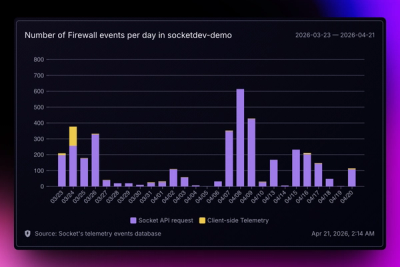
Explore exportable charts for vulnerabilities, dependencies, and usage with Reports, Socket’s new extensible reporting framework.
By André Staltz - Apr 21, 2026
@jawj/test-serverless
Advanced tools
@neondatabase/serverless is Neon's PostgreSQL driver for JavaScript and TypeScript. It's:
pg (on which it's based)Install it with your preferred JavaScript package manager. For example:
npm install @neondatabase/serverless
Using TypeScript? No worries: types are included.
Get your connection string from the Neon console and set it as an environment variable. Something like:
DATABASE_URL=postgres://username:password@host.neon.tech/neondb
For one-shot queries, use the neon function. For instance:
import { neon } from '@neondatabase/serverless';
const sql = neon(process.env.DATABASE_URL);

const [post] = await sql`SELECT * FROM posts WHERE id = ${postId}`;
// `post` is now { id: 12, title: 'My post', ... } (or undefined)
Note: interpolating ${postId} here is safe from SQL injection.
Turn this example into a complete API endpoint deployed on Vercel Edge Functions at https://myapp.vercel.dev/api/post?postId=123 by following two simple steps:
api/post.ts:import { neon } from '@neondatabase/serverless';
const sql = neon(process.env.DATABASE_URL);
export default async (req: Request, ctx: any) => {
// get and validate the `postId` query parameter
const postId = parseInt(new URL(req.url).searchParams.get('postId'), 10);
if (isNaN(postId)) return new Response('Bad request', { status: 400 });
// query and validate the post
const [post] = await sql`SELECT * FROM posts WHERE id = ${postId}`;
if (!post) return new Response('Not found', { status: 404 });
// return the post as JSON
return new Response(JSON.stringify(post), {
headers: { 'content-type': 'application/json' }
});
}
export const config = {
runtime: 'edge',
regions: ['iad1'], // specify the region nearest your Neon DB
};
npm install -g vercel  # install vercel CLI
npx vercel env add DATABASE_URL  # paste Neon connection string, select all environments
npx vercel dev  # check working locally, then ...
npx vercel deploy
The neon query function has a few additional options.
A query using the neon function, as shown above, is carried by an https fetch request.
This should work — and work fast — from any modern JavaScript environment. But you can only send one query at a time this way: sessions and transactions are not supported.
transaction()Multiple queries can be issued via fetch request within a single, non-interactive transaction by using the transaction() function. This is exposed as a property on the query function.
For example:
import { neon } from '@neondatabase/serverless';
const sql = neon(process.env.DATABASE_URL);
const showLatestN = 10;

const [posts, tags] = await sql.transaction([
  sql`SELECT * FROM posts ORDER BY posted_at DESC LIMIT ${showLatestN}`,
  sql`SELECT * FROM tags`,
]);
There are some additional options when using transaction().
Pool and ClientUse the Pool or Client constructors, instead of the functions described above, when you need:
session or interactive transaction support, and/or
compatibility with node-postgres, which supports query libraries like Kysely or Zapatos.
Queries using Pool and Client are carried by WebSockets. There are two key things to know about this:
In Node.js and some other environments, there's no built-in WebSocket support. In these cases, supply a WebSocket constructor function.
In serverless environments such as Vercel Edge Functions or Cloudflare Workers, WebSocket connections can't outlive a single request.
That means Pool or Client objects must be connected, used and closed within a single request handler. Don't create them outside a request handler; don't create them in one handler and try to reuse them in another; and to avoid exhausting available connections, don't forget to close them.
These points are demonstrated in the examples below.
The full API guide to Pool and Client can be found in the node-postgres docs.
There are a few additional configuration options that apply to Pool and Client here.
Pool.connect()In Node.js, it takes two lines to configure WebSocket support. For example:
import { Pool, neonConfig } from '@neondatabase/serverless';

import ws from 'ws';
neonConfig.webSocketConstructor = ws;  // <-- this is the key bit

const pool = new Pool({ connectionString: process.env.DATABASE_URL });
pool.on('error', err => console.error(err));  // deal with e.g. re-connect
// ...

const client = await pool.connect();

try {
  await client.query('BEGIN');
  const { rows: [{ id: postId }] } = await client.query('INSERT INTO posts (title) VALUES ($1) RETURNING id', ['Welcome']);
  await client.query('INSERT INTO photos (post_id, url) VALUES ($1, $2)', [postId, 's3.bucket/photo/url']);
  await client.query('COMMIT');

} catch (err) {
  await client.query('ROLLBACK');
  throw err;

} finally {
  client.release();
}

// ...
await pool.end();
Other WebSocket libraries are available. For example, you could replace ws in the above example with undici:
import { WebSocket } from 'undici';
neonConfig.webSocketConstructor = WebSocket;
Pool.query()We can rewrite the Vercel Edge Function shown above (under the heading 'Deploy it') to use Pool, as follows:
import { Pool } from '@neondatabase/serverless';

// *don't* create a `Pool` or `Client` here, outside the request handler

export default async (req: Request, ctx: any) => {
  // create a `Pool` inside the request handler
  const pool = new Pool({ connectionString: process.env.DATABASE_URL });

  // get and validate the `postId` query parameter
  const postId = parseInt(new URL(req.url).searchParams.get('postId'), 10);
  if (isNaN(postId)) return new Response('Bad request', { status: 400 });

  // query and validate the post
  const [post] = await pool.query('SELECT * FROM posts WHERE id = $1', [postId]);
  if (!post) return new Response('Not found', { status: 404 });

  // end the `Pool` inside the same request handler
  // (unlike `await`, `ctx.waitUntil` won't hold up the response)
  ctx.waitUntil(pool.end());

  // return the post as JSON
  return new Response(JSON.stringify(post), {
    headers: { 'content-type': 'application/json' }
  });
}

export const config = {
  runtime: 'edge',
  regions: ['iad1'],  // specify the region nearest your Neon DB
};
Note: we don't actually use the pooling capabilities of Pool in this example. But it's slightly briefer than using Client and, because Pool.query is designed for one-shot queries, we may in future automatically route these queries over https for lower latency.
ClientUsing Client instead, the example looks like this:
import { Client } from '@neondatabase/serverless';

// don't create a `Pool` or `Client` here, outside the request handler

export default async (req: Request, ctx: any) => {
  // create a `Client` inside the request handler
  const client = new Client(process.env.DATABASE_URL);
  await client.connect();

  // get and validate the `postId` query parameter
  const postId = parseInt(new URL(req.url).searchParams.get('postId'), 10);
  if (isNaN(postId)) return new Response('Bad request', { status: 400 });

  // query and validate the post
  const [post] = await client.query('SELECT * FROM posts WHERE id = $1', [postId]);
  if (!post) return new Response('Not found', { status: 404 });

  // end the `Client` inside the same request handler
  // (unlike `await`, `ctx.waitUntil` won't hold up the response)
  ctx.waitUntil(client.end());

  // return the post as JSON
  return new Response(JSON.stringify(post), {
    headers: { 'content-type': 'application/json' }
  });
}

export const config = {
  runtime: 'edge',
  regions: ['iad1'],  // specify the region nearest your Neon DB
};
These repos show how to use @neondatabase/serverless with a variety of environments and tools:
This package comes configured to connect to a Neon database. But you can also use it to connect to your own Postgres instances if you run your own WebSocket proxy.
This code is released under the MIT license.
Please visit Neon Community or Support.
FAQs
node-postgres for serverless environments from neon.tech
The npm package @jawj/test-serverless receives a total of 1 weekly downloads. As such, @jawj/test-serverless popularity was classified as not popular.
We found that @jawj/test-serverless demonstrated a not healthy version release cadence and project activity because the last version was released a year ago. It has 1 open source maintainer collaborating on the project.
Did you know?

Socket for GitHub automatically highlights issues in each pull request and monitors the health of all your open source dependencies. Discover the contents of your packages and block harmful activity before you install or update your dependencies.
Product
Explore exportable charts for vulnerabilities, dependencies, and usage with Reports, Socket’s new extensible reporting framework.
Product
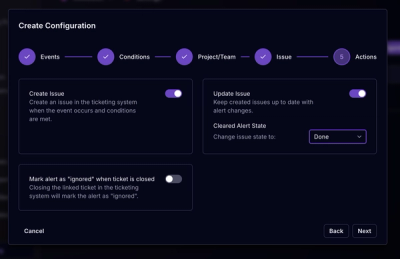
Socket for Jira lets teams turn alerts into Jira tickets with manual creation, automated ticketing rules, and two-way sync.

Company News
Socket won two 2026 Reppy Awards from RepVue, ranking in the top 5% of all sales orgs. AE Alexandra Lister shares what it's like to grow a sales career here.