@runloop/agent-axon-client
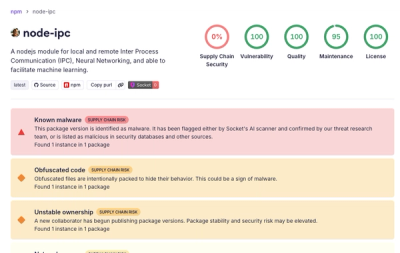
Alpha — subject to change. This SDK is in early development. APIs, interfaces, and behavior may change without notice between versions.
TypeScript client for connecting to coding agents running inside Runloop devboxes via the Axon event bus.
This package provides two protocol modules and a shared utilities module:
| ACP | @runloop/agent-axon-client/acp | Agent Client Protocol (JSON-RPC 2.0) | Any ACP-compatible agent (OpenCode, Claude via ACP, etc.) |
| Claude | @runloop/agent-axon-client/claude | Claude Code SDK wire format | Claude Code with native SDK message types |
| Shared | @runloop/agent-axon-client/shared | — | Common types (BaseConnectionOptions, AxonEventView, AxonEventListener) and utilities |
Both protocol modules communicate over Runloop Axon channels. Pick the one that matches your agent's protocol. Shared types are also re-exported from each protocol module for convenience.
Installation
npm install @runloop/agent-axon-client @runloop/api-client
@runloop/api-client is a peer dependency — you provide the Runloop SDK instance.
If using the Claude module, you also need:
npm install @anthropic-ai/claude-agent-sdk
Imports
import { ACPAxonConnection, PROTOCOL_VERSION } from "@runloop/agent-axon-client/acp";
import { ClaudeAxonConnection } from "@runloop/agent-axon-client/claude";
import type { BaseConnectionOptions, AxonEventView } from "@runloop/agent-axon-client/shared";
import { acp, claude, shared } from "@runloop/agent-axon-client";
Getting Started
ACP Agent
import {
ACPAxonConnection,
isAgentMessageChunk,
PROTOCOL_VERSION,
} from "@runloop/agent-axon-client/acp";
import { RunloopSDK } from "@runloop/api-client";
const sdk = new RunloopSDK({ bearerToken: process.env.RUNLOOP_API_KEY });
const axon = await sdk.axon.create({ name: "acp-transport" });
const devbox = await sdk.devbox.create({
mounts: [
{
type: "broker_mount",
axon_id: axon.id,
protocol: "acp",
agent_binary: "opencode",
launch_args: ["acp"],
},
],
});
const conn = new ACPAxonConnection(axon, devbox);
await conn.connect();
await conn.initialize({
protocolVersion: PROTOCOL_VERSION,
clientInfo: { name: "my-app", version: "1.0.0" },
});
conn.onSessionUpdate((sessionId, update) => {
if (isAgentMessageChunk(update)) {
process.stdout.write(update.message);
}
});
conn.onTimelineEvent((event) => {
switch (event.kind) {
case "acp_protocol":
break;
case "system":
break;
case "unknown":
break;
}
});
const session = await conn.newSession({ cwd: "/home/user", mcpServers: [] });
await conn.prompt({
sessionId: session.sessionId,
prompt: [{ type: "text", text: "Hello!" }],
});
await conn.disconnect();
Claude Code Agent
import { ClaudeAxonConnection, tryParseTimelinePayload } from "@runloop/agent-axon-client/claude";
import { RunloopSDK } from "@runloop/api-client";
const sdk = new RunloopSDK({ bearerToken: process.env.RUNLOOP_API_KEY });
const axon = await sdk.axon.create({ name: "claude-transport" });
const devbox = await sdk.devbox.create({
mounts: [{
type: "broker_mount",
axon_id: axon.id,
protocol: "claude_json",
agent_binary: "claude",
}],
});
const conn = new ClaudeAxonConnection(axon, devbox, { model: "claude-sonnet-4-5" });
await conn.connect();
await conn.initialize();
conn.onTimelineEvent((event) => {
switch (event.kind) {
case "claude_protocol":
console.log(event.data.type, event.data);
break;
case "unknown":
if (event.axonEvent.event_type === "build_status") {
const status = tryParseTimelinePayload<{ step: string; progress: number }>(event);
if (status) console.log(`${status.step}: ${status.progress}%`);
}
break;
}
});
await conn.send("What files are in this directory?");
for await (const msg of conn.receiveAgentResponse()) {
console.log(msg.type, msg);
}
await conn.publish({
event_type: "build_status",
origin: "EXTERNAL_EVENT",
source: "ci-pipeline",
payload: JSON.stringify({ step: "compile", progress: 100 }),
});
await conn.disconnect();
ACP Module
ACPAxonConnection
Higher-level wrapper that manages an axonStream, an AbortController, and the ACP ClientSideConnection.
Constructor: new ACPAxonConnection(axon, devbox, options?)
axon | Axon | Axon channel from @runloop/api-client |
devbox | Devbox | Runloop devbox from @runloop/api-client |
Options (ACPAxonConnectionOptions):
verbose | boolean | Emit verbose logs to stderr |
requestPermission | (params) => Promise<Response> | Custom permission handler (defaults to auto-approve) |
onError | (error: unknown) => void | Error callback (defaults to console.error) |
onDisconnect | () => void | Promise<void> | Teardown callback invoked by disconnect() (e.g. devbox shutdown) |
afterSequence | number | Resume from this Axon sequence number — only events after it are delivered. Mutually exclusive with replay. |
replay | boolean | When true (the default), replays historical events without dispatching to session/permission handlers until replay completes; timeline listeners still receive events. Set to false for legacy behavior (handlers run for every replayed event). Mutually exclusive with afterSequence. |
ACP Methods (proxied from ClientSideConnection):
initialize(params) | ACP handshake and capability negotiation (requires connect() first) |
newSession(params) | Creates a new conversation session |
loadSession(params) | Loads an existing session |
listSessions(params) | Lists existing sessions |
prompt(params) | Sends a prompt and processes the agent's turn |
cancel(params) | Cancels an ongoing prompt turn |
authenticate(params) | Authenticates using an advertised method |
setSessionMode(params) | Sets session mode (e.g. "ask", "code") |
setSessionConfigOption(params) | Sets a session config option |
extMethod(method, params) | Extension request |
extNotification(method, params) | Extension notification |
Listeners & Lifecycle:
connect() | Open the Axon SSE stream and wire the ClientSideConnection (call before initialize()) |
protocol: ClientSideConnection | Escape hatch for experimental/unstable ACP methods (available after connect()) |
axonId: string | The Axon channel ID |
devboxId: string | The Runloop devbox ID |
signal: AbortSignal | Fires when the connection closes |
closed: Promise<void> | Resolves when the connection closes |
onSessionUpdate(listener) | Register a session update listener. Returns unsubscribe function. |
onAxonEvent(listener) | Register an Axon event listener. Returns unsubscribe function. |
onTimelineEvent(listener) | Register a classified timeline event listener. Returns unsubscribe function. |
receiveTimelineEvents() | Async generator yielding classified ACPTimelineEvents |
abortStream() | Abort the SSE stream without clearing listeners (useful for testing / reconnect) |
disconnect() | Abort the stream, clear all listeners, and run the onDisconnect callback |
Provisioning Axon + devbox
Create an Axon channel, attach a devbox broker_mount with protocol: "acp", then pass axon and devboxId into ACPAxonConnection:
import { ACPAxonConnection, PROTOCOL_VERSION } from "@runloop/agent-axon-client/acp";
import { RunloopSDK } from "@runloop/api-client";
const sdk = new RunloopSDK({ bearerToken: process.env.RUNLOOP_API_KEY });
const axon = await sdk.axon.create({ name: "my-channel" });
const devbox = await sdk.devbox.create({
mounts: [
{
type: "broker_mount",
axon_id: axon.id,
protocol: "acp",
agent_binary: "opencode",
launch_args: ["acp"],
},
],
});
const conn = new ACPAxonConnection(axon, devbox, {
onDisconnect: async () => {
await devbox.shutdown();
},
requestPermission: async (params) => {
const option = params.options[0];
return { outcome: { outcome: "selected", optionId: option.optionId } };
},
onError: (err) => console.warn("transport error:", err),
});
conn.onSessionUpdate((sessionId, update) => {
console.log(sessionId, update);
});
await conn.connect();
await conn.initialize({
protocolVersion: PROTOCOL_VERSION,
clientInfo: { name: "my-app", version: "1.0.0" },
});
axonStream(options): Stream
Low-level function that creates an ACP-compatible duplex stream backed by an Axon channel from @runloop/api-client. Uses axon.subscribeSse() for inbound events and axon.publish() for outbound messages.
Parameters (AxonStreamOptions):
axon | Axon | Yes | Axon channel from @runloop/api-client |
signal | AbortSignal | No | Cancellation signal |
onAxonEvent | (event: AxonEventView) => void | No | Callback for every Axon event |
onError | (error: unknown) => void | No | Callback for swallowed parse errors |
afterSequence | number | No | Resume from this sequence — only events after it are delivered. Mutually exclusive with replayTargetSequence. On ACPAxonConnection, the connection-level replay option (default true) is mutually exclusive with afterSequence — see Event replay section. |
replayTargetSequence | number | No | Marks the end of the historical replay window for buffered agent requests. Set by ACPAxonConnection when replay is enabled. Mutually exclusive with afterSequence. |
Returns: { readable: ReadableStream<AnyMessage>; writable: WritableStream<AnyMessage> }
The stream handles JSON-RPC ID correlation internally — Axon's wire format doesn't carry IDs, so the transport layer maintains mapping tables to synthesize and restore them.
Session Update Type Guards
Narrowing helpers for discriminating SessionUpdate variants:
import {
isUserMessageChunk,
isAgentMessageChunk,
isToolCall,
isUsageUpdate,
} from "@runloop/agent-axon-client/acp";
conn.onSessionUpdate((sessionId, update) => {
if (isAgentMessageChunk(update)) {
process.stdout.write(update.message);
} else if (isToolCall(update)) {
console.log(`Tool: ${update.toolName}`);
}
});
Available guards: isUserMessageChunk, isAgentMessageChunk, isAgentThoughtChunk, isToolCall, isToolCallProgress, isPlan, isAvailableCommandsUpdate, isCurrentModeUpdate, isConfigOptionUpdate, isSessionInfoUpdate, isUsageUpdate.
Re-exported ACP Types
All types from @agentclientprotocol/sdk are re-exported for convenience:
import type {
SessionUpdate,
SessionNotification,
ToolCall,
ContentBlock,
} from "@runloop/agent-axon-client/acp";
Claude Module
Re-exported Claude SDK Types
All types from @anthropic-ai/claude-agent-sdk are re-exported. The most commonly used message types are explicitly named for discoverability:
import type {
SDKMessage,
SDKAssistantMessage,
SDKPartialAssistantMessage,
SDKResultMessage,
SDKResultSuccess,
SDKResultError,
SDKSystemMessage,
SDKStatusMessage,
SDKUserMessage,
SDKControlRequest,
SDKControlResponse,
SDKToolProgressMessage,
PermissionMode,
} from "@runloop/agent-axon-client/claude";
ClaudeAxonConnection
Bidirectional, interactive client for Claude Code via Axon. Messages are yielded as SDKMessage from @anthropic-ai/claude-agent-sdk — the exact types the Claude Code CLI emits.
Constructor: new ClaudeAxonConnection(axon, devbox, options?)
axon | Axon | Axon channel from @runloop/api-client |
devbox | Devbox | Runloop devbox from @runloop/api-client |
Options (ClaudeAxonConnectionOptions):
verbose | boolean | Emit verbose logs to stderr |
systemPrompt | string | Override the system prompt |
appendSystemPrompt | string | Append to the default system prompt |
model | string | Model ID (e.g. "claude-sonnet-4-5") — set after initialization |
onError | (error: unknown) => void | Error callback (defaults to console.error) |
onDisconnect | () => void | Promise<void> | Teardown callback invoked by disconnect() (e.g. devbox shutdown) |
afterSequence | number | Resume from this Axon sequence number — only events after it are delivered. Mutually exclusive with replay. |
replay | boolean | When true (the default), replays historical events without dispatching protocol handlers until replay completes; timeline listeners still receive events. Set to false for legacy behavior. Mutually exclusive with afterSequence. |
Listeners & Lifecycle:
axonId: string | The Axon channel ID |
devboxId: string | The Runloop devbox ID |
connect() | Open the transport and start the background read loop |
initialize() | Protocol handshake + optional model set (requires connect() first) |
disconnect() | Close the transport, fail pending requests, and run onDisconnect if provided |
abortStream() | Abort the SSE stream without clearing listeners |
Messaging:
send(prompt) | Send a user message. Accepts a string or SDKUserMessage. |
receiveAgentEvents() | Async iterator yielding all SDKMessages indefinitely |
receiveAgentResponse() | Async iterator yielding messages until (and including) a result message |
receiveMessages() | Deprecated — use receiveAgentEvents() |
receiveResponse() | Deprecated — use receiveAgentResponse() |
Control:
interrupt() | Interrupt the current conversation turn |
setPermissionMode(mode) | Change the permission mode |
setModel(model) | Change the AI model |
Listeners:
onAxonEvent(listener) | Register an Axon event listener. Returns unsubscribe function. |
onTimelineEvent(listener) | Register a classified timeline event listener. Returns unsubscribe function. |
receiveTimelineEvents() | Async generator yielding classified ClaudeTimelineEvents |
onControlRequest(subtype, handler) | Register a handler for incoming control requests (e.g. "can_use_tool") |
AxonTransport
Lower-level transport that implements the Transport interface using Runloop Axon. Used internally by ClaudeAxonConnection but available for custom integrations.
import { AxonTransport, type Transport } from "@runloop/agent-axon-client/claude";
const transport = new AxonTransport(axon, { verbose: true });
await transport.connect();
await transport.write(JSON.stringify({ type: "user", message: { role: "user", content: "Hello" } }));
for await (const msg of transport.readMessages()) {
console.log(msg);
}
await transport.close();
Transport interface:
connect() | Open the underlying connection |
write(data: string) | Send a JSON message string |
readMessages() | Async iterable of parsed inbound messages |
abortStream() | Abort the SSE stream without closing the transport |
reconnect() | Abort the current SSE stream and re-subscribe |
close() | Close the transport |
isReady() | Whether the transport is connected and not closed |
Timeline Events
Both modules provide a unified timeline event stream that classifies every Axon event into a typed discriminated union. This is the recommended way to build chat UIs that interleave protocol events, system events (turn start/end), and custom events in a single chronological view.
Event structure
Every timeline event has three fields:
kind | string | Discriminant: "acp_protocol", "claude_protocol", "system", or "unknown" |
data | varies | Parsed typed payload (SessionUpdate, SDKMessage, SystemEvent, or null) |
axonEvent | AxonEventView | The raw Axon event with full metadata (origin, event_type, payload, sequence) |
ACP timeline events (ACPTimelineEvent)
import type { ACPTimelineEvent } from "@runloop/agent-axon-client/acp";
import { tryParseTimelinePayload } from "@runloop/agent-axon-client/acp";
conn.onTimelineEvent((event: ACPTimelineEvent) => {
switch (event.kind) {
case "acp_protocol":
break;
case "system":
break;
case "unknown":
if (event.axonEvent.event_type === "my_custom_event") {
const payload = tryParseTimelinePayload<{ progress: number }>(event);
if (payload) console.log(`Progress: ${payload.progress}%`);
}
break;
}
});
Claude timeline events (ClaudeTimelineEvent)
import type { ClaudeTimelineEvent } from "@runloop/agent-axon-client/claude";
import { tryParseTimelinePayload } from "@runloop/agent-axon-client/claude";
conn.onTimelineEvent((event: ClaudeTimelineEvent) => {
switch (event.kind) {
case "claude_protocol":
break;
case "system":
break;
case "unknown":
const payload = tryParseTimelinePayload<{ progress: number }>(event);
if (payload) console.log(payload.progress);
break;
}
});
Async generator pattern
Both connections also provide receiveTimelineEvents() for pull-based consumption:
for await (const event of conn.receiveTimelineEvents()) {
  console.log(event.kind, event.data);
}
Custom events via publish() and tryParseTimelinePayload
Both ACPAxonConnection and ClaudeAxonConnection expose a publish() method for pushing custom events to the Axon channel. These arrive in the timeline as kind: "unknown" events that you can match on event_type and parse with tryParseTimelinePayload.
Publishing a custom event:
await conn.publish({
  event_type: "build_status",
  origin: "EXTERNAL_EVENT",
  source: "ci-pipeline",
  payload: JSON.stringify({ step: "compile", progress: 75, logs: ["..."] }),
});
Consuming it on the other side:
import { tryParseTimelinePayload } from "@runloop/agent-axon-client/acp";

interface BuildStatus {
  step: string;
  progress: number;
  logs: string[];
}

conn.onTimelineEvent((event) => {
  if (event.kind === "unknown" && event.axonEvent.event_type === "build_status") {
    const status = tryParseTimelinePayload<BuildStatus>(event);
    if (status) console.log(`${status.step}: ${status.progress}%`);
  }
});
tryParseTimelinePayload safely JSON-parses axonEvent.payload into your expected type, returning null if parsing fails or the payload is empty.
Event replay, replay, and afterSequence
Both modules subscribe to the Axon SSE stream. By default, replay is true: the connection queries the channel head and replays all events up to that point without dispatching to session updates, permission handlers, or (Claude) control handlers — timeline listeners still receive every event. Unresolved permission/control work is flushed after replay completes.
Set replay: false to restore the previous behavior: every replayed event invokes handlers immediately (useful if you rely on side effects during history replay).
replay and afterSequence are mutually exclusive — you cannot set both on the same connection.
Pass afterSequence to subscribe starting after a known sequence number (skips earlier events entirely — no full replay from the beginning):
const conn = new ACPAxonConnection(axon, devbox, { afterSequence: 42 });
await conn.connect();
const conn = new ClaudeAxonConnection(axon, devbox, { afterSequence: 42 });
await conn.connect();
Track the cursor by persisting AxonEventView.sequence from onAxonEvent:
let lastSeq: number | undefined;
conn.onAxonEvent((ev) => { lastSeq = ev.sequence; });
const conn2 = new ACPAxonConnection(axon, devbox, { afterSequence: lastSeq });
await conn2.connect();
Architecture
Both modules communicate over Runloop Axon channels but use different wire formats:
ACP Module                                    Claude Module

┌─────────────────┐                           ┌─────────────────┐
│  axonStream()   │                           │  AxonTransport   │
│  (Axon SDK)     │                           │  (Axon SDK)      │
│       ↕         │                           │       ↕          │
│  JSON-RPC 2.0   │         Axon Bus          │  Claude SDK      │
│  translation    │◄───────────────────────►  │  wire format     │
│       ↕         │       (SSE + publish)     │       ↕          │
│  ACPAxon        │                           │  ClaudeAxon      │
│  Connection     │                           │  Connection      │
└─────────────────┘                           └─────────────────┘
        ↕                                             ↕
   ACP Agent                                   Claude Code
   (in devbox)                                 (in devbox)
| Wire format | JSON-RPC 2.0 via Axon events | Claude SDK messages via Axon events |
| Transport | @runloop/api-client Axon SDK | @runloop/api-client Axon SDK |
| Agent protocol | @agentclientprotocol/sdk | @anthropic-ai/claude-agent-sdk |
| ID tracking | Synthetic (transport maps IDs) | Native (SDK handles correlation) |
Shared Types
Shared types are available from @runloop/agent-axon-client/shared or re-exported from each protocol module.
BaseConnectionOptions
Common options accepted by both ACPAxonConnection and ClaudeAxonConnection:
verbose | boolean | Emit verbose logs to stderr |
onError | (error: unknown) => void | Error callback (defaults to console.error) |
onDisconnect | () => void | Promise<void> | Teardown callback invoked by disconnect() |
afterSequence | number | Resume from this Axon sequence number — only events after it are delivered. If omitted and replay is false, all events from the beginning of the Axon channel are delivered to handlers, replaying the entire session history. Mutually exclusive with replay. |
replay | boolean | When true (the default), connect() replays all events from the beginning of the Axon channel without dispatching to session/protocol handlers (timeline listeners still receive events). Unresolved permission/control requests are delivered after replay. Set false to process the full history with handlers firing for every event. Mutually exclusive with afterSequence. |
AxonEventView
Raw event from the Axon event bus (re-exported from @runloop/api-client):
interface AxonEventView {
  axon_id: string;
  event_type: string;
  origin: "EXTERNAL_EVENT" | "AGENT_EVENT" | "USER_EVENT" | "SYSTEM_EVENT";
  payload: string;
  sequence: number;
  source: string;
  timestamp_ms: number;
}
AxonEventListener
Callback type for raw Axon event listeners:
type AxonEventListener = (event: AxonEventView) => void;
SystemEvent
Typed representation of recognized broker system events:
type SystemEvent =
  | { type: "turn.started"; turnId: string }
  | { type: "turn.completed"; turnId: string; stopReason?: string };
WireData (Claude module)
Generic JSON wire format used by the Claude transport:
type WireData = Record<string, any>;
Known Limitations
- Explicit
connect() required (ACP & Claude): Both ACPAxonConnection and ClaudeAxonConnection require an explicit await conn.connect() call before initialize(). The constructor is lightweight and synchronous.
- Automatic reconnection (single retry): If an SSE stream drops unexpectedly, the SDK re-subscribes once and logs a
console.warn. If the retry also fails, the connection is terminal — create a new instance.
- Permission handling (Claude): The
ClaudeAxonConnection auto-approves all tool use by default. Register a "can_use_tool" handler via onControlRequest() to customize.
ACP: prompt() resolves before all session updates arrive
The Axon broker delivers events in this order for a given turn:
session/prompt response — resolves the prompt() promise (stopReason: "end_turn")turn.completed system eventsession/update notifications — thought chunks, message chunks, etc.
This means await conn.prompt(...) returns before the agent's response text has been delivered via onSessionUpdate. If you need to know when all content for a turn has arrived, use one of these strategies:
-
Use onTimelineEvent to watch for system events (recommended). These bracket all content for a turn. Use a switch on event.kind and the exported SYSTEM_EVENT_TYPES constants for exhaustive, type-safe matching:
import { SYSTEM_EVENT_TYPES } from "@runloop/agent-axon-client/shared";
conn.onTimelineEvent((event) => {
switch (event.kind) {
case "system":
switch (event.data.type) {
case SYSTEM_EVENT_TYPES.TURN_STARTED:
break;
case SYSTEM_EVENT_TYPES.TURN_COMPLETED:
break;
}
break;
case "acp_protocol":
break;
case "unknown":
break;
}
});
-
Debounce after prompt() resolves — wait a short period (e.g. 200ms) for trailing session/update events. This is a heuristic and may drop events on slow connections.
License
MIT