Research
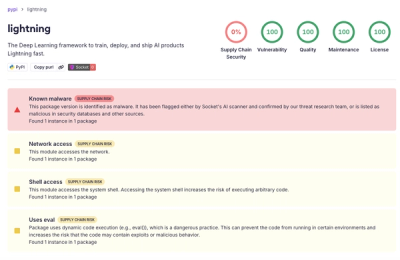
lightning PyPI Package Compromised in Supply Chain Attack
Socket detected a malicious supply chain attack on PyPI package lightning versions 2.6.2 and 2.6.3, which execute credential-stealing malware on import.
@tapjs/after-each
Advanced tools
@tapjs/after-eachA default tap plugin providing t.afterEach().
This plugin is installed with tap by default. If you had
previously removed it, you can tap plugin add @tapjs/after-each to
bring it back.
import t from 'tap'
t.afterEach(t => {
// this will run after each child test, all of their child
// tests, and so on
// the parameter is the child test that just ended.
})
If the method returns a promise, it will be awaited before moving on to the next test.
The afterEach method is called for all child tests, not just
direct children. "Closer" ancestor afterEach methods are called
before further ancestors.
For example, this test:
import t from 'tap'
t.afterEach(t => {
console.error('root after each', t.name)
})
t.test('parent test', t => {
t.afterEach(t => {
console.error('parent after each', t.name)
})
t.test('child test', t => t.end())
t.end()
})
will print:
parent after each child test
root after each child test
root after each parent test

FAQs
a built-in tap extension for t.afterEach()
The npm package @tapjs/after-each receives a total of 115,047 weekly downloads. As such, @tapjs/after-each popularity was classified as popular.
We found that @tapjs/after-each demonstrated a healthy version release cadence and project activity because the last version was released less than a year ago. It has 2 open source maintainers collaborating on the project.
Did you know?

Socket for GitHub automatically highlights issues in each pull request and monitors the health of all your open source dependencies. Discover the contents of your packages and block harmful activity before you install or update your dependencies.

Research
Socket detected a malicious supply chain attack on PyPI package lightning versions 2.6.2 and 2.6.3, which execute credential-stealing malware on import.

Research
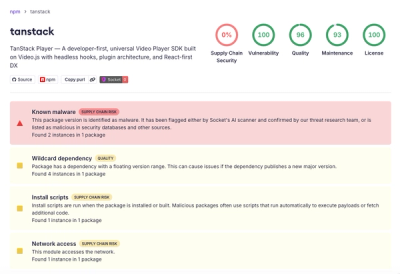
A brand-squatted TanStack npm package used postinstall scripts to steal .env files and exfiltrate developer secrets to an attacker-controlled endpoint.

Research
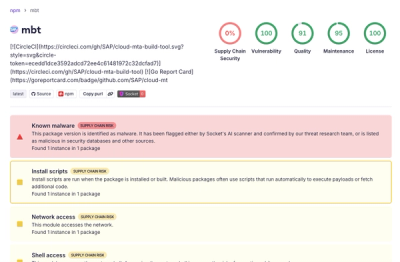
Compromised SAP CAP npm packages download and execute unverified binaries, creating urgent supply chain risk for affected developers and CI/CD environments.