


Security News
Deno 2.6 + Socket: Supply Chain Defense In Your CLI
Deno 2.6 introduces deno audit with a new --socket flag that plugs directly into Socket to bring supply chain security checks into the Deno CLI.
By Sarah Gooding - Dec 12, 2025
ansi-to-image
Advanced tools
😹 convert ANSI Escaped CLI strings to PNG, JPEG




ANSI-to-Image provides a Markdown friendly way to include Node.js CLI output in your software documentation; like this PNG here:

ANSI-to-SVG sits on top of tha base-package ANSI-to and is part of a collection of tools used for ZDD development.
ANSI-to has the following plugins available:
$ yarn add ansi-to-svg
const ansiToImage = require('ansi-to-image')

ansiToImage(ansiText, {
	// Path to output file (required)
	filename: 'path/to/output/image.jpg',

	// Image types: [jpeg, png],
	type: 'jpeg',

	// Image compression quality (only relevant for jpeg)
	quality: 60,

	// Defaults to  2x for Retina compatibility
	scale: 2,

	// Font settings
	fontFace: 'Courier',
	fontSize: 14,
	lineHeight: 18,

	// Padding
	paddingTop: 0,
	paddingLeft: 0,
	paddingBottom: 0,
	paddingRight: 0,

	// Supply an iTerm2 Color file
	colors: './base16-flat-dark-f1lt3r-256.itermcolors',

	// Or override the default colors'
	// (all defaults shown here)
	colors: {
		black: '#000000',
		red: '#B22222',
		green: '#32CD32',
		yellow: '#DAA520',
		blue: '#4169E1',
		magenta: '#9932CC',
		cyan: '#008B8B',
		white: '#D3D3D3',
		gray: '#A9A9A9',
		redBright: '#FF4500',
		greenBright: '#ADFF2F',
		yellowBright: '#FFFF00',
		blueBright: '#87CEEB',
		magentaBright: '#FF00FF',
		cyanBright: '#00FFFF',
		whiteBright: '#FFFFFF',
		bgBlack: '#000000',
		bgRed: '#B22222',
		bgGreen: '#32CD32',
		bgYellow: '#DAA520',
		bgBlue: '#4169E1',
		bgMagenta: '#9932CC',
		bgCyan: '#008B8B',
		bgWhite: '#D3D3D3',
		bgGray: '#A9A9A9',
		bgRedBright: '#FF0000',
		bgGreenBright: '#ADFF2F',
		bgYellowBright: '#FFFF00',
		bgBlueBright: '#87CEEB',
		bgMagentaBright: '#FF00FF',
		bgCyanBright: '#00FFFF',
		bgWhiteBright: '#FFFFFF',
		backgroundColor: '#000000',
		foregroundColor: '#D3D3D3'
	}
})
const ansiToImage = require('ansi-to-image')
const chalk = require('chalk')
const ansiText = chalk`Your {red $wish}\n is {bgYellow.cyan my} command.`

const result = ansiToImage(ansiText, {
	filename: 'examples/basic-example.png'
})

Using: ./fixtures/base16-flat-dark-f1lt3r-256.itermcolors
const ansiText = chalk`Your {red $wish}\n is {bgYellow.cyan my} command.`
const colorFile = 'base16-flat-dark-f1lt3r-256.itermcolors'

ansiToSVG(ansiText, {
	color: colorFile,
	filename: 'examples/iterm2colors-file.png'
})

const ansiText = chalk.bgRed('🌈') +
	chalk.bgYellow('🦄') +
	chalk.bgGreen('🐘') +
	chalk.bgCyan('🍄') +
	chalk.bgBlue('🎃') +
	chalk.bgMagenta('🐦') +
	chalk.bgRed('🖤') +
	chalk.bgYellow('😳') +
	chalk.bgGreen('😒') +
	chalk.bgCyan('😮') +
	chalk.bgBlue('😐') +
	chalk.bgMagenta('😱') +
	chalk.bgRed('😕') +
	chalk.bgYellow('😕') +
	chalk.bgGreen('😑') +
	chalk.bgCyan('😘')

ansiToSVG(ansiText, {
	filename:
	colors: 'base16-flat-dark-f1lt3r-256.itermcolors'
})

const ansiText = chalk` {bgGreen.white Testing background colors } butting adjacent lines. \n` +
chalk` {red ✘ }{bgBlue.black ~/repos/minkjs/ansi-to }{bgYellow.blue }{bgYellow.black svg-image-plugins ● }{yellow } ava powerline-fonts.test.js \n` +
chalk` {green 1 passed}`
ansiToSVG(ansiText, {
filename: 'examples/powerline-font.png',
colors: 'base16-flat-dark-f1lt3r-256.itermcolors',
fontFamily: 'SauceCodePro Nerd Font'
})
Note: you will need SauceCodePro Nerd font for the following example to render correctly. You can find Nerd Fonts here: https://nerdfonts.com/

If we dump some ANSI to a file: fixture.chalk-styles.ansi
[1mbold [22m [2mdim [22m [3mitalic [23m [4munderline [24m [7minverse [27m [9mstrikethrough [29m
[1m[30mblack [39m[22m [1m[31mred [39m[22m [1m[32mgreen [39m[22m [1m[33myellow [39m[22m [1m[34mblue [39m[22m [1m[35mmagenta [39m[22m [1m[36mcyan [39m[22m [1m[37mwhite [39m[22m
[1m[90mgray [39m[22m [30m[91mredBright [30m[39m [30m[92mgreenBright [30m[39m [30m[93myellowBright [30m[39m [30m[94mblueBright [30m[39m [30m[95mmagentaBright [30m[39m [30m[96mcyanBright [30m[39m [30m[97mwhiteBright [30m[39m
[37m[1m[40mbgBlack [49m[22m[39m [30m[1m[41mbgRed [49m[22m[39m [30m[1m[42mbgGreen [49m[22m[39m [30m[1m[43mbgYellow [49m[22m[39m [30m[1m[44mbgBlue [49m[22m[39m [30m[1m[45mbgMagenta [49m[22m[39m [30m[1m[46mbgCyan [49m[22m[39m [30m[1m[47mbgWhite [49m[22m[39m
[37m[3m[100mbgBlackBright [49m[23m[39m [30m[3m[101mbgRedBright [49m[23m[39m [30m[3m[102mbgGreenBright [49m[23m[39m [30m[3m[103mbgYellowBright [49m[23m[39m [30m[3m[104mbgBlueBright [49m[23m[39m [30m[3m[105mbgMagentaBright [49m[23m[39m [30m[3m[106mbgCyanBright [49m[23m[39m [30m[3m[107mbgWhiteBright [49m[23m[39m
We can render it with ansiToImage:
const ansiText = String(fs.readFileSync('all-supported-styles.ansi'))

ansiToImage(ansiText, {
	filename: 'examples/chalk-base-styles.png',
	colors: 'base16-flat-dark-f1lt3r-256.itermcolors'
})
Resulting in the following output:

Note: this example uses Chalk as a base to write the ANSI Escape sequences.
ansiToSVG(ansiText), {
	filename: 'examples/light-iterm2-color-scheme.png',
	colors: 'base16-tomorrow-256.itermcolors'
})

const ansiText = chalk`{red.bold padding} {green.italic woo!}`
const colorFile = './fixtures/base16-flat-dark-f1lt3r-256.itermcolors'

const result = ansiToImage(ansiText, {
	filename: 'examples/padding.png'
	colors: colorFile,
	paddingTop: 14,
	paddingLeft: 14,
	paddingRight: 14,
	paddingBottom: 14
})

ansiToImage(ansiText, {
	filename: 'examples/jpeg-0-percent-quality.jpg'
	colors: './fixtures/base16-flat-dark-f1lt3r-256.itermcolors',
	type: 'jpeg',
	quality: 0,
	scale: 1
})

FAQs
😹 convert ANSI Escaped CLI strings to PNG, GIF and JPG
The npm package ansi-to-image receives a total of 2 weekly downloads. As such, ansi-to-image popularity was classified as not popular.
We found that ansi-to-image demonstrated a not healthy version release cadence and project activity because the last version was released a year ago. It has 1 open source maintainer collaborating on the project.
Did you know?

Socket for GitHub automatically highlights issues in each pull request and monitors the health of all your open source dependencies. Discover the contents of your packages and block harmful activity before you install or update your dependencies.
Security News
Deno 2.6 introduces deno audit with a new --socket flag that plugs directly into Socket to bring supply chain security checks into the Deno CLI.
Security News
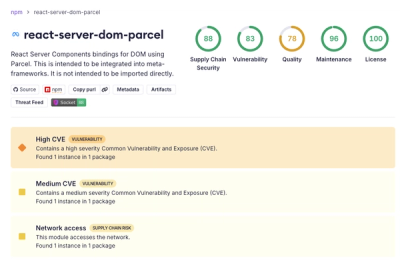
New DoS and source code exposure bugs in React Server Components and Next.js: what’s affected and how to update safely.

Security News
Socket CEO Feross Aboukhadijeh joins Software Engineering Daily to discuss modern software supply chain attacks and rising AI-driven security risks.