


Security News
Deno 2.6 + Socket: Supply Chain Defense In Your CLI
Deno 2.6 introduces deno audit with a new --socket flag that plugs directly into Socket to bring supply chain security checks into the Deno CLI.
By Sarah Gooding - Dec 12, 2025
backbone-redux-migrator
Advanced tools
Lets Backbone and Redux apps coexist, so you don't have to rewrite everything at once Edit


A tool for migrating from Backbone stack to react+redux without disturbing the project or putting it on hold for a rewrite.
Lets Backbone and Redux apps coexist, so you can write new features in redux and continue with regular releases while a rewrite is progressing.
Initial state: You have a Backbone or Backbone+Marionette app to migrate away from
Chooser with router of your choiceFinal state: All features rewritten to redux, project is still alive, people stopped avoiding your job offers.
One more tip: You don't have to rewrite your whole single page app, just split it into more apps. People will accept a page load when going from main application to settings.
npm install backbone-redux-migrator
backbone-redux-migrator requires react and react-redux installed in the project. It's not listing them as dependencies in package.json, so you don't end up having duplicated dependencies when you use a different version of react or old version of npm.
require("backbone-redux-migrator"): migrator factory function that wraps your redux app
migrator instance API exposes functionalities to Backbone:
getView - returns a View class for displaying redux app within Backbone layoutgetViewMarionetteCompat - returns a View class that uses Marionette's onRender and onDestroy instead of render. Use it only if getView breaks your complicated Marionette view logic.getModelReadonly - returns a Model class for reading storedispatchAction - dispatches a redux action"backbone-redux-migrator/Chooser" exports Chooser, ConnectedChooser, Choice components
storeFactory is a function where you build and configure the store, compose reducers and return the store reference.
renderers is a collection of ReactDOM.render segments. default is mandatory, but in case you need to display parts of your Redux app in multiple regions of the Backbone app at once, you can have multiple renderers connected to one store.
The recommended way to go is to try to minimize the number of renderers you have (they are never destroyed, so they are not meant to be used and recycled)
In your main redux app entrypoint reduxMain.js
/* all the redux dependencies would also be here */
import {ConnectedChooser, Choice} from "backbone-redux-migrator/Chooser"
import migrator from "backbone-redux-migrator"

//I bet you have a nicer way to pass it to Backbone app, but I didn't want to add a build system in readme
window.Backbone.reduxApp = migrator({
  storeFactory: function(choiceReducer) {

    const createStoreWithMiddleware = applyMiddleware(...middleware)(createStore);
    store = createStoreWithMiddleware(combineReducers({
        /* your reducers here */
        choice: choiceReducer
    }));
    return store; //This is very important!
  },
  renderers:{
    default: function(store, renderRoot){
        ReactDOM.render(
            <Provider store={ store }>
                <ConnectedChooser>
                  <Choice name="default/home">
                    <MyHomeComponent />
                  </Choice>
                  <Choice name="default/item">
                    <MyItemComponent />
                  </Choice>
                </ConnectedChooser>
            </Provider>,
            renderRoot
        );
    },
    itemPreview: function(store, renderRoot){
        ReactDOM.render(
            <Provider store={ store }>
                <ConnectedChooser>
                  <Choice name="itemPreview/item">
                    <MyItemComponent />
                  </Choice>
                </ConnectedChooser>
            </Provider>,
            renderRoot
        );
    }
  }


})
Now in Backbone/Marionette app just get a view and use it without a model
var reduxHomeView = Backbone.reduxApp.getView({choice:"home"})
var reduxHomeView = Backbone.reduxApp.getViewMarionetteCompat({ choice: "home", constructorOverride: CustomView })

//IF inheriting from a complex Marionette view that didn't work for you with getView
var reduxHomeViewMarionetteCompatible = Backbone.reduxApp.getViewMarionetteCompat({ choice: "home",  constructorOverride:  Backbone.Marionette.ItemView })
How do I render a parametrized item view if I can only choose components by name? The redux way - by setting it in store using an action.
Backbone.reduxApp.dispatchAction({ type: SET_ITEM, item: itemId })
ConnectedChooser is using connect from react-redux to automatically retrieve the choice from your store. If you decide to use a different key in your store instead of choice you can import Chooser and wrap it in connect on your own. You can also use Chooser directly. It requires you to pass chosen property.
Readonly access to store form Backbone app
Sometimes, when you rewrite a functionality to redux side it turns out that something else depended on reading a field from your functionality's model. You can provide a model based on redux store contents, which will update from store on every fetch() call.
The model calls fetch() in initialize, so it should be ready to use without calling fetch() manually.
var HomeTilesModel = Backbone.reduxApp.getModelReadonly(function mapStateToModel(state){
  return state.home.tiles
})
var customModel = Backbone.reduxApp.getModelReadonly(function mapStateToModel(state){ /* ... */ }, CustomModelClass)
Let me know if you're also migrating!

Questions You Might Have
That would require forcing consumers of this library to use react-router (or any other router I integrate with, but not their choice). Letting Backbone app dispatch actions seems like a good replacement and is much more versatile. Any parametrized route can be a field in store instead.
With the right reducers in place, one can even push content of a fetched model into the redux app to save some http requests using dispatchAction. But this is only recommended if you're in the process of rewriting multiple views to react+redux and some still need the model.
See paragraph above :)
When they were first created, react mixins/bridges for Backbone were very promising. They enabled a lot of good rewrites of ugly views to reusable Rect components, but they didn't eliminate the complexity of 2way bindings. Many projects found them to be a dead-end, with all the component lifecycle functions to connect to models and mistakes in event handling causing bursts of re-renders.
This migrator package is aiming at letting you build a new redux app inside existing codebase, but in total isolation in terms of data flows. Backbone keeps the routing (and probably main layout) while your redux rewrite is growing.
Also, backbone-redux-migrator is sooo much simpler.
window.location updates to change route.
You can use store based model to get data that redux app fetched from the server.
Hopefully you won't need anything else.
I didn't find a way to communicate back that wouldn't introduce unwanted dependencies or "magic" into your nice new redux app. But if I figure it out, I'll let you know.
It could, but the aim of this library is to help migrating away from old codebase, so all features here are focused on making sure redux app can be easily separated and doesn't depend on any behavior logic from Backbone side except routing.
Yes, but if that was a good idea, I would have implemented it in the store based model.
I'm sure if you try, it can get ugly really fast. Please don't do it. :) Feel free to get in touch for suggestions on how to avoid this.
FAQs
Lets Backbone and Redux apps coexist, so you don't have to rewrite everything at once Edit
We found that backbone-redux-migrator demonstrated a not healthy version release cadence and project activity because the last version was released a year ago. It has 1 open source maintainer collaborating on the project.
Did you know?

Socket for GitHub automatically highlights issues in each pull request and monitors the health of all your open source dependencies. Discover the contents of your packages and block harmful activity before you install or update your dependencies.
Security News
Deno 2.6 introduces deno audit with a new --socket flag that plugs directly into Socket to bring supply chain security checks into the Deno CLI.
Security News
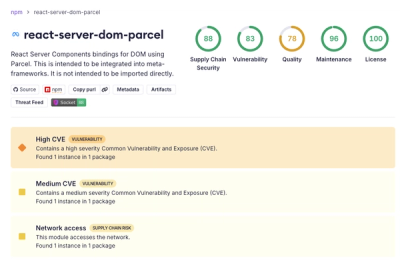
New DoS and source code exposure bugs in React Server Components and Next.js: what’s affected and how to update safely.

Security News
Socket CEO Feross Aboukhadijeh joins Software Engineering Daily to discuss modern software supply chain attacks and rising AI-driven security risks.