

Product
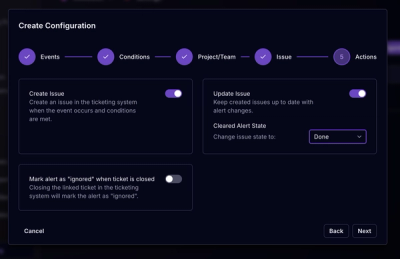
Socket for Jira Is Now Available
Socket for Jira lets teams turn alerts into Jira tickets with manual creation, automated ticketing rules, and two-way sync.
By Jeppe Hasseriis - Apr 20, 2026
captcha-manager
Advanced tools
A Node.js library used for creating and harvesting Google ReCAPTCHA response tokens
A Node.js module used for creating and harvesting Google ReCAPTCHA response tokens
npm install captcha-manager --saveFirst of all, you have to edit your hosts file. You'll need to add a new entry for each website you'll be getting captcha tokens from. For example, if you'll be getting tokens from adidas.com, you have to add this to your hosts file: 127.0.0.1 localapi.adidas.com
The respective hosts files on macOS and Windows are /etc/hosts and c:\windows\system32\drivers\etc\hosts.
Create a Harvester to start getting captcha response tokens.
const {Harvester} = require('captcha-manager');

const harvester = new Harvester();
You can get a captcha response token by calling the getResponse method:
async function run(){
//                                               hostname      sitekey
    const response = await harvester.getResponse('google.com', '6Le-wvkSAAAAAPBMRTvw0Q4Muexq9bi0DJwx_mJ-');
    console.log(response);
}
run();
This will open your default browser with the captcha(s).
If you want to prioritise getting a certain response token first, just set the third parameter to true. That'll push it to the front of the captchas queue.
await harvester.getResponse('google.com', '6Le-wvkSAAAAAPBMRTvw0Q4Muexq9bi0DJwx_mJ-');
// -->
await harvester.getResponse('google.com', '6Le-wvkSAAAAAPBMRTvw0Q4Muexq9bi0DJwx_mJ-', true);
You can also use Promises (however, I would recommend using async & await because it's a lot nicer):
harvester.getResponse('google.com', '6Le-wvkSAAAAAPBMRTvw0Q4Muexq9bi0DJwx_mJ-').then(response => console.log(response));
You can also setup a Client, that will get captcha response tokens from a remote Harvester (or "server"). This is useful if, say, you're running a bot on a server somewhere and you want to complete the captchas on your own computer.
First, you need to run the actual Harvester somewhere so that the client can connect to it. Your Harvester will now act as a server.
You can do that by cloning this repository and either running the pre-made script by changing directory to the cloned repository and running node start.js, or by installing it via npm and creating a Harvester in your own project by doing:
const {Harvester} = require('captcha-manager');

const remoteServerPort = 8083;
//                              HTTP port
const harvester = new Harvester(8081, 8082, remoteServerPort);
//                                    Web Socket Server port
Next, you'll have to setup the client. To do that, you'll need the IP address of the computer that's running the Harvester, and the remote server port (which is 8083 if you ran the pre-made start.js script, or whatever you used as the remote server port parameter if you did it manually).
You'll also need the secret, which can either get by going to your cloned repository or by going to the node_modules/captcha-manager repository of your Node.js project and then running cat src/.secret. Your secret will have echo'd in terminal if you've used/ran the module at least once by running node start.js and stopping the process afterwards.
Once you have the secret, you can start the Client.
const {Client} = require('captcha-manager');

const ipAddress = 'xx.xx.xx.xx';
const remoteServerPort = 8083;
const secret = '4336a1682f726c17e12c0e902e791b1717e05ba2ef82ec1988a9f3143236d5e7d74177c273c743214a9e64b72bb28fad7909498fa66168d06a5e94ccf47aec64d6f11738267557d7b5cdc8c6e1b6d6b2f7a46c2630af89ab8eb227f097d367366ac5e7a81c1ede165f9b2894a11b2321120ee0ea6c6b5d677a659ca1614b3c58';

const client = new Client(ipAddress, remoteServerPort, secret);
The client has the exact same getResponse method as the Harvester, with the only difference being the tokens coming from your "server".
async function run(){
    const response = await harvester.getResponse('google.com', '6Le-wvkSAAAAAPBMRTvw0Q4Muexq9bi0DJwx_mJ-');
    console.log(response);
}
run();

// or promises

harvester.getResponse('google.com', '6Le-wvkSAAAAAPBMRTvw0Q4Muexq9bi0DJwx_mJ-').then(response => console.log(response));
FAQs
A Node.js library used for creating and harvesting Google ReCAPTCHA response tokens
The npm package captcha-manager receives a total of 1 weekly downloads. As such, captcha-manager popularity was classified as not popular.
We found that captcha-manager demonstrated a not healthy version release cadence and project activity because the last version was released a year ago. It has 1 open source maintainer collaborating on the project.
Did you know?

Socket for GitHub automatically highlights issues in each pull request and monitors the health of all your open source dependencies. Discover the contents of your packages and block harmful activity before you install or update your dependencies.
Product
Socket for Jira lets teams turn alerts into Jira tickets with manual creation, automated ticketing rules, and two-way sync.
Company News
Socket won two 2026 Reppy Awards from RepVue, ranking in the top 5% of all sales orgs. AE Alexandra Lister shares what it's like to grow a sales career here.

Security News
NIST will stop enriching most CVEs under a new risk-based model, narrowing the NVD's scope as vulnerability submissions continue to surge.