Research
/Security News
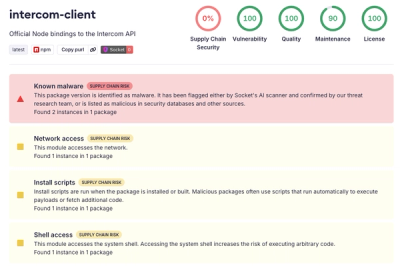
Intercom’s npm Package Compromised in Ongoing Mini Shai-Hulud Worm Attack
Compromised intercom-client@7.0.4 npm package is tied to the ongoing Mini Shai-Hulud worm attack targeting developer and CI/CD secrets.
create-qgp
Advanced tools
With NPM:
npm create qgp@latest
With Yarn:
yarn create qgp
With PNPM:
pnpm create qgp
With Bun:
bunx create-qgp
With Deno:
deno run -A npm:create-qgp
Then follow the prompts!
You can also directly specify the project name and the template you want to use via additional command line options. For example, to scaffold a QGP project, run:
# npm
npm create qgp@latest qgp-demo -- --template qgp-demo
# yarn
yarn create qgp qgp-demo --template qgp-demo
# pnpm
pnpm create qgp qgp-demo --template qgp-demo
# Bun
bunx create-qgp --template qgp-demo
# Deno
deno run -A npm:create-qgp --template qgp-demo
Currently supported template presets include:
| Template | Try online |
|---|---|
qgp-clean | StackBlitz |
qgp-demo | StackBlitz |
astro-vite-cra-ts | StackBlitz |
astro-vite-react-ts | StackBlitz |
astro-vite-solid-ssr | StackBlitz |
You can use . for the project name to scaffold in the current directory.
This project is a fork of create-vite-extra. Credit goes to all of its contributors.

FAQs
## Templates for a great HRM experience with Astro (and others)
We found that create-qgp demonstrated a not healthy version release cadence and project activity because the last version was released a year ago. It has 1 open source maintainer collaborating on the project.
Did you know?

Socket for GitHub automatically highlights issues in each pull request and monitors the health of all your open source dependencies. Discover the contents of your packages and block harmful activity before you install or update your dependencies.

Research
/Security News
Compromised intercom-client@7.0.4 npm package is tied to the ongoing Mini Shai-Hulud worm attack targeting developer and CI/CD secrets.

Research
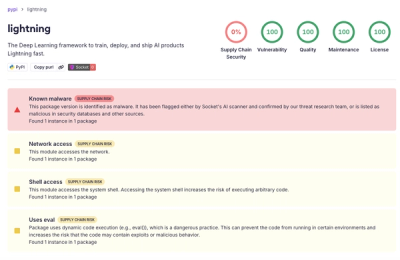
Socket detected a malicious supply chain attack on PyPI package lightning versions 2.6.2 and 2.6.3, which execute credential-stealing malware on import.

Research
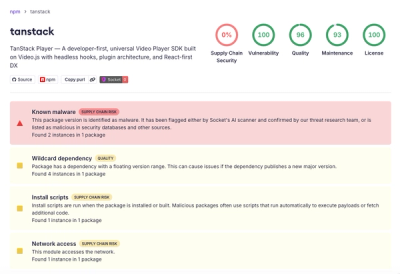
A brand-squatted TanStack npm package used postinstall scripts to steal .env files and exfiltrate developer secrets to an attacker-controlled endpoint.