

Product
Socket for Jira Is Now Available
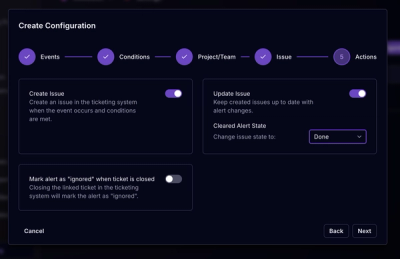
Socket for Jira lets teams turn alerts into Jira tickets with manual creation, automated ticketing rules, and two-way sync.
By Jeppe Hasseriis - Apr 20, 2026
Devrouter is a simple tool for managing lots of local webservers for development. Do you ever get the problem where you have one project running on port 8000, one on 8080, one on 3000, etc and you can't keep track of them any more? That's the problem devrouter is designed to solve.
Instead of typing, node myserver.js, you can type devroute node myserver.js. Devrouter will find a free port and set it to the PORT environment variable so your server can pick it up. Meanwhile, it also passes that port and the name of the current directory to the Devrouter service's HTTP proxy. So you can now visit it at, for example, http://myserver.dev.
Now all your local development services can be referenced by nice names instead of arbitrary ports!
Devrouter is on npm, so install it with npm install -g devrouter
Devrouter has two commands. The service is devrouter and the utility is devroute <-- note the lack of an r at the end.
You run the Devrouter service with devrouter, but you will probably need to sudo devrouter so that it can run as port 80. There are other, more secure ways of doing this, but they are all a bit annoying. We drop privileges after listening, so it's not so bad, but you may want to have a look through the code to make sure.
If you want it to run at startup, you can copy the plist file into /Library/LaunchDaemons and start it with sudo launchctl load /Library/LaunchDaemons/com.samgentle.devrouter.plist
Once the Devrouter is running, you need to redirect some TLD to it. I suggest .dev. On OS X you can do that by putting this in /etc/resolver/dev:
nameserver 127.0.0.1
port 10053
.localhost is another good choice, and I'm told it works by default on Linux. Unfortunately, Chrome interprets requests for .localhost in the URL bar as searches by default unless you prefix them with http://. Luckily, Google also registered the .dev TLD, presumably as a very expensive workaround. Thanks, Google!
To use it, just type devroute <command-here>. Works great with http-server! devroute http-server
There are some more options you can check out with devroute --help, including setting a specific port and name
You can also put static routes in /etc/devrouter.json, they should look like this:
{
  "myserver": 1234
}
Which will permanently point myserver.dev (or myserver.localhost or whatever) to port 1234.
npm install -g devrouter
sudo devrouter
sudo sh -c 'echo nameserver 127.0.0.1\\nport 10053 > /etc/resolver/dev'
cd my-project
devroute ./thing_that_runs_my_server
open http://my-project.dev
MIT
FAQs
Easy router for developing http services
We found that devrouter demonstrated a not healthy version release cadence and project activity because the last version was released a year ago. It has 1 open source maintainer collaborating on the project.
Did you know?

Socket for GitHub automatically highlights issues in each pull request and monitors the health of all your open source dependencies. Discover the contents of your packages and block harmful activity before you install or update your dependencies.
Product
Socket for Jira lets teams turn alerts into Jira tickets with manual creation, automated ticketing rules, and two-way sync.

Company News
Socket won two 2026 Reppy Awards from RepVue, ranking in the top 5% of all sales orgs. AE Alexandra Lister shares what it's like to grow a sales career here.

Security News
NIST will stop enriching most CVEs under a new risk-based model, narrowing the NVD's scope as vulnerability submissions continue to surge.