

Product
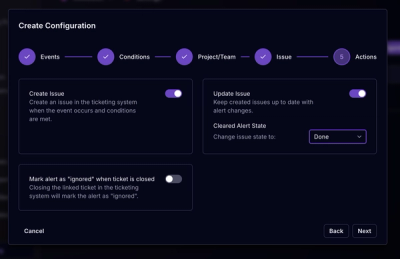
Socket for Jira Is Now Available
Socket for Jira lets teams turn alerts into Jira tickets with manual creation, automated ticketing rules, and two-way sync.
By Jeppe Hasseriis - Apr 20, 2026
npm install lazy-refs --save
export type Ref<T = any> = {
  readonly dependencies: Ref[];
  readonly value: Promise<T | undefined>;
  use(): void;
  unuse(): void;
};
References can return async values
import { createRef } from 'lazy-refs'

type Texture = {
  id: string;
}

// Create ref with a simple factory
const myTextureRef = createRef(async () => {
  await doSomethingAsync();
  return {
    id: 'myTexture'
  };
});

// Or create ref with options
const myTextureRef = createRef({
  async created(): Promise<Texture> {
    await doSomethingAsync();
    return {
      id: 'myTexture'
    };
  },
  destroyed(value: Texture) {
    // Dispose the texture
  }
});
You can also create references that depend on other references.
type Material = {
  id: string;
  texture?: Texture;
}

const myMaterialRef = createRef({
  created({ texture }) {
    return {
      id: "myMaterial",
      texture
    }
  },
  dependencies: {
    texture: myTextureRef
  }
});
use: When the reference is used for the first time, it will load the reference: it will automatically call use on all of its dependencies and get their values before calling the corresponding factory.
value: Getter who returns a promise with the value of the reference. In the case the factory throws an error, the returned value will be undefined.
unuse: When the reference is unused and isn't used anywhere else anymore, it will unload the reference: it will call unuse on all of its dependencies and call the destroyed function if defined.
The reference is initialized once again when it is used once more.
// First use the reference, to mark it as used and initialize the value if it hasn't been used yet
myMaterialRef.use();

// We can now get the value
const myMaterial = await myMaterialRef.value();

console.log(myMaterial); // { id: 'myMaterial', texture: { id: 'myTexture' } }

// Lastly, when we don't need it anymore, we unuse it so that it can be destroyed if it isn't used anywhere else anymore
myMaterialRef.unuse();
In the options parameter of createRef (2nd parameter), you can specify a timeout that tells how long the reference should wait when it is completely unused before unloading the reference:
timeout === -1 tells the reference to never unloadtimeout === 0 tells the reference to immediately unloadtimeout > 0: tells the reference to wait for X ms before unloading. If it is used again before the timeout activated, the timeout is cancelled and the reference will not unload.In the case you need to load a lot of references at once and track their loading progress, you can use createLoader.
import { createLoader } from 'lazy-refs'

const loader = createLoader([myMaterialRef]);

// Load all specified references
await loader.load((current, total) => {
  console.log("loading progress", current, total);
})

// Unload all specified references
loader.unload();
Note: The loader also goes deeply through all dependencies of the specified refs. That means that in the example above, the progress function is called twice (for myTextureRef and myMaterialRef).
If you are interested and want to help out, don't hesitate to contact me or to create a pull request with your fixes / features.
The project now also contains samples that you can use to directly test out your features during development.
Clone the repository
Install dependencies
npm install
Launch unit tests situated in ./tests. The unit tests are written in Jest.
npm run test:unit
This project is licensed under the MIT License - see the LICENSE.md file for details
FAQs
`npm install lazy-refs --save`
We found that lazy-refs demonstrated a not healthy version release cadence and project activity because the last version was released a year ago. It has 1 open source maintainer collaborating on the project.
Did you know?

Socket for GitHub automatically highlights issues in each pull request and monitors the health of all your open source dependencies. Discover the contents of your packages and block harmful activity before you install or update your dependencies.
Product
Socket for Jira lets teams turn alerts into Jira tickets with manual creation, automated ticketing rules, and two-way sync.
Company News
Socket won two 2026 Reppy Awards from RepVue, ranking in the top 5% of all sales orgs. AE Alexandra Lister shares what it's like to grow a sales career here.

Security News
NIST will stop enriching most CVEs under a new risk-based model, narrowing the NVD's scope as vulnerability submissions continue to surge.