


Security News
Feross on TBPN: How North Korea Hijacked Axios
Socket CEO Feross Aboukhadijeh breaks down how North Korea hijacked Axios and what it means for the future of software supply chain security.
By Sarah Gooding - Apr 08, 2026
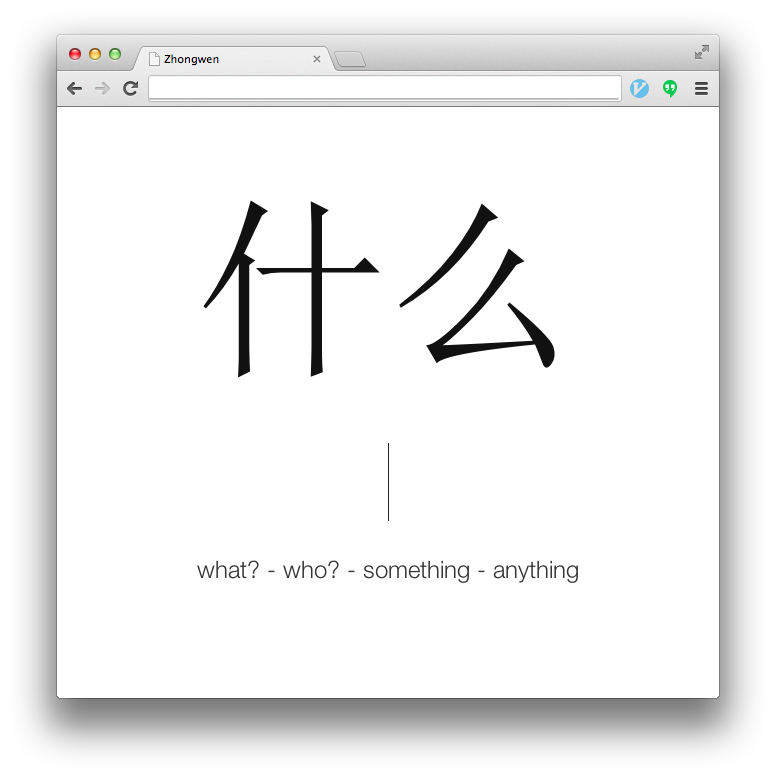
lightcards is a flash card software for learning Chinese characters.
It is designed with the Unix philosophy in mind. Edit your vocabulary using Sublime, Notepad, or whatever software you like.
I use Google Docs, so I can edit my vocabulary when I'm on the go. When I have
updated my vocabulary, I wget it to stdout and pipe it into lightcards.
Requirements:
To install:
sudo npm install -g lightcards
lightcards needs a vocabulary to generate flash cards from. A vocabulary
is a .txt file containing chinese characters separated by newlines:
什么
名字
谢谢
很
早饭
苹果
孩子
鸭子
吃
你
吗
我
To generate a starting vocabulary:
lightcards init
To run lightcards:
lightcards
lightcards then starts a local web server that you find by navigating to
http://localhost:3000 in your web browser.
By default, lightcards uses vocabulary.txt from the current working
directory. If no vocabulary.txt can be found, lightcards will create
it create it for you.
Have fun!
↓-key reveals translation / inputFAQs
Lightweight Chinese flashcards.
We found that lightcards demonstrated a not healthy version release cadence and project activity because the last version was released a year ago. It has 1 open source maintainer collaborating on the project.
Did you know?

Socket for GitHub automatically highlights issues in each pull request and monitors the health of all your open source dependencies. Discover the contents of your packages and block harmful activity before you install or update your dependencies.
Security News
Socket CEO Feross Aboukhadijeh breaks down how North Korea hijacked Axios and what it means for the future of software supply chain security.
Security News
OpenSSF has issued a high-severity advisory warning open source developers of an active Slack-based campaign using impersonation to deliver malware.

Research
/Security News
Malicious packages published to npm, PyPI, Go Modules, crates.io, and Packagist impersonate developer tooling to fetch staged malware, steal credentials and wallets, and enable remote access.