

Product
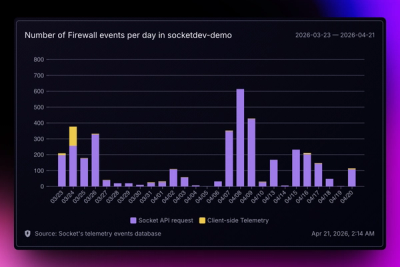
Introducing Reports: An Extensible Reporting Framework for Socket Data
Explore exportable charts for vulnerabilities, dependencies, and usage with Reports, Socket’s new extensible reporting framework.
By André Staltz - Apr 21, 2026



Minify - a minifier of js, css, html and img files.
To get things done Minify uses these amazing tools:
For Node users:
npm i minify -g
For Deno users:
import {minify} from 'npm:minify';
Usage: minify [options]
Options:
  -h, --help                  display this help and exit
  -v, --version               display version and exit
  --js                        minify javascript
  --css                       minify css
  --html                      minify html
  --auto                      auto detect format
The bash command below creates a code snippet saved as hello.js.
Simply copy + paste the code starting with cat, including the EOT on the last line, and press .
$ cat << EOT > hello.js
const hello = 'world';

for (let i = 0; i < hello.length; i++) {
    console.log(hello[i]);
}
EOT
Use the command minify followed by the path to and name of the js file intended to be minified. This will minify the code and output it to the screen.
$ minify hello.js
var a='world';for(let i=0;i<a.length;i++)console.log(a[i]);
You can capture the output with the following:
$ minify hello.js > hello.min.js
Use --fail-on-error to get a non-zero exit code when minification fails (useful in build scripts and CI):
$ minify broken.js --fail-on-error > broken.min.js
$ echo $?
1
You can pass input using cat:
cat << EOT | bin/minify.js --js
> const hello = 'world';
>
> for (let i = 0; i < hello.length; i++) {
>     console.log(hello[i]);
> }
> EOT
var a='world';for(let i=0;i<a.length;i++)console.log(a[i]);
Minify can be used with async-await and try-to-catch:
import {minify} from 'minify';
import {tryToCatch} from 'try-to-catch';

const options = {
    html: {
        removeAttributeQuotes: false,
        removeOptionalTags: false,
    },
};

const [error, data] = await tryToCatch(minify, './client.js', options);

if (error)
    return console.error(error.message);

console.log(data);
For cli use these options can be provided in a JSON file named .minify.json like so:
{
    "js": {
        "type": "putout",
        "putout": {
            "quote": "'",
            "mangle": true,
            "mangleClassNames": true,
            "removeUnusedVariables": true,
            "removeConsole": false,
            "removeUselessSpread": true
        }
    },
    "img": {
        "maxSize": 4096
    },
    "html": {
        "removeComments": true,
        "removeCommentsFromCDATA": true,
        "removeCDATASectionsFromCDATA": true,
        "collapseWhitespace": true,
        "collapseBooleanAttributes": true,
        "removeAttributeQuotes": true,
        "removeRedundantAttributes": true,
        "useShortDoctype": true,
        "removeEmptyAttributes": true,
        "removeEmptyElements": false,
        "removeOptionalTags": true,
        "removeScriptTypeAttributes": true,
        "removeStyleLinkTypeAttributes": true,
        "minifyJS": true,
        "minifyCSS": true
    },
    "css": {
        "type": "clean-css",
        "clean-css": {
            "compatibility": "*"
        }
    }
}
Minify walking up parent directories to locate and read it’s configuration file .minify.json.
jsIn section related to js you can choose type of minifier:
When you want to pass options to terser, use section with the same name, .minify.json will look this way:
{
    "js": {
        "type": "terser",
        "terser": {
            "mangle": false
        }
    }
}
MIT
FAQs
Minifier of js, css, html and img
The npm package minify receives a total of 32,742 weekly downloads. As such, minify popularity was classified as popular.
We found that minify demonstrated a healthy version release cadence and project activity because the last version was released less than a year ago. It has 1 open source maintainer collaborating on the project.
Did you know?

Socket for GitHub automatically highlights issues in each pull request and monitors the health of all your open source dependencies. Discover the contents of your packages and block harmful activity before you install or update your dependencies.
Product
Explore exportable charts for vulnerabilities, dependencies, and usage with Reports, Socket’s new extensible reporting framework.
Product
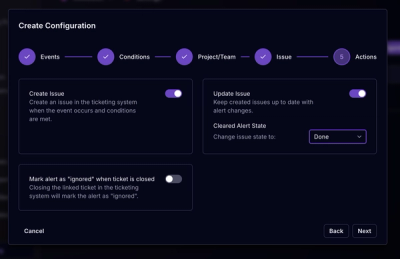
Socket for Jira lets teams turn alerts into Jira tickets with manual creation, automated ticketing rules, and two-way sync.

Company News
Socket won two 2026 Reppy Awards from RepVue, ranking in the top 5% of all sales orgs. AE Alexandra Lister shares what it's like to grow a sales career here.