

Product
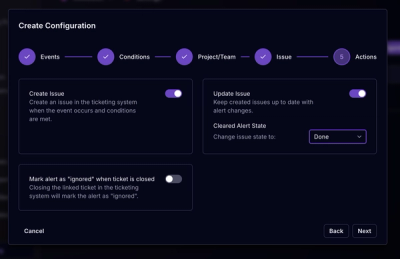
Socket for Jira Is Now Available
Socket for Jira lets teams turn alerts into Jira tickets with manual creation, automated ticketing rules, and two-way sync.
By Jeppe Hasseriis - Apr 20, 2026
netiam-adapter-sequelize
Advanced tools



A sequelize persistence adapter
npm i -S netiam netiam-adapter-sequelize
Every adapter has to export a public interface with the following requirements.
/**
 * Get ID names for type
 * @param {string} type - The type of resource
 * @returns {string|string[]} An ID field or list of ID fields
 */
getId(type) {
}

/**
 * Get type by model
 * @param {*} model - The model you want a type of
 * @returns {string} The model as string representation aka type
 */
getType(model) {
}

/**
 * Get model by type
 * @param {string} type - The model of a specific type
 * @returns {model} The model for the specified type
 */
getType(model) {
}

/**
 * Find one or more resources
 * @param {string} type - The type of resource you are looking for
 * @param {string|number|string[]|number[]} [id] - A single or list of resource IDs to find
 * @param {object} [opts] - Optional configuration of the query
 * @param {number} [opts.page] - Pagination
 * @param {number} [opts.page.size] - Size of resultset
 * @param {number} [opts.page.limit] - Limt size of resultset
 * @param {number} [opts.page.offset] - Offset resultset
 * @param {number} [opts.page.before] - Curser based pagination
 * @param {number} [opts.page.after] - Curser based pagination
 * @param {string} [opts.filter] - Filter
 * @param {string} [opts.sort] - Sort
 * @param {string} [opts.fields] - Sparse fieldsets
 * @param {string} [opts.include] - Compound documents
 * @returns {Promise} The result or a resultset
 */
find(type, id, opts) {
}

/**
 * Update a resource
 * @param {string} type - The type of resource you want to update
 * @param {string|number} id - The ID of a resource you wanna update
 * @param {object} [opts] - Optional configuration of the query
 * @returns {Promise} The modified resource
 */
update(type, id, opts) {
}

/**
 * Delete a resource
 * @param {string} type - The type of resource you want to delete
 * @param {string|number} id - The ID of a resource you wanna delete
 * @returns {Promise}
 */
remove(type, id) {
}

/**
 * Set attributes for a resource
 * @param {string} type - The type of resource you want to set attributes for
 * @param {object} resource - The resource you want to set attributes for
 * @param {object} attributes - A object literal with attribute names as keys
 * @returns {Promise} The modified resource
 */
setAttributes(type, resource, attributes) {
}

/**
 * Get only the attributes for a specific resource
 * @param {string} type - The type of resource you want to get attributes from
 * @param {object} resource - The resource you want to get attributes from
 * @returns {object} The attributes for the given resource
 */
getAttributes(type, resource) {
}

/**
 * Get all attribute keys as list of path names
 * @param {string} type - The type of resource you want to get attributes from
 * @param {object} resource - The resource you want to get attributes from
 * @returns {string[]} A list of attribute names
 */
getAttributeKeys(type, resource) {
}

/**
 * Set a relationship for a resource
 * @param {string} type - The type of resource you want to set a relationship for
 * @param {object} resource - The resource you want to set a relationship for
 * @param {string} relationship - The relationship/association name
 * @param {object|object[]} resourceIdentifiers - A single resource identifier or a list of identifiers
 * @see {@link http://jsonapi.org/format/#document-resource-identifier-objects|JSON API}
 * @returns {Promise} The relationship
 */
setRelationship(type, resource, relationship, resourceIdentifiers) {
}

/**
 * Set relationships for a resource
 * @param {string} type - The type of resource you want to set a relationship for
 * @param {object} resource - The resource you want to set a relationship for
 * @param {object.<string, object>|object.<string, object[]>} relationships - The relationships to set
 * @returns {Promise} The relationship
 */
setRelationships(type, resource, relationships) {
}

/**
 * Get a relationship from resource
 * @param {string} type - The type of resource you want to get a relationship from
 * @param {object} resource - The resource you want to get a relationship from
 * @param {string} relationship - The relationship/association name
 * @returns {Promise} The relationship
 */
getRelationship(type, resource, relationship) {
}

/**
 * Get all relationships as list of path names
 * @param {string} type - The type of resource you want to get relationships from
 * @param {object} resource - The resource you want to get relationships from
 * @returns {string[]} A list of relaionship names
 */
getRelationshipKeys(type, resource) {
}

/**
 * Check if a specific type has a relationship defined
 * @param {string} type - The type of resource
 * @param {string} relationship - The name of the relationship you want to check
 * @returns {boolean} True if relationship is defined, otherwise false
 */
hasRelationship(type, relationship) {
}

/**
 * Get the type of a relationship
 * @param {string} type - The type of resource
 * @param {string} relationship - The name of the relationship you want to get a type for
 * @returns {string} The resource type for the relationship
 */
getRelationshipType(type, relationship) {
}
FAQs
The sequelize persistence adapter.
We found that netiam-adapter-sequelize demonstrated a not healthy version release cadence and project activity because the last version was released a year ago. It has 1 open source maintainer collaborating on the project.
Did you know?

Socket for GitHub automatically highlights issues in each pull request and monitors the health of all your open source dependencies. Discover the contents of your packages and block harmful activity before you install or update your dependencies.
Product
Socket for Jira lets teams turn alerts into Jira tickets with manual creation, automated ticketing rules, and two-way sync.

Company News
Socket won two 2026 Reppy Awards from RepVue, ranking in the top 5% of all sales orgs. AE Alexandra Lister shares what it's like to grow a sales career here.

Security News
NIST will stop enriching most CVEs under a new risk-based model, narrowing the NVD's scope as vulnerability submissions continue to surge.