


Security News
Deno 2.6 + Socket: Supply Chain Defense In Your CLI
Deno 2.6 introduces deno audit with a new --socket flag that plugs directly into Socket to bring supply chain security checks into the Deno CLI.
By Sarah Gooding - Dec 12, 2025
ngx-error-boundary
Advanced tools
This library is an experimental implementation of React Error boundary for Angular.
npm i ngx-error-boundary --save
Import the module:
imports: [NgxErrorBoundaryModule];
Once you include the module, you will get following component that you can use:
<ErrorBoundary
  [fallback]="template"
  key="unique.identify.string"
></ErrorBoundary>
following directives:
errorRetry;
errorDismiss;
and also you got one service:
NgxErrorBoundaryService;
<ErrorBoundary>Using [fallback] with <ng-template></ng-template>, key is optional if there is only one ErrorBoundary pre-component.
If there are multi ErrorBoundary inside one component, you need to use key to show correct error message
<!-- error: {message: string, key: string} -->
<!-- retry$: Observable<boolean>: is retrying -->
<ng-template #errTemplate let-error let-retry$="retry$">
  <div class="err-container">
    <h2>Something goes wrong!</h2>
    <section>
      <p [innerHTML]="error.message"></p>
      <!-- errorRetry can help to retry the failed observable -->
      <button errorRetry>
        {{ (retry$ | async) ? "Retrying..." : "Retry" }}
      </button>
      <!-- errorDismiss: hide error boundary -->
      <button [errorDismiss]="error.key">Dismiss</button>
    </section>
  </div>
</ng-template>

<ErrorBoundary [fallback]="errTemplate" key="example">
  <YOUR_CONTENT_FROM_SERVER [data]="data$ | async" />
</ErrorBoundary>
this.data$ = timer(500).pipe(
  this.apiService.fetchData(),
  this.errorService.handleExpection({
    message: "Cannot load data",
    key: "example",
  })
);
When there is error, <YOUR_CONTENT_FROM_SERVER [data]="data$ | async" /> will be repalced with errTemplate.
@Input() fallback: TemplateRefTake an ng-template as input.
@Input() key: stringA string to unqiue identify string to show correct error message
errorRetry DirectiveYou can retry the failed observable.
errorDismiss DirectiveTake error's key string as input.
To hide Error boundary component
NgxErrorBoundaryServicehandleExpection({message?: string, key?: string})If nothing passed in as arguement, will use catched error's message information.
There is a default key assigned, can be used for global error message.
Example:
@Component({
  selector: "categories",
  ...
  providers: [NgxErrorBoundaryService],
})
export class CategoriesComponent {
  categories$: Observable<Category[]>;
  constructor(
    private categoriesService: CategoriesService,
    private errorService: NgxErrorBoundaryService
  ) {
    this.categories$ = this.categoriesService.fetchData().pipe(
      this.errorService.handleExpection({
        message: "Cannot load categories",
        key: "categories",
      })
    );
  }
}
dismiss(key?: string)key: error key
Hide error boundary component and error message for the key.
If didn't pass key, then hide all error messages.
FAQs
Angular 9 Component for React like Error boundary
We found that ngx-error-boundary demonstrated a not healthy version release cadence and project activity because the last version was released a year ago. It has 1 open source maintainer collaborating on the project.
Did you know?

Socket for GitHub automatically highlights issues in each pull request and monitors the health of all your open source dependencies. Discover the contents of your packages and block harmful activity before you install or update your dependencies.
Security News
Deno 2.6 introduces deno audit with a new --socket flag that plugs directly into Socket to bring supply chain security checks into the Deno CLI.
Security News
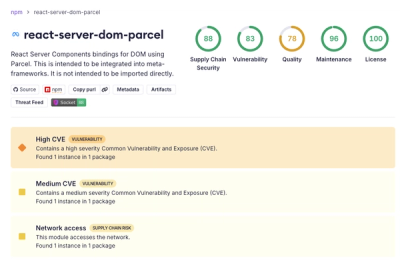
New DoS and source code exposure bugs in React Server Components and Next.js: what’s affected and how to update safely.

Security News
Socket CEO Feross Aboukhadijeh joins Software Engineering Daily to discuss modern software supply chain attacks and rising AI-driven security risks.