

Product
Introducing Reports: An Extensible Reporting Framework for Socket Data
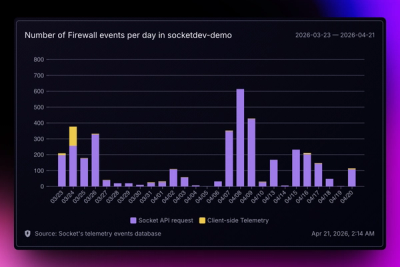
Explore exportable charts for vulnerabilities, dependencies, and usage with Reports, Socket’s new extensible reporting framework.
By André Staltz - Apr 21, 2026
ngx-monaco-editor
Advanced tools
Using this Module you can utilize the Monaco Editor as an Angular Component. Feel free to contribute, raise feature requests and make it better.
Supports all the options available in monaco-editor Monaco Editor Options
Install from npm repository:
npm install monaco-editor ngx-monaco-editor --save
For angular version 6 use v6.x.x
npm install ngx-monaco-editor@6.0.0 --save
Add the glob to assets in .angular-cli.json schema - projects.[project-name].architect.build (to make monaco-editor lib available to the app):
{
  "options": {
    {
      "assets": [
        { "glob": "**/*", "input": "node_modules/monaco-editor", "output": "assets/monaco-editor" }
      ],
      ...
    }
    ...
  },
  ...
}
For Angular 6 and below, add the glob to assets in angular.json
{
  "apps": [
    {
      "assets": [
        { "glob": "**/*", "input": "../node_modules/ngx-monaco-editor/assets/monaco", "output": "./assets/monaco/" }
      ],
      ...
    }
    ...
  ],
  ...
}
Include MonacoEditorModule in Main Module and Feature Modules where you want to use the editor component.(eg: app.module.ts):
import { BrowserModule } from '@angular/platform-browser';
import { NgModule } from '@angular/core';
import { FormsModule } from '@angular/forms';

import { AppComponent } from './app.component';
import { MonacoEditorModule } from 'ngx-monaco-editor';

@NgModule({
  declarations: [
    AppComponent
  ],
  imports: [
    BrowserModule,
    FormsModule,
    MonacoEditorModule.forRoot() // use forRoot() in main app module only.
  ],
  providers: [],
  bootstrap: [AppComponent]
})
export class AppModule {
}
Create Editor options in component.(eg: app.component.ts)
import { Component } from '@angular/core';

@Component({
  selector: 'app-root',
  templateUrl: './app.component.html'
})
export class AppComponent {
  editorOptions = {theme: 'vs-dark', language: 'javascript'};
  code: string= 'function x() {\nconsole.log("Hello world!");\n}';
}
Include editor in html with options and ngModel bindings.(eg: app.component.html)
<ngx-monaco-editor [options]="editorOptions" [(ngModel)]="code"></ngx-monaco-editor>
Include diff-editor in html with options.(eg: app.component.html)
<ngx-monaco-diff-editor [options]="options" [originalModel]="originalModel" [modifiedModel]="modifiedModel"></ngx-monaco-diff-editor>
import { Component } from '@angular/core';
import { DiffEditorModel } from 'ngx-monaco-editor';

@Component({
  selector: 'app-root',
  templateUrl: './app.component.html'
})
export class AppComponent {
  options = {
    theme: 'vs-dark'
  };
  originalModel: DiffEditorModel = {
    code: 'heLLo world!',
    language: 'text/plain'
  };

  modifiedModel: DiffEditorModel = {
    code: 'hello orlando!',
    language: 'text/plain'
  };
}
To match height of container element add height: 100% and wrap in container
<div style="height: 500px">
    <ngx-monaco-editor style="height: 100%" [options]="editorOptions" [(ngModel)]="code"></ngx-monaco-editor>
</div>
Add class to editor tag. (eg. class="my-code-editor")
<ngx-monaco-editor class="my-code-editor" [options]="editorOptions" [(ngModel)]="code"></ngx-monaco-editor>
Add styling in css/scss file:
.my-code-editor {
  .editor-container {
    height: calc(100vh - 100px);
  }
}
Set automaticLayout option to adjust editor size dynamically. Recommended when using in modal dialog or tabs where editor is not visible initially.
Output event (onInit) expose editor instance that can be used for performing custom operations on the editor.
<ngx-monaco-editor [options]="editorOptions" [(ngModel)]="code" (onInit)="onInit($event)"></ngx-monaco-editor>
export class AppComponent {
  editorOptions = {theme: 'vs-dark', language: 'javascript'};
  code: string= 'function x() {\nconsole.log("Hello world!");\n}';
  onInit(editor) {
      let line = editor.getPosition();
      console.log(line);
    }
}
forRoot() method of MonacoEditorModule accepts config of type NgxMonacoEditorConfig.
import { NgModule } from '@angular/core';
import { FormsModule } from '@angular/forms';
import { BrowserModule } from '@angular/platform-browser';

import { MonacoEditorModule, NgxMonacoEditorConfig } from 'ngx-monaco-editor';
import { AppComponent } from './app.component';

const monacoConfig: NgxMonacoEditorConfig = {
  baseUrl: 'app-name/assets', // configure base path cotaining monaco-editor directory after build default: './assets'
  defaultOptions: { scrollBeyondLastLine: false }, // pass default options to be used
  onMonacoLoad: () => { console.log((<any>window).monaco); } // here monaco object will be available as window.monaco use this function to extend monaco editor functionalities.
};

@NgModule({
  declarations: [
    AppComponent
  ],
  imports: [
    BrowserModule,
    FormsModule,
    MonacoEditorModule.forRoot(monacoConfig)
  ],
  providers: [],
  bootstrap: [AppComponent]
})
export class AppModule {
}
onMonacoLoad property of NgxMonacoEditorConfig can be used to configure JSON default.
import { NgModule } from '@angular/core';
import { FormsModule } from '@angular/forms';
import { BrowserModule } from '@angular/platform-browser';

import { MonacoEditorModule, NgxMonacoEditorConfig } from 'ngx-monaco-editor';
import { AppComponent } from './app.component';

export function onMonacoLoad() {

  console.log((window as any).monaco);

  const uri = monaco.Uri.parse('a://b/foo.json');
  monaco.languages.json.jsonDefaults.setDiagnosticsOptions({
    validate: true,
    schemas: [{
      uri: 'http://myserver/foo-schema.json',
      fileMatch: [uri.toString()],
      schema: {
        type: 'object',
        properties: {
          p1: {
            enum: ['v1', 'v2']
          },
          p2: {
            $ref: 'http://myserver/bar-schema.json'
          }
        }
      }
    }, {
      uri: 'http://myserver/bar-schema.json',
      fileMatch: [uri.toString()],
      schema: {
        type: 'object',
        properties: {
          q1: {
            enum: ['x1', 'x2']
          }
        }
      }
    }]
  });

}

const monacoConfig: NgxMonacoEditorConfig = {
  baseUrl: 'assets',
  defaultOptions: { scrollBeyondLastLine: false },
  onMonacoLoad
};

@NgModule({
  declarations: [
    AppComponent
  ],
  imports: [
    BrowserModule,
    FormsModule,
    MonacoEditorModule.forRoot(monacoConfig)
  ],
  providers: [],
  bootstrap: [AppComponent]
})
export class AppModule {
}
Now pass model config of type NgxEditorModel to Editor Component
@Component({
  selector: 'app-root',
  template: `<ngx-monaco-editor [options]="options" [model]="model"></ngx-monaco-editor>`,
  styles: []
})
export class AppComponent {
  options = {
    theme: 'vs-dark'
  };

  jsonCode = [
    '{',
    '    "p1": "v3",',
    '    "p2": false',
    '}'
  ].join('\n');

  model: NgxEditorModel = {
    value: this.jsonCode,
    language: 'json',
    uri: monaco.Uri.parse('a://b/foo.json')
  };
}
Monaco Editor
Monaco Editor Options
MIT © Atul Kumar
FAQs
Monaco Code Editor for Angular
The npm package ngx-monaco-editor receives a total of 12,402 weekly downloads. As such, ngx-monaco-editor popularity was classified as popular.
We found that ngx-monaco-editor demonstrated a not healthy version release cadence and project activity because the last version was released a year ago. It has 1 open source maintainer collaborating on the project.
Did you know?

Socket for GitHub automatically highlights issues in each pull request and monitors the health of all your open source dependencies. Discover the contents of your packages and block harmful activity before you install or update your dependencies.
Product
Explore exportable charts for vulnerabilities, dependencies, and usage with Reports, Socket’s new extensible reporting framework.
Product
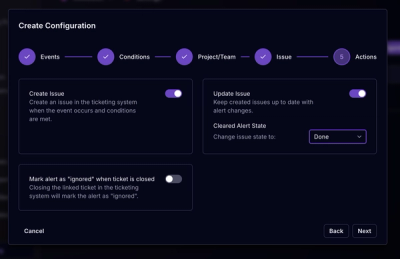
Socket for Jira lets teams turn alerts into Jira tickets with manual creation, automated ticketing rules, and two-way sync.

Company News
Socket won two 2026 Reppy Awards from RepVue, ranking in the top 5% of all sales orgs. AE Alexandra Lister shares what it's like to grow a sales career here.