Nodality
This library works with elements represented as an array of HTML entities, and nodes that control the behavior of elements.
Elements is an array of objects. This array produces the code of elements you can use in your website.
Nodes is another array containing nodes that change the look and behavior of the generated elements.
Installation
The easiest way to get up and running is to use npm:
npm create nodality@latest my-app
Tutorial
Step 1
Define an array of elements you want to display in your user interface:
let elements = [
  {
    type: "h1",
    text: "Hello"
  }
];
Step 2
Define an array of nodes that will adjust the behaviour of the element.
This particular node will add the stroked text effect:
let nodes = [
  {
    op: "blast"
  }
];
Step 3
Add the nodes array using the .nodes() modifier, and use the .set() method to mount the result of the code to the website.
Use the code: true option to also display the source code of the elements:
new Des()
  .nodes(nodes)
  .add(elements)
  .set({
    mount: "#mount",
    code: true
  });
Also define a <div> with id="#mount" that will serve as a root element to render the UI.
Everything Together
Here is the complete working code which uses CDN for convenient testing.
<div id="#mount"></div>
<script type="module">
import {Des} from "https://www.unpkg.com/nodality@1.0.13/dist/index.esm.js";
let elements = [
{
type: "h1",
text: "Hello"
}
];
let nodes = [
{
op: "blast"
}
];
new Des()
.nodes(nodes)
.add(elements)
.set({
mount: "#mount",
code: true
});
</script>
Result
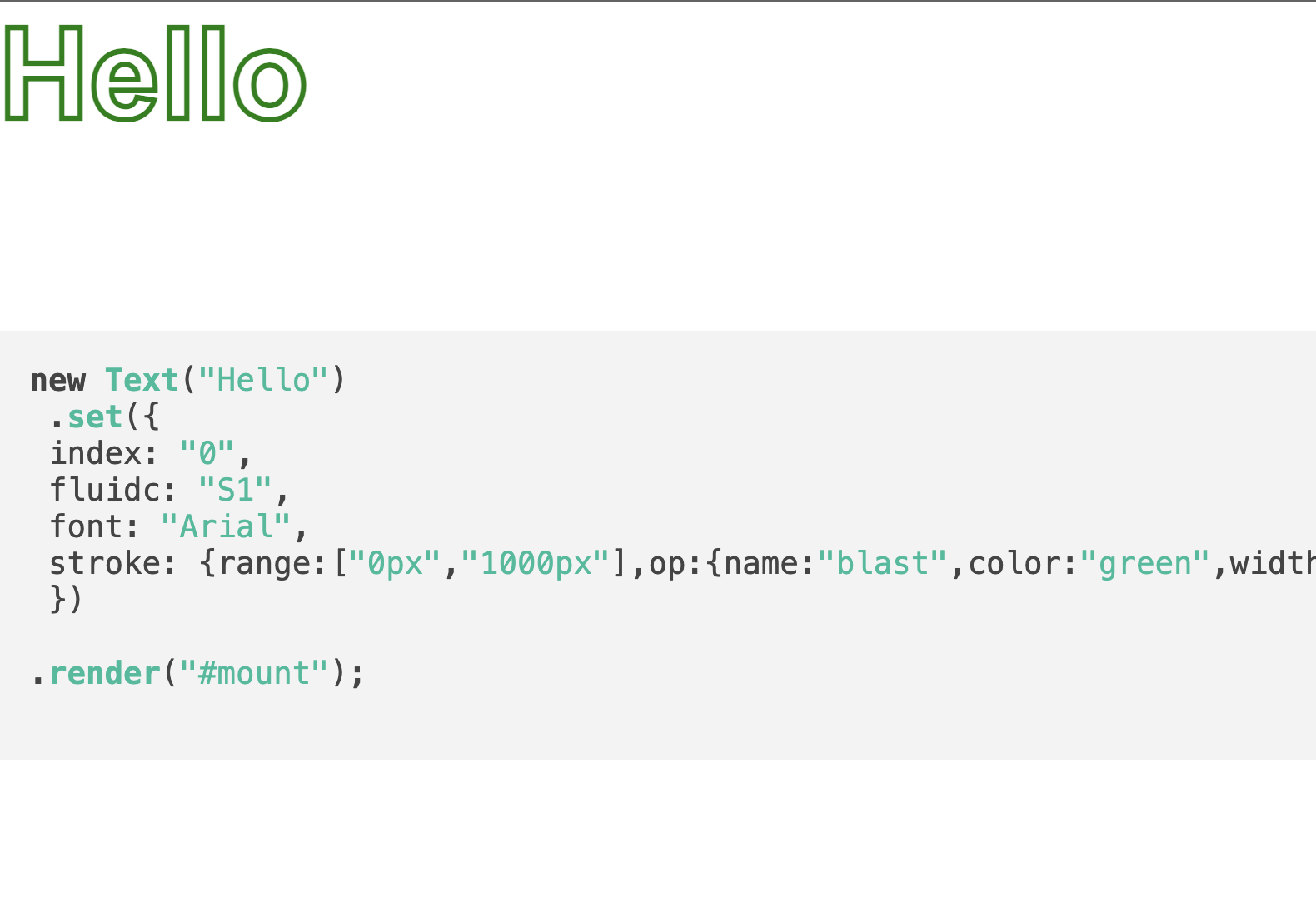
After running this code:
- You will see an
<h1> element on the screen.
- When the user resizes the window and hits the 400–600px breakpoint, a stroke effect will appear on the text, thanks to the
blast modifier.
- The resulting code of the UI will also be displayed below the rendered element.





