

Product
Socket for Jira Is Now Available
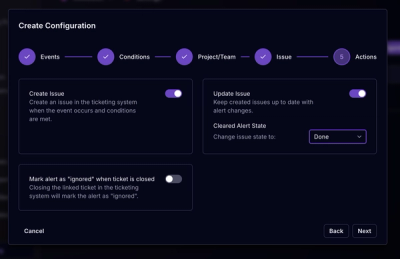
Socket for Jira lets teams turn alerts into Jira tickets with manual creation, automated ticketing rules, and two-way sync.
By Jeppe Hasseriis - Apr 20, 2026
A lightning-fast, single-pass command line argument parser with structure validation
A lightning-fast, single-pass command line argument parser with structural validation and elegant JSON configuration.
npm install pargv-lite
import parse from 'pargv-lite';

// Define your application's command structure
const gitReq = {
  // Global options
  help: {
    def: false,
    set: ['-h', '--help']
  },
  verbose: {
    def: false,
    set: ['-v', '--verbose']
  },
  // Subcommands (direct string array format for exit options)
  command: ['clone', 'push', 'pull', 'commit', 'checkout']
};

// Commit subcommand config
const commitReq = {
  message: {
    def: '',
    set: ['-m', '--message']
  },
  all: {
    def: false,
    set: ['-a', '--all']
  },
  amend: {
    def: false,
    set: ['--amend']
  }
};

function main() {
  const gitRes = {};

  // First parse to handle global options and identify subcommand
  const ret = parse(process.argv, 2, gitReq, gitRes, console.error);

  // Handle help flag
  if (gitRes.help) {
    showHelp();
    return;
  }

  // Check if a subcommand was encountered (returns object with next position)
  if (typeof ret === 'object') {
    // ret contains { avi, key, opt }:
    // - ret.avi is the argv index to continue parsing from
    // - ret.key is the variable name in gitReq that triggered the exit ('command')
    // - ret.opt is the option string that triggered the exit (subcommand name)

    console.error(`Executing ${ret.opt} command...`);

    switch (ret.opt) {
      case 'commit':
        // Parse commit-specific options starting from ret.avi
        const commitRes = {};
        parse(process.argv, ret.avi, commitReq, commitRes, console.error);

        // Use the results
        console.error(
          `Committing with message: ${commitRes.message}`,
          commitRes.all ? '(all files)' : '',
          commitRes.amend ? '(amending)' : ''
        );
        break;

      case 'push':
        // Handle push command...
        break;

      // Handle other commands...
    }
  }
}
parse(argv, i, req, res, err)
process.argv)2){msg, avi, opt, key, val} and returns booleanThe function returns either:
{ avi, key, opt } when exiting early due to an exit option, where:
avi: The next index to resume parsing from (ArgV Index)key: The variable name in the req object that triggered the exitopt: The option string that triggered the exit (e.g., the subcommand name){
// Regular variable with default value and option definitions
variableName: {
def: defaultValue, // Boolean, string, or string[]
set: optionDefinition, // Options that set this variable
rst: optionDefinition // Options that reset this variable to default
},
// Exit option (shorthand format) - exits parsing when encountered
exitOptionName: optionDefinition
}
Option definitions can be:
'--option'['--option', '-o']null refers to the variable name. [null, ...] is also supported.// Simple flags (no value needed)
verbose: {
def: false,
set: ['-v', '--verbose']
}
// String option with default value
output: {
  def: 'stdout',
  set: ['-o', '--output']
}
// Collect multiple values in an array
files: {
  def: [],
  set: ['-i', '--input'] // -i 1.txt --input 2.txt -i3.txt --input=4.txt
}

// Special option '--' collects all the anonymous arguments.
allFiles: {
  def: [],
  set: ['--', '-i'] // -i 1.txt 2.txt -- --this-will-be-collected-too
}
// Option to reset value back to default
// For boolean values:
color: {
  def: false,
  set: ['--color'],   // Sets to true (!def)
  rst: ['--no-color'] // Resets to false (def)
}

big: {
  def: true,
  set: ['--small'], // Sets to false (!def)
  rst: ['--big']    // Resets to true (def)
}

// For strings or arrays, reset restores the original default:
files: {
  def: ['default.txt'],
  set: ['--files'],    // Adds files to array
  rst: ['--no-files']  // Resets back to ['default.txt']
}
Note: Inverting a boolean value is not supported.
const res = {};
parse(['node', 'app.js', '-abc'], 2, {
  a: { def: false, set: '-a' },
  b: { def: false, set: '-b' },
  c: { def: false, set: '-c' }
}, res, console.error);
// res = { a: true, b: true, c: true }
const res = {};
parse(['node', 'app.js', '-abcd'], 2, {
  a: { def: false, set: '-a' },
  b: { def: [], set: '-b' },
  c: { def: false, set: '-c' },
  d: { def: false, set: '-d' }
}, res, console.error);
// { a: true, b: [ 'cd' ], c: false, d: false }
The exit feature enables elegant subcommand handling:
// Main CLI configuration
const mainReq = {
  help: {
    def: false,
    set: ['-h', '--help']
  },
  // Direct array format for exit options
  command: ['build', 'serve', 'test']
};

const mainRes = {};
const ret = parse(process.argv, 2, mainReq, mainRes, console.error);

if (typeof ret === 'object') {
  // When a command is found via the exit mechanism:
  // - ret.avi is already positioned after the subcommand
  // - ret.key contains the variable name in req ('command' in this case)
  // - ret.opt contains the matched option (the subcommand name)

  switch(ret.opt) {
    case 'build':
      const buildReq = { /* build options */ };
      const buildRes = {};
      parse(process.argv, ret.avi, buildReq, buildRes, console.error);
      break;
  }
}
MIT © Chinory
FAQs
A lightning-fast, single-pass command line argument parser with structure validation
We found that pargv-lite demonstrated a not healthy version release cadence and project activity because the last version was released a year ago. It has 1 open source maintainer collaborating on the project.
Did you know?

Socket for GitHub automatically highlights issues in each pull request and monitors the health of all your open source dependencies. Discover the contents of your packages and block harmful activity before you install or update your dependencies.
Product
Socket for Jira lets teams turn alerts into Jira tickets with manual creation, automated ticketing rules, and two-way sync.
Company News
Socket won two 2026 Reppy Awards from RepVue, ranking in the top 5% of all sales orgs. AE Alexandra Lister shares what it's like to grow a sales career here.

Security News
NIST will stop enriching most CVEs under a new risk-based model, narrowing the NVD's scope as vulnerability submissions continue to surge.