

Product
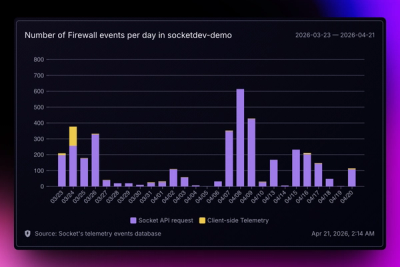
Introducing Reports: An Extensible Reporting Framework for Socket Data
Explore exportable charts for vulnerabilities, dependencies, and usage with Reports, Socket’s new extensible reporting framework.
By André Staltz - Apr 21, 2026
quickswap-sdk
Advanced tools
This repository has been forked from UniswapV2
To run the tests, follow these steps. You must have at least node v10 and yarn installed.
First clone the repository:
git clone https://github.com/QuickSwap/QuickSwap-sdk.git
Move into the quickswap-sdk working directory
cd QuickSwap-sdk/
Install dependencies
yarn install
Run tests
yarn test
You should see output like the following:
yarn run v1.22.4
$ tsdx test
 PASS  test/constants.test.ts
 PASS  test/pair.test.ts
 PASS  test/fraction.test.ts
 PASS  test/miscellaneous.test.ts
 PASS  test/entities.test.ts
 PASS  test/trade.test.ts

Test Suites: 1 skipped, 6 passed, 6 of 7 total
Tests:       3 skipped, 82 passed, 85 total
Snapshots:   0 total
Time:        5.091s
Ran all test suites.
✨  Done in 6.61s.
FAQs
🛠 An SDK for building applications on top of Quickswap.
The npm package quickswap-sdk receives a total of 236 weekly downloads. As such, quickswap-sdk popularity was classified as not popular.
We found that quickswap-sdk demonstrated a healthy version release cadence and project activity because the last version was released less than a year ago. It has 1 open source maintainer collaborating on the project.
Did you know?

Socket for GitHub automatically highlights issues in each pull request and monitors the health of all your open source dependencies. Discover the contents of your packages and block harmful activity before you install or update your dependencies.
Product
Explore exportable charts for vulnerabilities, dependencies, and usage with Reports, Socket’s new extensible reporting framework.
Product
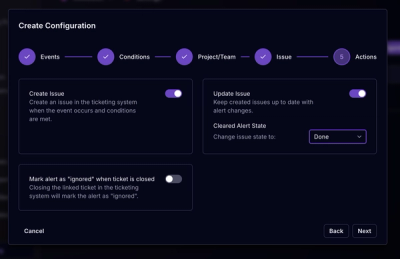
Socket for Jira lets teams turn alerts into Jira tickets with manual creation, automated ticketing rules, and two-way sync.

Company News
Socket won two 2026 Reppy Awards from RepVue, ranking in the top 5% of all sales orgs. AE Alexandra Lister shares what it's like to grow a sales career here.