Product
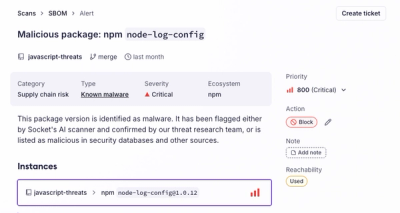
Introducing the Alert Details Page: A Better Way to Explore Alerts
Socket's new Alert Details page is designed to surface more context, with a clearer layout, reachability dependency chains, and structured review.
response.step
Advanced tools
response.step is a small plugin for root that adds a step function to the response
npm install response.step
response.step is useful is when nested async code needs to be flattened out a bit
var root = require('root');
var app = root();
app.use(require('response.step'));
app.get(function(request, response) {
response.step(
function(next) {
setTimeout(next, 300);
},
function(next) {
setTimeout(next, 500);
},
function() {
response.send('waiting approx 800ms!\n');
}
);
});
app.listen(8080);
response.step takes care of all our error handling for us.
app.get(function(request, response) {
response.step(
function(next) {
next(new Error('bad stuff'));
},
function() {
// i am never called
}
);
});
app.error(function(request, response) {
// all errors are forwarded to me
});
FAQs
flow control on for root
We found that response.step demonstrated a not healthy version release cadence and project activity because the last version was released a year ago. It has 1 open source maintainer collaborating on the project.
Did you know?

Socket for GitHub automatically highlights issues in each pull request and monitors the health of all your open source dependencies. Discover the contents of your packages and block harmful activity before you install or update your dependencies.

Product
Socket's new Alert Details page is designed to surface more context, with a clearer layout, reachability dependency chains, and structured review.

Product
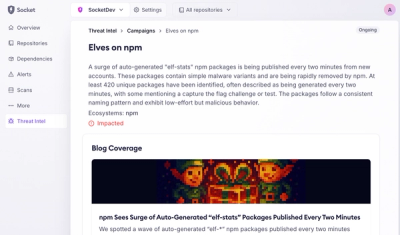
Campaign-level threat intelligence in Socket now shows when active supply chain attacks affect your repositories and packages.

Research
Malicious PyPI package sympy-dev targets SymPy users, a Python symbolic math library with 85 million monthly downloads.