

Product
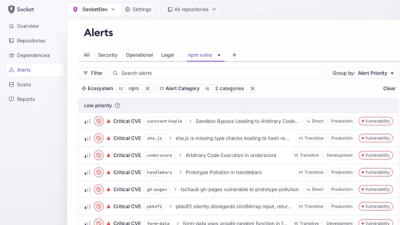
Introducing Custom Tabs for Org Alerts
Create and share saved alert views with custom tabs on the org alerts page, making it easier for teams to return to consistent, named filter sets.
By André Staltz - Jan 20, 2026
I was working on one of my JavaScript libraries and noticed I was doing something silly:
Karait (https://github.com/bcoe/karait)
exports.Queue = function(params, onQueueReady) {
if (typeof(params) === 'function') {
onQueueReady = params;
params = {};
}
var defaults = {
host: 'localhost',
port: 27017,
database: 'karait',
queue: 'messages',
averageMessageSize: 8192,
queueSize: 4096
};
extend(this, defaults, params);
}
There's a lot of ritual around dealing with optional arguments and default parameters!
I did a little digging, and found this problem was pretty widespread:
Node MongoDB Native (https://github.com/christkv/node-mongodb-native)
Collection.prototype.insertAll = function insertAll (docs, options, callback) {
  if('function' === typeof options) callback = options, options = {};
  if(options == null) options = {};
  if(!('function' === typeof callback)) callback = null;
  // ... Function body.
}
Express (https://github.com/visionmedia/express)
res.sendfile = function(path, options, fn){
  var self = this
    , req = self.req
    , next = this.req.next
    , options = options || {};

  // support function as second arg
  if ('function' == typeof options) {
    fn = options;
    options = {};
  }
  // ... Function body.
};
JSDom (https://github.com/tmpvar/jsdom)
exports.jQueryify = exports.jsdom.jQueryify = function (window /* path [optional], callback */) {
  var args = Array.prototype.slice.call(arguments),
      callback = (typeof(args[args.length - 1]) === 'function') && args.pop(),
      path,
      jQueryTag = window.document.createElement("script");

  if (args.length > 1 && typeof(args[1] === 'string')) {
    path = args[1];
  }
  // ... Function body.
}
sexy-args is DSL for:
sexy-args enforces sane defaults:
So,
exports.func = function(options, callback) {
    if (typeof(options) === 'function') {
        callback = options;
        options = {};
    }
	callback = callback || function() {};
	// ... Function body.
}
Becomes:
exports.func = function(options, callback) {
	sexy.args([this], function() {
	// ... Function body.
	});
}
Here's what those prior examples would look like if they were using sexy-args:
Karait
exports.Queue = function(params, onQueueReady) {
	sexy.args([this, ['object1', 'function1'], 'function1'], {
		object1: {
			host: 'localhost',
			port: 27017,
			database: 'karait',
			queue: 'messages',
			averageMessageSize: 8192,
			queueSize: 4096
		}
	}, function() {
		sexy.extend(this, params);
	});
}
Express
res.sendfile = function(path, options, fn){
	sexy.args([this, 'string1', ['object1', 'function1'], 'function1'], function() {
		var self = this,
			req = self.req,
			next = this.req.next;
  		// ... Function body.
	});
};
JSDom
exports.jQueryify = exports.jsdom.jQueryify = function (window, path, callback) {
	sexy.args([this, 'object1', ['string1', 'function1'], 'function1'], function() {
		var jQueryTag = window.document.createElement("script");
		// ... Function body.
	});
}
I think this is much cleaner, which is the goal of sexy-args. Why repeat ritualistic syntax over and over again.
To simplify your life, sexy.args exposes a shorthand for extending objects.
exports.foo = function(path, options, fn){
	sexy.args([this, 'string1', ['object1', 'function1'], 'function1'], function() {
		sexy.extend(this, options);
	});
};
The above code would extend an instance of foo with the options object.
Copyright (c) 2011 Attachments.me. See LICENSE.txt for further details.
FAQs
A sexy DSL for parsing the arguments passed into functions.
We found that sexy-args demonstrated a not healthy version release cadence and project activity because the last version was released a year ago. It has 1 open source maintainer collaborating on the project.
Did you know?

Socket for GitHub automatically highlights issues in each pull request and monitors the health of all your open source dependencies. Discover the contents of your packages and block harmful activity before you install or update your dependencies.
Product
Create and share saved alert views with custom tabs on the org alerts page, making it easier for teams to return to consistent, named filter sets.

Product
Socket’s Rust and Cargo support is now generally available, providing dependency analysis and supply chain visibility for Rust projects.

Security News
Chrome 144 introduces the Temporal API, a modern approach to date and time handling designed to fix long-standing issues with JavaScript’s Date object.