Thank you for using Shoebill.js:
Features:
* lightweight and modular authentication
* already setup encryption and sessions
* plugin and use different features such as local authentication, google authentication, facebook authentication, and more (coming soon) easily through a single command using our api
* lists routes for ease of use
To install run the following command:
* npm install shoebilljs -g
To initially setup your project:
* cd into_your_project
* npm init
* npm install express mongoose passport body-parser express-session ejs bcryptjs chalk
* shoebill start <entryfile.js> <~/the_absolute_path_of_your_local_repo>
* if all files (listed below) are not automatically generated, run the above command again
To add a social media authentication:
* steps above must be completed
* shoebill add <social_media> <~/the_absolute_path_of_your_local_repo> , for instance shoebill add facebook ~/tumblrclone (currently we only support google and facebook oauth)
* in your views/index.ejs add <% include ./partials/<social_media>signin.ejs %>, for instance <% include ./partials/facebooksignin.ejs %>
* in your entryfile, just before app.use(express.static('public')), write: app.use('/auth/<socialmedai>/',require('./routes/<socialmedia>.routes')); for instance app.use('/auth/facebook/',require('./routes/facebook.routes'));
Files that are created by shoebill start <entryfile.js> <~/the_absolute_path_of_your_local_repo>:
* Note: by running shoebill start you will overwrite any existing files by the below names
* model/user.model.js
* config/displayroutes.js - this file is used simply for viewing the available routes in the terminal
* routes/localuser.routes.js - this file is used for c.r.u.d functionalities for local users and to login
* views/index.ejs - this file is a template file for your homepage, including instructions to include premade signup or login partials in this homepage
* views/partials/signup.ejs - this file is a partial for a local signup form
* views/partials/signup.ejs - this file is a partial for a local login form
* views/profile.ejs - this file is a template file for your profile
* public/shoebill.css - this file is the styling linked in views/index.ejs
* ./<entryfile.js> - this file is created through the first parameter when you run shoebill start
* /routes/user.routes.js - this file contains the routes shared amongst all users, regardless of whether they were created locally or through oauth/passport
* ./key.js - this file contains the placeholder client_ids and secrets in the proper format, you must edit this file to use shoebill add <socialmedia>
API:
* shoebill start <entryfile> <absolute__local_project_path> | shoebill start app.js ~/tumblrclone
* shoebill add <socialmedia> <absolute__local_project_path> | shoebill add facebook ~/tumblrclone, shoebill add google ~/tumblrclone
Goals:
Example:
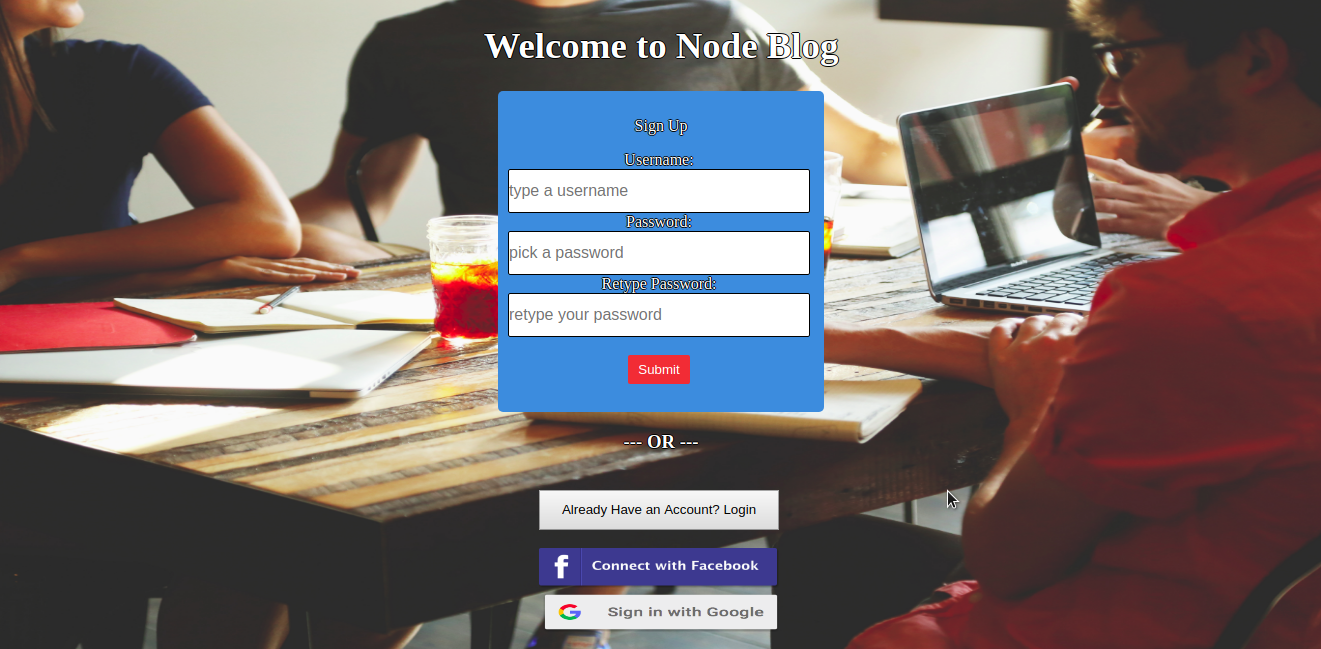
* Some notes on this example app:
* You can test it out by git cloning this repository, cd-ing into the repo, running npm install, and then node index.js
* This example app took me about an hour in total, linking the authentication was fairly simple and went without any issues, though I did have to comment out the fs.existsSync from the entrypoint file after I ran shoebill add google and shoebill add facebook. Other than that, it was very simple to use and basically just involved styling.





