

Product
Socket for Jira Is Now Available
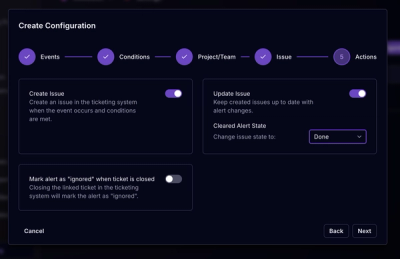
Socket for Jira lets teams turn alerts into Jira tickets with manual creation, automated ticketing rules, and two-way sync.
By Jeppe Hasseriis - Apr 20, 2026
spirit-express
Advanced tools
Wraps a Express (or Connect) middleware to make it compatible with spirit.
Wrapped Express (or Connect) middleware and spirit middleware can be used in conjunction with each other, it's not one or the other.
It is not meant to bring full Express API compatibility, but enough for most Express middleware to work, thus reducing extra overhead from Express API that normally are never used.


npm install spirit-express
const compat = require("spirit-express")
compat(express_middleware) // use anywhere that supports spirit middleware
For specific examples, see the examples dir
NOTE: it is almost always better to use a "native" spirit middleware over using this module to wrap a Express middleware (if one exists).
Note, this list is not exhaustive, but the following have been tested:
Express error handling middleware (err, req, res, next) are not supported on purpose. Instead handle errors the conventional way by using Promise catch. Note that next(err) is supported and will just throw the err.
This module wraps a Express middleware so it runs like a spirit middleware.
It also makes changes to how a request and response are handled.
The normal request object in spirit is copied over to the original req object from node (http.IncomingRequest).
This "req" object is what is passed to Express middleware and spirit middleware.
So the req object replaces the spirit request throughout once a Express middleware is used.
Note that the req does not support any Express related req API, which in most cases is not needed. Most Express middleware avoid using the Express req API so they can be compatible with Connect.
The res object passed to Express middleware is not a node res object. But instead, it's a object that mocks certain common properties and methods that exist on a node and Express res object.
In spirit, middleware flow once on input, and once on output (bidirectional). This is in contrast to the Express model where middleware only go one way. To make it compatible with the spirit model, all changes a Express middleware would normally do on the res object are stored and accumulated.
The stored changes will be set once by the first Express middleware that is encountered on flow back (which would be the last Express middleware, depending on how you think about it).
The above is only true when a Express middleware makes partial changes to the res object. If a Express middleware terminates (because of res.end or res.writeHead) then it would not continue moving forward, but instead immediately return a response.
The following Express methods are supported:
FAQs
use express middleware with spirit
We found that spirit-express demonstrated a not healthy version release cadence and project activity because the last version was released a year ago. It has 1 open source maintainer collaborating on the project.
Did you know?

Socket for GitHub automatically highlights issues in each pull request and monitors the health of all your open source dependencies. Discover the contents of your packages and block harmful activity before you install or update your dependencies.
Product
Socket for Jira lets teams turn alerts into Jira tickets with manual creation, automated ticketing rules, and two-way sync.

Company News
Socket won two 2026 Reppy Awards from RepVue, ranking in the top 5% of all sales orgs. AE Alexandra Lister shares what it's like to grow a sales career here.

Security News
NIST will stop enriching most CVEs under a new risk-based model, narrowing the NVD's scope as vulnerability submissions continue to surge.