

Product
Introducing Reports: An Extensible Reporting Framework for Socket Data
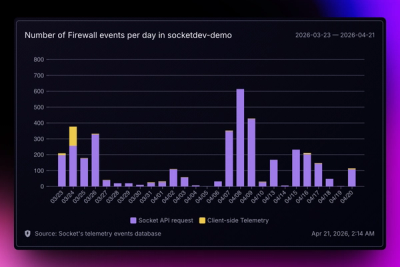
Explore exportable charts for vulnerabilities, dependencies, and usage with Reports, Socket’s new extensible reporting framework.
By André Staltz - Apr 21, 2026
Stafly is a state management tool for react
Let's start with a global state.
import { createStore } from "stafly";
const NameStore = createStore<string>();
const Ancenstor = props => {
const name = NameStore.useValue();
// rest component...
const Descendant = props => {
  const [name, setName] = useState("");

  NameStore.useSetValue(name);

  // rest component...
Done! We can get or set value from any component, either from up, down, or non-related components too
You might not need a global state is some cases (for example, if we use Ancestor component at several places), so sometimes we need to limit our flight. They say, sky is the limit, so let's wrap our Ancestor component
const Ancenstor = staflySky(NameStore)(props => {
  // rest component ...
});
That's it! Now we can render Ancenstor at multiple places and they will have separate states. No more singleton; however, keep in mind that if you use use stores in hierarchically higher places than components that are wrapped in sky, you will access global state there.
You can pass multiple stores to staflySky function.
You can use staflySky.memo instead of staflySky to memoize component, just as React.memo would do.
Sometimes we might not need to have an up-to-date value of the store, but just access it whenever needed. In this case, Ancestor will not rerender on every change of value.
const Ancenstor = staflySky.memo(NameStore)(props => {
  const getName = NameStore.useValueGetterFn();

  const onSubmit = () => {
    const name = getName();
    // rest logic
  }

  // rest component...
You can get setter function too
const Ancenstor = props => {
  const setName = NamesStore.useValueSetterFn();

  // rest component...
When creating stafly, you can pass default value too:
const NameStore = createStafly({
  defaultValue: ""
});
You can add reducers to move state change logic away from components
const NameStore = createStafly({
  defaultValue: ""
}).addReducers({
  reset: (state) => "",
  addSuffix: (state, suffix: string) => state + suffix
});


const Ancestor = props => {

  const handleReset = NameStore.useDispatcher("reset");
  const handleAddPrefix = NameStore.useDispatcher("addSuffix");

  const addDollarSign = () => handleAddPrefix("$");

  const cleanup = () => {
    handleReset();
    // rest code
  }
You can subscribe to value change.
const Ancestor = props => {
    NameStore.useSubscriber((newName) => {
      // perform operations
    });

    // alternatively, if you want to manually control subscription and unsubscription, then you can write:

    const subscribe = NameStore.useSubscriberFn();

    useEffect(() => {
      const unsubscribe = subscribe(() => {
        // perform operations
      });

      return unsubscribe; // for cleanup
    }, [subscribe]);

    // rest component...
If you are saving complex and/or fast changing data in the store, sometimes you might not want to have up-to-date information for optimization purposes. You can not only get data when needed, but also set data in the store when requested. For that, you can register setter on the store.
const Descendant = props => {
  const [name, setName] = useState("");
  const inputRef = useRef();

  NamesStore.useRegisterValueSetter(() => inputRef.current.value);

  return <input defaultValue="" ref={inputRef} />
In this case, you will no longer have up-to-date value in the store, but when requested by value getter function, registered setter function will be called and you will get newest data. The value in the store will be updated too.
For advanced uses, such as accessing and modifying global state outside components, persisting global state, using immer, collecting data from multiple places and more, please see the rest of the documentation here.
FAQs
Stafly is a state management tool for react
We found that stafly demonstrated a not healthy version release cadence and project activity because the last version was released a year ago. It has 1 open source maintainer collaborating on the project.
Did you know?

Socket for GitHub automatically highlights issues in each pull request and monitors the health of all your open source dependencies. Discover the contents of your packages and block harmful activity before you install or update your dependencies.
Product
Explore exportable charts for vulnerabilities, dependencies, and usage with Reports, Socket’s new extensible reporting framework.
Product
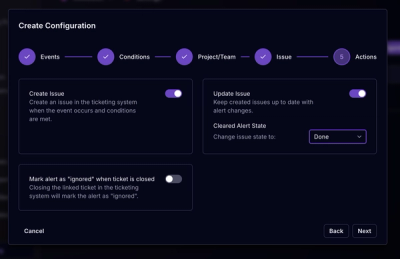
Socket for Jira lets teams turn alerts into Jira tickets with manual creation, automated ticketing rules, and two-way sync.
Company News
Socket won two 2026 Reppy Awards from RepVue, ranking in the top 5% of all sales orgs. AE Alexandra Lister shares what it's like to grow a sales career here.