

Product
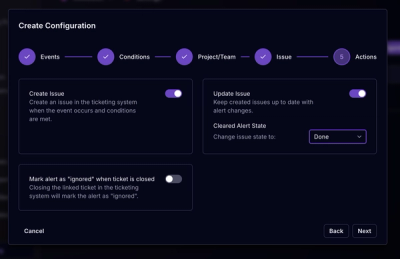
Socket for Jira Is Now Available
Socket for Jira lets teams turn alerts into Jira tickets with manual creation, automated ticketing rules, and two-way sync.
By Jeppe Hasseriis - Apr 20, 2026
tileserver-gl
Advanced tools
Map tile server for JSON GL styles - vector and server side generated raster tiles


Vector and raster maps with GL styles. Server-side rendering by MapLibre GL Native. Map tile server for MapLibre GL JS, Android, iOS, Leaflet, OpenLayers, GIS via WMTS, etc.
Download vector tiles from OpenMapTiles.
Make sure you have Node.js version 20 or above installed. Node 24 is recommended. (running node -v it should output something like v24.x.x). Running without docker requires Native dependencies to be installed first.
Install tileserver-gl with server-side raster rendering of vector tiles with npm.
npm install -g tileserver-gl
Once installed, you can use it like the following examples.
using a mbtiles file
wget https://github.com/maptiler/tileserver-gl/releases/download/v1.3.0/zurich_switzerland.mbtiles
tileserver-gl --file zurich_switzerland.mbtiles
[in your browser, visit http://[server ip]:8080]
using a config.json + style + mbtiles file
wget https://github.com/maptiler/tileserver-gl/releases/download/v1.3.0/test_data.zip
unzip test_data.zip
tileserver-gl
[in your browser, visit http://[server ip]:8080]
Alternatively, you can use the tileserver-gl-light npm package instead, which is pure javascript, does not have any native dependencies, and can run anywhere, but does not contain rasterization on the server side made with Maplibre GL Native.
An alternative to npm to start the packed software easier is to install Docker on your computer and then run from the tileserver-gl directory
Example using a mbtiles file
wget https://github.com/maptiler/tileserver-gl/releases/download/v1.3.0/zurich_switzerland.mbtiles
docker run --rm -it -v $(pwd):/data -p 8080:8080 maptiler/tileserver-gl:latest --file zurich_switzerland.mbtiles
[in your browser, visit http://[server ip]:8080]
Example using a config.json + style + mbtiles file
wget https://github.com/maptiler/tileserver-gl/releases/download/v1.3.0/test_data.zip
unzip test_data.zip
docker run --rm -it -v $(pwd):/data -p 8080:8080 maptiler/tileserver-gl:latest
[in your browser, visit http://[server ip]:8080]
Example using a different path
docker run --rm -it -v /your/local/config/path:/data -p 8080:8080 maptiler/tileserver-gl:latest
replace '/your/local/config/path' with the path to your config file
Alternatively, you can use the maptiler/tileserver-gl-light:latest docker image instead, which is pure javascript, does not have any native dependencies, and can run anywhere, but does not contain rasterization on the server side made with Maplibre GL Native.
Test from command line
wget https://github.com/maptiler/tileserver-gl/releases/download/v1.3.0/test_data.zip
unzip -q test_data.zip -d test_data
xvfb-run --server-args="-screen 0 1024x768x24" npm test
Run from command line
xvfb-run --server-args="-screen 0 1024x768x24" node .
You can read the full documentation of this project at https://tileserver.readthedocs.io/en/latest/.
When the server is started without --public_url, URLs in responses (WMTS, TileJSON, style JSON) are built from the request’s Host and X-Forwarded-* headers. If an attacker can influence these headers, the server may return URLs pointing to an attacker-controlled host (Host header poisoning). Clients that use those URLs can then be directed to malicious servers.
Recommended for production:
Set a canonical public URL so the server never derives host from the request:
tileserver-gl --public_url https://your-domain.com/ --file your.mbtiles
Or restrict which hosts are allowed when not using --public_url, via the allowed-hosts list (default is *, i.e. no restriction):
TILESERVER_GL_ALLOWED_HOSTS to a comma-separated list of allowed hostnames (e.g. localhost,myapp.example.com). If the request’s host (or X-Forwarded-Host) is not in this list, the server returns path-only URLs instead of absolute URLs, so responses cannot be poisoned with an attacker’s host.export TILESERVER_GL_ALLOWED_HOSTS="localhost,map.example.com"
tileserver-gl --file your.mbtiles
*), behavior is unchanged and all hosts are accepted; for public-facing deployments you should either use --public_url or set TILESERVER_GL_ALLOWED_HOSTS to your known host(s). See SECURITY.md for details.Discover MapTiler Server if you need a map server with easy setup and user-friendly interface.
FAQs
Map tile server for JSON GL styles - vector and server side generated raster tiles
The npm package tileserver-gl receives a total of 459 weekly downloads. As such, tileserver-gl popularity was classified as not popular.
We found that tileserver-gl demonstrated a healthy version release cadence and project activity because the last version was released less than a year ago. It has 11 open source maintainers collaborating on the project.
Did you know?

Socket for GitHub automatically highlights issues in each pull request and monitors the health of all your open source dependencies. Discover the contents of your packages and block harmful activity before you install or update your dependencies.
Product
Socket for Jira lets teams turn alerts into Jira tickets with manual creation, automated ticketing rules, and two-way sync.
Company News
Socket won two 2026 Reppy Awards from RepVue, ranking in the top 5% of all sales orgs. AE Alexandra Lister shares what it's like to grow a sales career here.

Security News
NIST will stop enriching most CVEs under a new risk-based model, narrowing the NVD's scope as vulnerability submissions continue to surge.