

Product
Introducing Reports: An Extensible Reporting Framework for Socket Data
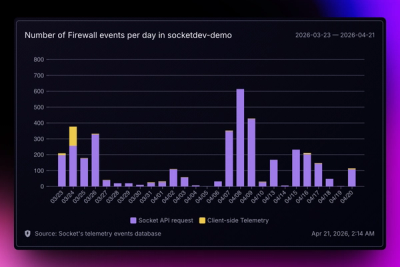
Explore exportable charts for vulnerabilities, dependencies, and usage with Reports, Socket’s new extensible reporting framework.
By André Staltz - Apr 21, 2026
verdaccio-aws-s3-storage
Advanced tools
AWS S3 + DynamoDB storage plugin for Verdaccio.
Uses S3 for package tarballs and metadata, and DynamoDB for the registry database (package list, secrets, tokens).
Built with AWS SDK for JavaScript v3.
package.json metadatapk (String)sk (String)The plugin requires the following IAM permissions:
S3:
s3:GetObjects3:PutObjects3:DeleteObjects3:DeleteObjects (for bulk deletes)s3:ListBucket / s3:ListObjectsV2s3:HeadObjectDynamoDB:
dynamodb:GetItemdynamodb:PutItemdynamodb:DeleteItemdynamodb:Querynpm install verdaccio-aws-s3-storage
Add to your Verdaccio config.yaml:
store:
  aws-s3-storage:
    bucket: your-s3-bucket
    keyPrefix: some-prefix # optional, nests all files under a subdirectory
    region: us-east-1 # optional, defaults to AWS SDK default
    endpoint: https://s3.us-east-1.amazonaws.com # optional
    s3ForcePathStyle: false # optional, required for MinIO/LocalStack
    tarballACL: private # optional, use 'public-read' for CDN (e.g. CloudFront)
    accessKeyId: your-key # optional, uses AWS credential chain if omitted
    secretAccessKey: your-secret # optional
    sessionToken: your-token # optional
    proxy: https://your-proxy # optional

    # DynamoDB (required)
    dynamoTableName: verdaccio-registry
    dynamoEndpoint: https://dynamodb.us-east-1.amazonaws.com # optional
    dynamoRegion: us-east-1 # optional, defaults to 'region'
Config values can reference environment variables by name. If the environment variable is set, its value is used; otherwise the literal string is used as-is.
store:
  aws-s3-storage:
    bucket: AWS_S3_BUCKET # uses $AWS_S3_BUCKET if set, otherwise literal "AWS_S3_BUCKET"
    keyPrefix: AWS_S3_KEY_PREFIX
    region: AWS_DEFAULT_REGION
    endpoint: AWS_S3_ENDPOINT
    accessKeyId: AWS_ACCESS_KEY_ID
    secretAccessKey: AWS_SECRET_ACCESS_KEY
    sessionToken: AWS_SESSION_TOKEN
    dynamoTableName: AWS_DYNAMO_TABLE_NAME
    dynamoEndpoint: AWS_DYNAMO_ENDPOINT
    dynamoRegion: AWS_DYNAMO_REGION
The following environment variables are used by the Docker image and the plugin when config values reference them:
| Variable | Required | Description |
|---|---|---|
AWS_S3_BUCKET | Yes | S3 bucket name for storing packages |
AWS_S3_KEY_PREFIX | No | Prefix (subdirectory) for all S3 keys. Default: none |
AWS_S3_ENDPOINT | No | Custom S3 endpoint URL. Required for LocalStack or MinIO. Omit for real AWS |
AWS_DEFAULT_REGION | No | AWS region for S3 and DynamoDB (if AWS_DYNAMO_REGION is not set). Default: SDK default |
| Variable | Required | Description |
|---|---|---|
AWS_DYNAMO_TABLE_NAME | Yes | DynamoDB table name (must have pk/sk key schema) |
AWS_DYNAMO_ENDPOINT | No | Custom DynamoDB endpoint URL. Required for LocalStack. Omit for real AWS |
AWS_DYNAMO_REGION | No | AWS region for DynamoDB. Falls back to AWS_DEFAULT_REGION |
| Variable | Required | Description |
|---|---|---|
AWS_ACCESS_KEY_ID | No | AWS access key. Omit to use IAM roles, instance profiles, or IRSA |
AWS_SECRET_ACCESS_KEY | No | AWS secret key. Required if AWS_ACCESS_KEY_ID is set |
AWS_SESSION_TOKEN | No | AWS session token for temporary credentials (STS) |
| Variable | Required | Description |
|---|---|---|
DEBUG | No | Enable debug output. Set to verdaccio:plugin* for all plugin namespaces |
Available debug namespaces:
verdaccio:plugin:aws-s3-storage:database — DynamoDB operations (add, remove, get, tokens, secret)verdaccio:plugin:aws-s3-storage:package — S3 package operations (read, write, create, delete, tarballs)verdaccio:plugin:aws-s3-storage:s3-client — S3 client initializationverdaccio:plugin:aws-s3-storage:dynamo-client — DynamoDB client initializationverdaccio:plugin:aws-s3-storage:delete-prefix — S3 prefix deletionverdaccio:plugin:aws-s3-storage:errors — AWS error conversionverdaccio:plugin:aws-s3-storage:config — config value resolution from env varspackages:
'@scope/*':
access: $all
publish: $all
storage: 'scoped' # stored under keyPrefix/scoped/@scope/pkg/
'**':
access: $all
publish: $all
proxy: npmjs
storage: 'public'
Set tarballACL: public-read to grant anonymous read access for CDN integration (e.g. Amazon CloudFront).
                   +-----------+
                   | Verdaccio |
                   +-----+-----+
                         |
            +------------+------------+
            |                         |
      S3Database               S3PackageManager
      (registry state)         (per-package storage)
            |                         |
       DynamoDB                      S3
   +-----------------+      +------------------+
   | pk=CONFIG       |      | pkg/package.json |
   | pk=PACKAGE      |      | pkg/tarball.tgz  |
   | pk=TOKEN#user   |      +------------------+
   +-----------------+
S3Database handles registry operations via DynamoDB:
add, remove, get)getSecret, setSecret)saveToken, deleteToken, readTokens)S3PackageManager handles per-package operations via S3:
readPackage, savePackage, createPackage, deletePackage)readTarball, writeTarball)Single-table design with partition key pk and sort key sk:
| pk | sk | Description |
|---|---|---|
CONFIG | SECRET | Registry secret key |
PACKAGE | {packageName} | Package entry |
TOKEN#{user} | {tokenKey} | Auth token |
See LOCAL_DEV.md for the full local development guide, including:
aws dynamodb create-table \
  --table-name verdaccio-registry \
  --attribute-definitions \
    AttributeName=pk,AttributeType=S \
    AttributeName=sk,AttributeType=S \
  --key-schema \
    AttributeName=pk,KeyType=HASH \
    AttributeName=sk,KeyType=RANGE \
  --billing-mode PAY_PER_REQUEST
resource "aws_dynamodb_table" "verdaccio" {
  name         = "verdaccio-registry"
  billing_mode = "PAY_PER_REQUEST"
  hash_key     = "pk"
  range_key    = "sk"

  attribute {
    name = "pk"
    type = "S"
  }

  attribute {
    name = "sk"
    type = "S"
  }
}
Resources:
  VerdaccioTable:
    Type: AWS::DynamoDB::Table
    Properties:
      TableName: verdaccio-registry
      BillingMode: PAY_PER_REQUEST
      AttributeDefinitions:
        - AttributeName: pk
          AttributeType: S
        - AttributeName: sk
          AttributeType: S
      KeySchema:
        - AttributeName: pk
          KeyType: HASH
        - AttributeName: sk
          KeyType: RANGE
The plugin is fully stateless and supports horizontal scaling. Run multiple Verdaccio instances behind a load balancer — all instances share the same S3 bucket and DynamoDB table.
MIT
FAQs
AWS S3 storage implementation for Verdaccio
The npm package verdaccio-aws-s3-storage receives a total of 2,884 weekly downloads. As such, verdaccio-aws-s3-storage popularity was classified as popular.
We found that verdaccio-aws-s3-storage demonstrated a healthy version release cadence and project activity because the last version was released less than a year ago. It has 2 open source maintainers collaborating on the project.
Did you know?

Socket for GitHub automatically highlights issues in each pull request and monitors the health of all your open source dependencies. Discover the contents of your packages and block harmful activity before you install or update your dependencies.
Product
Explore exportable charts for vulnerabilities, dependencies, and usage with Reports, Socket’s new extensible reporting framework.
Product
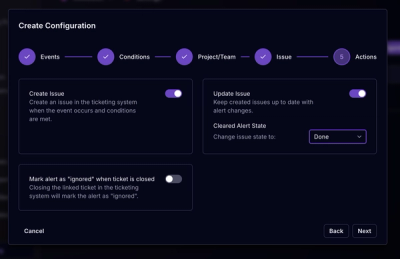
Socket for Jira lets teams turn alerts into Jira tickets with manual creation, automated ticketing rules, and two-way sync.
Company News
Socket won two 2026 Reppy Awards from RepVue, ranking in the top 5% of all sales orgs. AE Alexandra Lister shares what it's like to grow a sales career here.