

Product
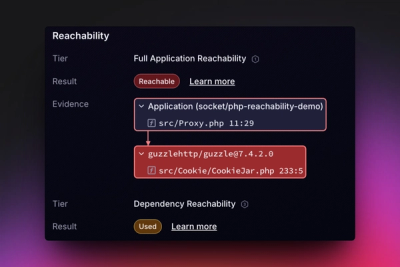
Introducing Reachability for PHP
Reachability analysis for PHP is now available in experimental, helping teams identify which vulnerabilities are actually exploitable.
By Benjamin Barslev - Apr 24, 2026
vite-plugin-esi
Advanced tools
Vite plugin to resolve ESI with [nodesi](https://www.npmjs.com/package/nodesi).
Vite plugin to resolve ESI with nodesi.
npm i -D vite-plugin-esi
yarn add -D vite-plugin-esi
pnpm add -D vite-plugin-esi
Use the required esi option to define ESI tags to be resolved. The keys of the object are the names of the html comments that will be replaced with the resolved ESI tags.
This plugin uses html comments to determine where the ESI tags (or resolved ESI tags) should be placed.
Comments must be in the following format:
<!--vite-plugin-esi name="somename" -->
// vite.config.ts
import { defineConfig } from 'vite'
import viteEsi from 'vite-plugin-esi'

export default defineConfig({
  plugins: [
    viteEsi({
        esi: {
            headFragments: [
                { src: "http://localhost:3000/esi/fragment1" },
                { src: "http://localhost:3000/esi/fragment2" }
            ]
        }
    })
  ]
})
<!-- index.html -->
<!DOCTYPE html>
<html lang="en">
<head>
    <meta charset="UTF-8">
    <title>ESI Demo</title>
    <!--vite-plugin-esi name="headFragments" -->
</head>
<body>
    ....
</body>
</html>
| name | type | optional | default | description |
|---|---|---|---|---|
| esiOptions | NodeEsiOptions | undefined | true | n/a | Passed to nodesi. |
| esi | { [name: string]: Tag[]; } | false | n/a | |
| resolveESI | boolean | undefined | true | true | If ESI tags should be resolved to html, or to keep them as-is in the final html. |
If your production server is responsible for resolving ESI tags, you can set the resolveESI option to false to keep the tags as-is in the final html.
// vite.config.ts
import { defineConfig } from 'vite'
import viteEsi from 'vite-plugin-esi'

export default defineConfig({
  plugins: [
    viteEsi({
        resolveESI: false,
        esi: {
            headFragments: [
                { src: "http://localhost:3000/esi/fragment1" },
                { src: "http://localhost:3000/esi/fragment2" }
            ]
        }
    })
  ]
})
<!-- index.html -->
<!DOCTYPE html>
<html lang="en">
<head>
    <meta charset="UTF-8">
    <title>ESI Demo</title>
    <!--vite-plugin-esi name="headFragments" -->
</head>
<body>
    ....
</body>
</html>
<!-- index.html (after build) -->
<!DOCTYPE html>
<html lang="en">
<head>
    <meta charset="UTF-8">
    <title>ESI Demo</title>
    <esi:include src="http://localhost:3000/esi/fragment1" onerror="abort"></esi:include>
    <esi:include src="http://localhost:3000/esi/fragment2" onerror="abort"></esi:include>
</head>
<body>
    ....
</body>
</html>
FAQs
Vite plugin to resolve ESI with [nodesi](https://www.npmjs.com/package/nodesi).
The npm package vite-plugin-esi receives a total of 759 weekly downloads. As such, vite-plugin-esi popularity was classified as not popular.
We found that vite-plugin-esi demonstrated a not healthy version release cadence and project activity because the last version was released a year ago. It has 1 open source maintainer collaborating on the project.
Did you know?

Socket for GitHub automatically highlights issues in each pull request and monitors the health of all your open source dependencies. Discover the contents of your packages and block harmful activity before you install or update your dependencies.
Product
Reachability analysis for PHP is now available in experimental, helping teams identify which vulnerabilities are actually exploitable.
Product
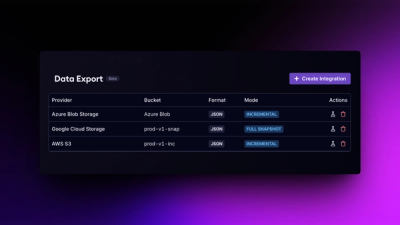
Export Socket alert data to your own cloud storage in JSON, CSV, or Parquet, with flexible snapshot or incremental delivery.
Research
/Security News
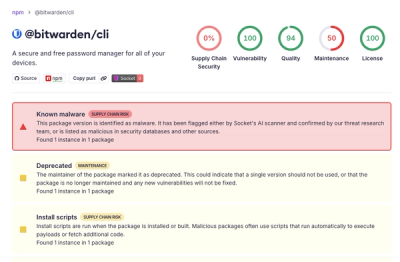
Bitwarden CLI 2026.4.0 was compromised in the Checkmarx supply chain campaign after attackers abused a GitHub Action in Bitwarden’s CI/CD pipeline.