

Security News
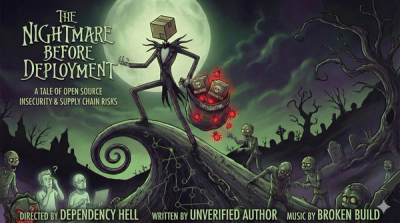
The Nightmare Before Deployment
Season’s greetings from Socket, and here’s to a calm end of year: clean dependencies, boring pipelines, no surprises.
By Ahmad Nassri - Dec 16, 2025
Jinja2
Advanced tools
Jinja is a fast, expressive, extensible templating engine. Special placeholders in the template allow writing code similar to Python syntax. Then the template is passed data to render the final document.
It includes:
Jinja's philosophy is that while application logic belongs in Python if possible, it shouldn't make the template designer's job difficult by restricting functionality too much.
{% extends "base.html" %}
{% block title %}Members{% endblock %}
{% block content %}
<ul>
{% for user in users %}
<li><a href="{{ user.url }}">{{ user.username }}</a></li>
{% endfor %}
</ul>
{% endblock %}
The Pallets organization develops and supports Jinja and other popular packages. In order to grow the community of contributors and users, and allow the maintainers to devote more time to the projects, please donate today.
See our detailed contributing documentation for many ways to contribute, including reporting issues, requesting features, asking or answering questions, and making PRs.
FAQs
A very fast and expressive template engine.
We found that Jinja2 demonstrated a healthy version release cadence and project activity because the last version was released less than a year ago. It has 0 open source maintainers collaborating on the project.
Did you know?

Socket for GitHub automatically highlights issues in each pull request and monitors the health of all your open source dependencies. Discover the contents of your packages and block harmful activity before you install or update your dependencies.
Security News
Season’s greetings from Socket, and here’s to a calm end of year: clean dependencies, boring pipelines, no surprises.

Research
/Security News
Impostor NuGet package Tracer.Fody.NLog typosquats Tracer.Fody and its author, using homoglyph tricks, and exfiltrates Stratis wallet JSON/passwords to a Russian IP address.

Security News
Deno 2.6 introduces deno audit with a new --socket flag that plugs directly into Socket to bring supply chain security checks into the Deno CLI.