


Product
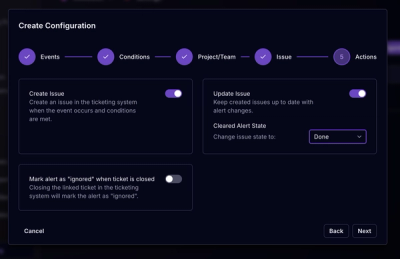
Socket for Jira Is Now Available
Socket for Jira lets teams turn alerts into Jira tickets with manual creation, automated ticketing rules, and two-way sync.
By Jeppe Hasseriis - Apr 20, 2026
NxTransit
Advanced tools

NxTransit is a Python library designed to build and analyze multimodal graphs of urban transit systems using General Transit Feed Specification (GTFS) data. This tool allows for detailed, time-sensitive analysis of public transit accesibility.
See the documentation for more information.
NxTransit integrates GTFS with OpenStreetMap (OSM) data to create a multimodal graph representing an urban transit system.
The package enables the detailed analysis of transit systems by incorporating time-dependent nature of public transportation. This includes:
NxTransit utilizes GTFS data, a common format for public transportation schedules and geographic information.
pip install nxtransit
Package is open source and licensed under the MIT license. OpenStreetMap's open data license requires that derivative works provide proper attribution. This package heavily depends on OSMnx by Geoff Boeing, which is also licensed under the MIT license.
FAQs
Construct and analyze time-dependent transit networks from GTFS data
We found that NxTransit demonstrated a healthy version release cadence and project activity because the last version was released less than a year ago. It has 1 open source maintainer collaborating on the project.
Did you know?

Socket for GitHub automatically highlights issues in each pull request and monitors the health of all your open source dependencies. Discover the contents of your packages and block harmful activity before you install or update your dependencies.
Product
Socket for Jira lets teams turn alerts into Jira tickets with manual creation, automated ticketing rules, and two-way sync.
Company News
Socket won two 2026 Reppy Awards from RepVue, ranking in the top 5% of all sales orgs. AE Alexandra Lister shares what it's like to grow a sales career here.

Security News
NIST will stop enriching most CVEs under a new risk-based model, narrowing the NVD's scope as vulnerability submissions continue to surge.