

Security News
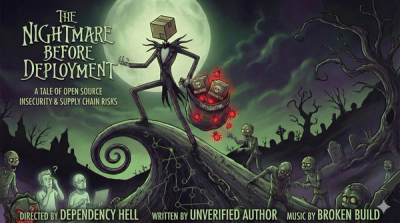
The Nightmare Before Deployment
Season’s greetings from Socket, and here’s to a calm end of year: clean dependencies, boring pipelines, no surprises.
By Ahmad Nassri - Dec 16, 2025
coverage-conditional-plugin
Advanced tools





Conditional coverage based on any rules you define!
Some projects have different parts that relies on different environments:
Current best practice is to use # pragma: no cover for this places in our project.
This project allows to use configurable pragmas
that include code to the coverage if some condition evaluates to true,
and fallback to ignoring this code when condition is false.
Read the announcing post.
pip install coverage-conditional-plugin
Then you will need to add to your setup.cfg or .coveragerc file
some extra configuration:
[coverage:run]
# Here we specify plugins for coverage to be used:
plugins =
  coverage_conditional_plugin

[coverage:coverage_conditional_plugin]
# Here we specify files to conditionally omit:
omit =
  "sys_platform == 'win32'":
      "my_project/omit*.py"
      "my_project/win.py"
# Here we specify our pragma rules:
rules =
  "sys_version_info >= (3, 8)": py-gte-38
  "is_installed('mypy')": has-mypy
Or to your pyproject.toml:
[tool.coverage.run]
# Here we specify plugins for coverage to be used:
plugins = ["coverage_conditional_plugin"]

[tool.coverage.coverage_conditional_plugin.omit]
# Here we specify files to conditionally omit:
"my_project/omit*.py" = "sys_platform == 'win32'"

[tool.coverage.coverage_conditional_plugin.rules]
# Here we specify our pragma rules:
py-gte-38 = "sys_version_info >= (3, 8)"
has-mypy = "is_installed('mypy')"
Adapt rules to suit your needs!
Imagine that we have this code:
try:  # pragma: has-django
    import django
except ImportError:  # pragma: has-no-django
    django = None

def run_if_django_is_installed():
    if django is not None:  # pragma: has-django
        ...
And here's the configuration you might use:
[coverage:coverage_conditional_plugin]
rules =
  "is_installed('django')": has-django
  "not is_installed('django')": has-no-django
When running tests with and without django installed
you will have 100% coverage in both cases.
But, different lines will be included.
With django installed it will include
both try: and if django is not None: conditions.
When running without django installed,
it will include except ImportError: line.
Format for pragma rules is:
"pragma-condition": pragma-name
Code inside "pragma-condition" is evaluted with eval.
Make sure that the input you pass there is trusted!
"pragma-condition" must return bool value after evaluation.
We support all environment markers specified in PEP-496. See Strings and Version Numbers sections for available values. Also, we provide a bunch of additional markers:
sys_version_info is the same as sys.version_infoos_environ is the same as os.environis_installed is our custom function that tries to import the passed string, returns bool valuepackage_version is our custom function that tries to get package version from pkg_resources and returns its parsed versionUse get_env_info to get values for the current environment:
from coverage_conditional_plugin import get_env_info

get_env_info()
Omits allow entire files to be conditionally omitted from coverage measurement.
The TOML format for omits is:
[tool.coverage.coverage_conditional_plugin.omit]
"pragma-condition" = ["project/prefix*.py", "project/filename.py"]
# or
"pragma-condition" = "project/filename.py"
Note: ini format is not supported for omit configuration option,
because there's no easy way to parse ini complex configuration.
PRs with the fix are welcome!
File name patterns should follow coverage.py's [run] omit syntax.
See coverage.py.
FAQs
Conditional coverage based on any rules you define!
We found that coverage-conditional-plugin demonstrated a healthy version release cadence and project activity because the last version was released less than a year ago. It has 1 open source maintainer collaborating on the project.
Did you know?

Socket for GitHub automatically highlights issues in each pull request and monitors the health of all your open source dependencies. Discover the contents of your packages and block harmful activity before you install or update your dependencies.
Security News
Season’s greetings from Socket, and here’s to a calm end of year: clean dependencies, boring pipelines, no surprises.

Research
/Security News
Impostor NuGet package Tracer.Fody.NLog typosquats Tracer.Fody and its author, using homoglyph tricks, and exfiltrates Stratis wallet JSON/passwords to a Russian IP address.

Security News
Deno 2.6 introduces deno audit with a new --socket flag that plugs directly into Socket to bring supply chain security checks into the Deno CLI.