.. image:: https://img.shields.io/pypi/v/django-nece.svg
:target: https://pypi.python.org/pypi/django-nece
.. image:: https://img.shields.io/pypi/pyversions/django-nece.svg
:target: https://pypi.python.org/pypi/django-nece/
IMPORTANT NOTICE
This is a fork of https://github.com/tatterdemalion/django-nece which is not maintained anymore.
The package name has been changed from nece to django-nece.
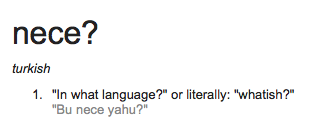
nece?
Introduction
.. figure:: https://raw.githubusercontent.com/polyconseil/django-nece/master/images/nece.png
:alt: nece
A “Content Translation Framework” using Postgresql’s jsonb field. It
simply sets and gets translations from a jsonb field called
translations.
Why?
You might ask why you should use django-nece since there are other, and
more mature content translation frameworks like `django-hvad`_ and
`django-modeltranslation`_. Both of them are good in some ways, worst in
others.

For instance, it is very hard for ``django-hvad`` users to get default
language if there is no corresponding translation for an object. And it
holds translated values in a different table, so every translation query
results in another hit to the database.

On the other hand ``django-modeltranslation`` adds multiple additional
fields for multiple languages. The number of fields inceases by the
number of languages you need to support. At the end it becomes a huge
chunk of an object if you need to add more than 20 languages.

``nece?`` more or less works like the latter one with an important
difference. It uses Postgresql’s new ``JSONB`` field to hold translation
information. And overrides the original one on query.

Dependencies
------------

::

    postgresql >= 9.4.5
    Django >= 2.2
    psycopg2 >= 2.5.4


Installation
------------

via pypi:
::
pip install django-nece
Usage
Lets say we have a model called Fruit:
::
from nece.models import TranslationModel

class Fruit(TranslationModel):
    name = CharField(max_length=255)

    def __str__(self):
        return self.name

    class Meta:
        translatable_fields = ('name',)
TranslationModel adds a jsonb field to this table and sets
translations in a notation like the one below:
::
{u'de_de': {u'name': u'Apfel'},
 u'tr_tr': {u'name': u'elma'}}
When we need the German translation we can simply choose the language
and get the attribute as usual:
::
>> f = Fruit.objects.get(name='apple')
>> print(f.name)
apple
>> f.language('de_de')
>> print(f.name)
Apfel
You can also filter out the ones containing any language translation:
::
>> Fruit.objects.all()
[<Fruit: apple>, <Fruit: pear>, <Fruit: banana>]
>> Fruit.objects.language('tr_tr')
[<Fruit: elma>, <Fruit: armut>]  # there is no translation for banana
>> Fruit.objects.language_or_default('tr_tr')
[<Fruit: elma>, <Fruit: armut>, <Fruit: banana>]
>> Fruit.objects.language('tr_tr').filter(name='elma')
[<Fruit: elma>]
>> Fruit.objects.language('tr_tr').get(name='elma')
<Fruit: elma>
Updating translations
::

    >> fruit._language_code
    tr_tr
    >> fruit.name
    elma
    >> fruit.translate(name='armut').save()
    >> fruit.name
    armut
    >> fruit.language('en')
    >> fruit.translate('it_it', name='pera')
    >> fruit.language('it_it')
    >> fruit.name
    pera

Settings
--------

TRANSLATIONS_DEFAULT
~~~~~~~~~~~~~~~~~~~~

Default language code. Default value: ```en_us```

TRANSLATIONS_MAP
~~~~~~~~~~~~~~~~

Shortcuts for ```languagecode_countrycode``` notation.

Example:

::

    TRANSLATIONS_MAP = {
        "en": "en_us",
        "tr": "tr_tr",
        "ar": "ar_sy",
        "bg": "bg_bg",
        "cs": "cs_cz",
        "da": "da_dk",
        ...
    }


Default:

::

    {'en': 'en_us'}


TRANSLATIONS_FALLBACK
Fallback language would be used if a translation is missing.
Example:
::
TRANSLATIONS_FALLBACK = {
    'fr_ca': ['fr_fr'],
    'en_us': ['en_gb'],
}
Admin panel
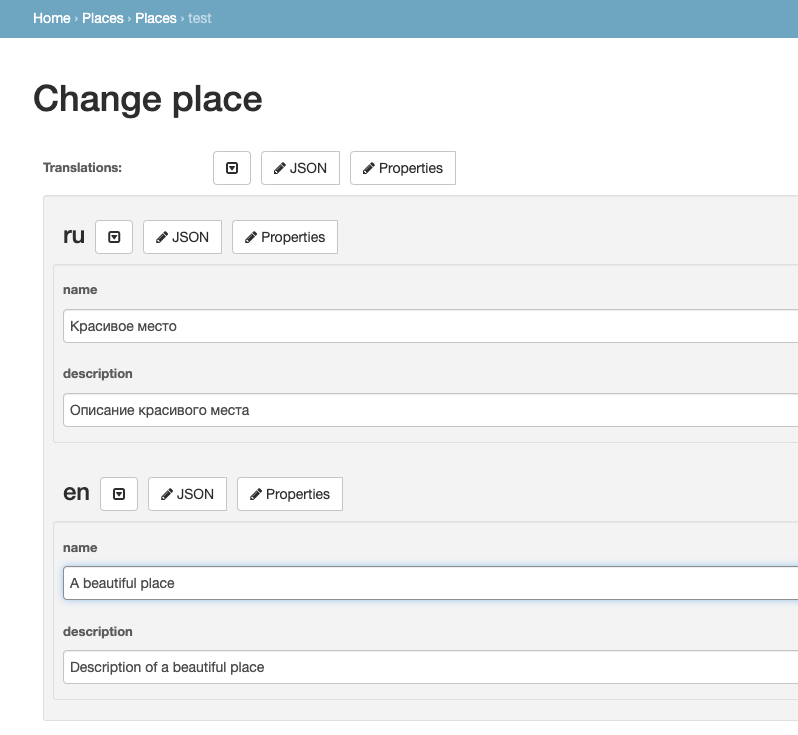
Use TranslatableModelAdmin for pretty JSON editor (powered by django-admin-json-editor_).
.. figure:: https://raw.githubusercontent.com/polyconseil/django-nece/master/images/admin.png
:alt: nece
Example:
.. code-block:: python
settings.py
INSTALLED_APPS = [
...
'django_admin_json_editor',
...
]
admin.py
from nece.admin import TranslatableModelAdmin
class PlaceAdmin(TranslatableModelAdmin):
list_display = ('...')
Contributors & Thanks
Erkan Ay_Ayman Khalil_Gönül Sabah_Faruk Rahmet_Mathieu Richardoz_Marc Hertzog_Alexey Kotenko_
Change Log_
.. _django-hvad: https://github.com/kristianoellegaard/django-hvad
.. _django-modeltranslation: https://github.com/deschler/django-modeltranslation
.. _Erkan Ay: https://github.com/erkanay
.. _Ayman Khalil: https://github.com/aymankh86
.. _Gönül Sabah: https://github.com/gonulsabah
.. _Faruk Rahmet: https://github.com/farukrahmet
.. _Mathieu Richardoz: https://github.com/metamatik
.. _Marc Hertzog: https://github.com/kemar
.. _Alexey Kotenko: https://github.com/k0t3n
.. _Change Log: https://github.com/polyconseil/django-nece/blob/master/CHANGELOG.md
.. _django-admin-json-editor: https://github.com/abogushov/django-admin-json-editor