

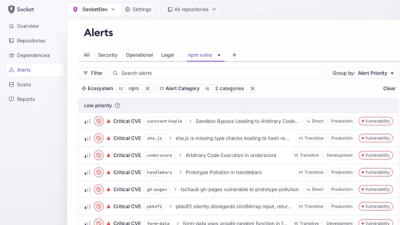
Product
Introducing Custom Tabs for Org Alerts
Create and share saved alert views with custom tabs on the org alerts page, making it easier for teams to return to consistent, named filter sets.
By André Staltz - Jan 20, 2026
geomanager
Advanced tools
Wagtail based Geospatial Data Manager and backend CMS for geomapviewer

Most national/regional institutions working in weather/climate/DRM sectors regularly produce and disseminate data and information that is Geo-referenced. This can range from forecast model outputs, earth observation data, stations observation, periodic bulletins and advisories and so on. Usually these are shared on their websites and social media pages in static formats, mostly as PNGs or PDFS.
This is an effort to develop an interactive system for managing and publishing Geo-referenced (GIS) datasets. As the institutions produce and share their products in static formats, they can also use packages like this, to make their data interactive.
The package is developed primarily for use by NMHSs at national levels, but can be adapted in other institutions or places that need to visualize their geospatial data.
All the raster and vector datasets uploaded must have time associated with each file.
For netCDF files with time dimension, time is automatically extracted from the file. For Geotiff, each uploaded file must be manually assigned time.
Data management and visualization
django-large-imagefeatures are availableMapViewer Management
Before installing this package, you should make sure you have GDAL installed in your system.
TIP: Installing GDAL can be notoriously difficult. You can use pre-built Python wheels with the GDAL binary bundled,
provided by KitWare, for easy installation in production linux environments.
To install GDAL using KitWare GDAL wheel, use:
pip install --find-links https://girder.github.io/large_image_wheels GDAL
Other required packages that you will need to install, if not installed already in your Wagtail Project
You can install the package using pip:
pip install geomanager
Install this version of wagtail-admin-sortable from Github. This has some updates to the original packages.
pip install https://github.com/wmo-raf/wagtail-admin-sortable/archive/33bf22f290e7a4210b44667e9ff56e4b35ad309e.zip
Make sure the following are all added to your INSTALLED_APPS in your Wagtail settings
INSTALLED_APPS = [
    ...

    "geomanager",
    "adminboundarymanager",
    "django_large_image",
    'django_json_widget',
    'django_nextjs',
    "django_filters",
    "wagtail_color_panel",
    "wagtail_adminsortable",
    "wagtailhumanitarianicons",
    "wagtailiconchooser",
    "django_extensions",
    "wagtailfontawesomesvg"
    "allauth",
    "allauth.account",
    "wagtailcache",
    "wagtail_modeladmin"

    "wagtail.contrib.settings",
    "rest_framework",
    "django.contrib.gis",

    ...
]
Run migrations
python manage.py migrate geomanager
Add the following to your project's urls.py
urlpatterns = [
    ...
    path("", include("geomanager.urls")),
    ...
]
Geomanager depends on the wagtail-cache package for caching requests. Please have a look at the wagtail-cache documentation for setup instructions
This package is the backend component to the frontend geomapviewer.
TODO
GeoManager is built with 💛 by Erick Otenyo.
Your support and feedback are valuable in maintaining and improving the package.



FAQs
Wagtail based Geospatial Data Manager
We found that geomanager demonstrated a healthy version release cadence and project activity because the last version was released less than a year ago. It has 1 open source maintainer collaborating on the project.
Did you know?

Socket for GitHub automatically highlights issues in each pull request and monitors the health of all your open source dependencies. Discover the contents of your packages and block harmful activity before you install or update your dependencies.
Product
Create and share saved alert views with custom tabs on the org alerts page, making it easier for teams to return to consistent, named filter sets.
Product
Socket’s Rust and Cargo support is now generally available, providing dependency analysis and supply chain visibility for Rust projects.

Security News
Chrome 144 introduces the Temporal API, a modern approach to date and time handling designed to fix long-standing issues with JavaScript’s Date object.