


Security News
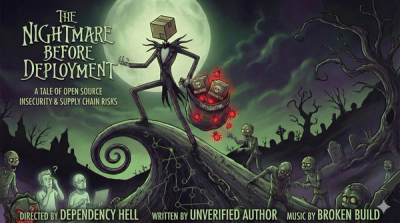
The Nightmare Before Deployment
Season’s greetings from Socket, and here’s to a calm end of year: clean dependencies, boring pipelines, no surprises.
By Ahmad Nassri - Dec 16, 2025
jedi-language-server
Advanced tools



A Python Language Server, with additional support for computational notebooks, powered by the latest version of Jedi.
Some frameworks, like coc-jedi and vscode-python, will install and manage jedi-language-server for you. If you're setting up manually, you can run the following from your command line (bash / zsh):
pip install -U jedi-language-server
Alternatively (and preferably), use pipx to keep jedi-language-server and its dependencies isolated from your other Python dependencies. Don't worry, jedi is smart enough to figure out which Virtual environment you're currently using!
The following instructions show how to use jedi-language-server with your development tooling. The instructions assume you have already installed jedi-language-server.
For Neovim, this project is supported out-of-the-box by Neovim's native LSP client through nvim-lspconfig. See here for an example configuration.
For Vim, here are some additional, actively maintained options:
Note: this list is non-exhaustive. If you know of a great choice not included in this list, please submit a PR!
Users may choose one of the following options:
Note: this list is non-exhaustive. If you know of a great choice not included in this list, please submit a PR!
Starting from the October 2021 release, set the python.languageServer setting to Jedi to use jedi-language-server.
See: https://github.com/pappasam/jedi-language-server/issues/50#issuecomment-781101169
jedi-language-server supports the following initializationOptions:
{
  "initializationOptions": {
    "codeAction": {
      "nameExtractVariable": "jls_extract_var",
      "nameExtractFunction": "jls_extract_def"
    },
    "completion": {
      "disableSnippets": false,
      "resolveEagerly": false,
      "ignorePatterns": []
    },
    "diagnostics": {
      "enable": false,
      "didOpen": true,
      "didChange": true,
      "didSave": true
    },
    "hover": {
      "enable": true,
      "disable": {
        "class": { "all": false, "names": [], "fullNames": [] },
        "function": { "all": false, "names": [], "fullNames": [] },
        "instance": { "all": false, "names": [], "fullNames": [] },
        "keyword": { "all": false, "names": [], "fullNames": [] },
        "module": { "all": false, "names": [], "fullNames": [] },
        "param": { "all": false, "names": [], "fullNames": [] },
        "path": { "all": false, "names": [], "fullNames": [] },
        "property": { "all": false, "names": [], "fullNames": [] },
        "statement": { "all": false, "names": [], "fullNames": [] }
      }
    },
    "jediSettings": {
      "autoImportModules": [],
      "caseInsensitiveCompletion": true,
      "debug": false
    },
    "markupKindPreferred": "markdown",
    "workspace": {
      "extraPaths": [],
      "environmentPath": "/path/to/venv/bin/python",
      "symbols": {
        "ignoreFolders": [".nox", ".tox", ".venv", "__pycache__", "venv"],
        "maxSymbols": 20
      }
    },
    "semanticTokens": {
      "enable": false
    }
  }
}
The different sections of the InitializationOptions are explained below, in detail. Section headers use a . to separate nested JSON-object keys.
The preferred MarkupKind for all jedi-language-server messages that take MarkupContent.
string"markdown", "plaintext"If omitted, jedi-language-server defaults to the client-preferred configuration. If there is no client-preferred configuration, jedi language server users "plaintext".
Modules that jedi will directly import without analyzing. Improves autocompletion but loses goto definition.
string[][]If you're noticing that modules like numpy and pandas are taking a super long time to load, and you value completions / signatures over goto definition, I recommend using this option like this:
{
  "jediSettings": {
    "autoImportModules": ["numpy", "pandas"]
  }
}
Completions are by default case-insensitive. Set to false to make completions case-sensitive.
booleantrue{
"jediSettings": {
"caseInsensitiveCompletion": false
}
}
Print jedi debugging messages to stderr.
booleanfalse{
"jediSettings": {
"debug": false
}
}
Function name generated by the 'extract_function' codeAction.
string"jls_extract_def"Variable name generated by the 'extract_variable' codeAction.
string"jls_extract_var"If your language client supports CompletionItem snippets but you don't like them, disable them by setting this option to true.
booleanfalseReturn all completion results in initial completion request. Set to true if your language client does not support completionItem/resolve.
booleanfalseA list of regular expressions. If any regular expression in ignorePatterns matches a completion's name, that completion item is not returned to the client.
string[][]In general, you should prefer the default value for this option. Jedi is good at filtering values for end users. That said, there are situations where IDE developers, or some programmers in some codebases, may want to filter some completions by name. This flexible interface is provided to accommodate these advanced use cases. If you have one of these advanced use cases, see below for some example patterns (and their corresponding regular expression).
| Matches | Non-Matches |
|---|---|
_hello, __world | __dunder__ |
Regular Expression:
^_{1,3}$|^_[^_].*$|^__.*(?<!__)$
| Matches | Non-Matches |
|---|---|
__world | _hello, __dunder__ |
Regular Expression:
^_{2,3}$|^__.*(?<!__)$
| Matches | Non-Matches |
|---|---|
__dunder__ | _hello, __world |
Regular Expression:
^__.*?__$
| Matches | Non-Matches |
|---|---|
_hello, __world, __dunder__ | regular |
Regular Expression:
^_.*$
Enables (or disables) diagnostics provided by Jedi.
booleantrueWhen diagnostics are enabled, run on document open
booleantrueWhen diagnostics are enabled, run on in-memory document change (e.g., while you're editing, without needing to save to disk)
booleantrueWhen diagnostics are enabled, run on document save (to disk)
booleantrueEnable (or disable) all hover text. If set to false, will cause the hover method not to be registered to the language server.
booleantrueThe following options are available under this prefix:
Disable all hover text of jedi-type specified.
boolfalseDisable hover text identified by name in list of jedi-type specified.
string[][]Disable hover text identified by the fully qualified name in list of jedi-type specified. If no fully qualified name can be found, jedi-language-server will default to the name to prevent any unexpected behavior for users (relevant for jedi types like keywords that don't have full names).
string[][]Add additional paths for Jedi's analysis. Useful with vendor directories, packages in a non-standard location, etc. You probably won't need to use this, but you'll be happy it's here when you need it!
string[][]Non-absolute paths are relative to your project root. For example, let's say your Python project is structured like this:
├── funky
│   └── haha.py
├── poetry.lock
├── pyproject.toml
├── test.py
Assume that funky/haha.py contains 1 line, x = 12, and your build system does some wizardry that makes haha importable just like os or pathlib. In this example, if you want to have this same non-standard behavior with jedi-language-server, put the following in your coc-settings.json:
{
  "workspace": {
    "extraPaths": ["funky"]
  }
}
When editing test.py, you'll get completions, goto definition, and all other lsp features for the line from haha import ....
Again, you probably don't need this.
The Python executable path, typically the path of a virtual environment.
stringIf omitted, defaults to the active Python environment.
Maximum number of symbols returned by a call to workspace/symbols.
number{
"workspace": {
"symbols": {
"maxSymbols": 20
}
}
}
A value less than or equal to zero removes the maximum and allows jedi-language-server to return all workplace symbols found by jedi.
Performance optimization that sets names of folders that are ignored for workspace/symbols.
string[][".nox", ".tox", ".venv", "__pycache__", "venv"]{
"workspace": {
"symbols": {
"ignoreFolders": ["hello", "world"]
}
}
}
If you manually set this option, it overrides the default. Setting it to an empty array will result in no ignored folders.
Improves highlighting by providing semantic token information. Disabled by default, because feature is broken and currently under development.
booleanfalseDiagnostics are provided by Python's built-in compile function.
If you would like additional diagnostics, we recommend using other tools (like diagnostic-language-server) to complement jedi-language-server.
Again, we recommend that you use diagnostic-language-server. It also supports code formatting.
jedi-language-server can be run directly from the command line.
$ jedi-language-server --help
usage: jedi-language-server [-h] [--version] [--tcp] [--ws] [--host HOST] [--port PORT] [--log-file LOG_FILE] [-v]
If testing sending requests over stdio manually from the command line, you must include Windows-style line endings: \r\n. For an example, from within this project, run the following:
$ jedi-language-server -v < ./example-initialization-request.txt
INFO:pygls.server:Starting IO server
...
If testing interactively, be sure to manually insert carriage returns. Although this may differ between shell environments, within most bash terminals, you can explicitly insert the required line endings by typing <C-v><C-m>, which will insert a ^M. See:
$ jedi-language-server 2>logs
Content-Length: 1062^M
^M
...
jedi-language-server aims to support Jedi's capabilities and expose them through the Language Server Protocol. It supports the following Language Server capabilities:
To build and run this project from source:
Install the following tools manually:
Fork this repository and clone the fork to your development machine:
git clone https://github.com/<YOUR-USERNAME>/jedi-language-server
cd jedi-language-server
make setup
make fix
make lint
make typecheck
make tests
Palantir's python-language-server inspired this project. In fact, for consistency's sake, many of python-language-server's CLI options are used as-is in jedi-language-server.
Unlike python-language-server, jedi-language-server:
FAQs
A language server for Jedi!
We found that jedi-language-server demonstrated a healthy version release cadence and project activity because the last version was released less than a year ago. It has 1 open source maintainer collaborating on the project.
Did you know?

Socket for GitHub automatically highlights issues in each pull request and monitors the health of all your open source dependencies. Discover the contents of your packages and block harmful activity before you install or update your dependencies.
Security News
Season’s greetings from Socket, and here’s to a calm end of year: clean dependencies, boring pipelines, no surprises.

Research
/Security News
Impostor NuGet package Tracer.Fody.NLog typosquats Tracer.Fody and its author, using homoglyph tricks, and exfiltrates Stratis wallet JSON/passwords to a Russian IP address.

Security News
Deno 2.6 introduces deno audit with a new --socket flag that plugs directly into Socket to bring supply chain security checks into the Deno CLI.