


Security News
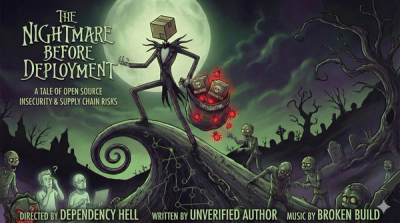
The Nightmare Before Deployment
Season’s greetings from Socket, and here’s to a calm end of year: clean dependencies, boring pipelines, no surprises.
By Ahmad Nassri - Dec 16, 2025
mutmut
Advanced tools
.. image:: https://github.com/boxed/mutmut/actions/workflows/tests.yml/badge.svg :target: https://github.com/boxed/mutmut/actions/workflows/tests.yml
.. image:: https://readthedocs.org/projects/mutmut/badge/?version=latest :target: https://mutmut.readthedocs.io/en/latest/?badge=latest :alt: Documentation Status
Mutmut is a mutation testing system for Python, with a strong focus on ease
of use. If you don't know what mutation testing is try starting with
this article <https://kodare.net/2016/12/01/mutmut-a-python-mutation-testing-system.html>_.
Some highlight features:
.. image:: browse_screenshot.png
If you want to mutate code outside of functions, you can try using mutmut 2, which has a different execution model than mutmut 3+.
Mutmut must be run on a system with fork support. This means that if you want
to run on windows, you must run inside WSL.
You can get started with a simple:
.. code-block:: console
pip install mutmut
mutmut run
This will by run pytest on tests in the "tests" or "test" folder and it will try to figure out where the code to mutate is.
You can stop the mutation run at any time and mutmut will restart where you left off. It will continue where it left off, and re-test functions that were modified since last run.
To work with the results, use mutmut browse where you can see the mutants,
retest them when you've updated your tests.
You can also write a mutant to disk from the browse interface, or via
mutmut apply <mutant>. You should REALLY have the file you mutate under
source code control and committed before you apply a mutant!
If during the installation you get an error for the libcst dependency mentioning the lack of a rust compiler on your system, it is because your architecture does not have a prebuilt binary for libcst and it requires both rustc and cargo from the rust toolchain to be built. This is known for at least the x86_64-darwin architecture.
Unix filename pattern matching style on mutants is supported. Example:
.. code-block:: console
mutmut run "my_module*"
mutmut run "my_module.my_function*"
In the browse TUI you can press f to retest a function, and m to retest
an entire module.
In setup.cfg in the root of your project you can configure mutmut if you need to:
.. code-block:: ini
[mutmut]
paths_to_mutate=src/
pytest_add_cli_args_test_selection=tests/
If you use pyproject.toml, you must specify the paths as array in a tool.mutmut section:
.. code-block:: toml
[tool.mutmut]
paths_to_mutate = [ "src/" ]
pytest_add_cli_args_test_selection= [ "tests/" ]
See below for more options for configuring mutmut.
"also copy" files
To run the full test suite some files are often needed above the tests and the
source. You can configure to copy extra files that you need by adding
directories and files to `also_copy` in your `setup.cfg`:

.. code-block:: ini

    also_copy=
        iommi/snapshots/
        conftest.py


Limit stack depth
In big code bases some functions are called incidentally by huge swaths of the codebase, but you really don't want tests that hit those executions to count for mutation testing purposes. Incidentally tested functions lead to slow mutation testing as hundreds of tests can be checked for things that should have clean and fast unit tests, and it leads to bad test suites as any introduced bug in those base functions will lead to many tests that fail which are hard to understand how they relate to the function with the change.
You can configure mutmut to only count a test as being relevant for a function
if the stack depth from the test to the function is below some limit. In your
setup.cfg add:
.. code-block:: ini
max_stack_depth=8
A lower value will increase mutation speed and lead to more localized tests, but will also lead to more surviving mutants that would otherwise have been caught.
Exclude files from mutation
You can exclude files from mutation in `setup.cfg`:

.. code-block::

    do_not_mutate=
        *__tests.py


Enable coverage.py filtering of lines to mutate
By default, mutmut will mutate only functions that are called. But, if you would like a finer grained (line-level) check for coverage, mutmut can use coverage.py to do that.
If you only want to mutate lines that are called (according to coverage.py), you can set
mutate_only_covered_lines to true in your configuration. The default value is false.
.. code-block::
mutate_only_covered_lines=true
Enable debug output (increase verbosity)
By default, mutmut "swallows" all the test output etc. so that you get a nice clean output.

If you want to see all the detail to aid with debugging, you can set `debug` to `true` in your configuration.
Note that not all displayed errors are necessarily bad. In particular test runs of the mutated code will lead
to failing tests.

.. code-block::

    debug=true


Whitelisting
~~~~~~~~~~~~

You can mark lines like this:

.. code-block:: python

    some_code_here()  # pragma: no mutate

to stop mutation on those lines. Some cases we've found where you need to
whitelist lines are:

- The version string on your library. You really shouldn't have a test for this :P
- Optimizing break instead of continue. The code runs fine when mutating break
  to continue, but it's slower.


Modifying pytest arguments
~~~~~~~~~~~~~~~~~~~~~~~~~~

You can add and override pytest arguments:

.. code-block:: python

    # for CLI args that select or deselect tests, use `pytest_add_cli_args_test_selection`
    pytest_add_cli_args_test_selection = ["-m", "not fail", "-k", "test_include"]

    # for other CLI args, use `pytest_add_cli_args`
    pytest_add_cli_args = ["-p", "no:some_plugin"] # disable a plugin
    pytest_add_cli_args = ["-o", "xfail_strict=False"] # overrides xfail_strict from your normal config

    # if you want to ignore the normal pytest configuration
    # you can specify a diferent pytest ini file to be used
    pytest_add_cli_args = ["-c", "mutmut_pytest.ini"]
    also_copy = ["mutmut_pytest.ini"]


Example mutations
-----------------

- Integer literals are changed by adding 1. So 0 becomes 1, 5 becomes 6, etc.
- `<` is changed to `<=`
- break is changed to continue and vice versa

In general the idea is that the mutations should be as subtle as possible.
See `node_mutation.py` for the full list and `test_mutation.py` for tests describing them.


Workflow
--------

This section describes how to work with mutmut to enhance your test suite.

1. Run mutmut with `mutmut run`. A full run is preferred but if you're just
   getting started you can exit in the middle and start working with what you
   have found so far.
2. Show the mutants with `mutmut browse`
3. Find a mutant you want to work on and write a test to try to kill it.
4. Press `r` to rerun the mutant and see if you successfully managed to kill it.

Mutmut keeps the data of what it has done and the mutants in the `mutants/`
directory.If  you want to make sure you run a full mutmut run you can delete
this directory to start from scratch.

Contributing to Mutmut
----------------------

If you wish to contribute to Mutmut, please see our `contributing guide <CONTRIBUTING.rst>`_.
FAQs
mutation testing for Python 3
We found that mutmut demonstrated a healthy version release cadence and project activity because the last version was released less than a year ago. It has 1 open source maintainer collaborating on the project.
Did you know?

Socket for GitHub automatically highlights issues in each pull request and monitors the health of all your open source dependencies. Discover the contents of your packages and block harmful activity before you install or update your dependencies.
Security News
Season’s greetings from Socket, and here’s to a calm end of year: clean dependencies, boring pipelines, no surprises.

Research
/Security News
Impostor NuGet package Tracer.Fody.NLog typosquats Tracer.Fody and its author, using homoglyph tricks, and exfiltrates Stratis wallet JSON/passwords to a Russian IP address.

Security News
Deno 2.6 introduces deno audit with a new --socket flag that plugs directly into Socket to bring supply chain security checks into the Deno CLI.