

Security News
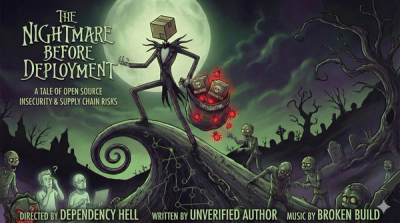
The Nightmare Before Deployment
Season’s greetings from Socket, and here’s to a calm end of year: clean dependencies, boring pipelines, no surprises.
By Ahmad Nassri - Dec 16, 2025
oapi
Advanced tools


oapi is a library for authoring python client libraries for web APIs
based on an OpenAPI specification (both
OpenAPI/Swagger version 2
and version 3
are supported).
oapi-generated packages/modules differ from those generated by other tools
(including but not limited to
swagger-codegen) in that
oapi generates a data model which enforces the schemas defined
in the OpenAPI specification. This means that request and response objects,
and their properties/items/members, cannot comprise data types which differ
from those specified in their OpenAPI document. Additionally, request and
response objects can be validated using sob.validate to verify that they
were not parsed from an object having attributes not defined in the
element's JSON schema, and have all required attributes. oapi
fully supports polymorphism when a schema has an "anyOf", "allOf", or
"oneOf" attribute (although oapi does not require a discriminator
to be defined).
Notable features of an oapi generated client/model library include:
oapi generated data models and clients are fully type-annotatedoapi generated data models and clients adhere to PEP-8 formattingoapi generated data models and clients include docstrings for all models,
model properties, client methods, and client method parameters, inferred
from "description" and "summary" attributes of elements within the
specificationoapi generated clients will handle the most common server-to-server
authentication methods out-of-box, including the OAuth2 authorization
code flow (client_id/client_secret), API keys, bearer tokens, HTTP basic
auth, and most cookie-based authentication patterns. Custom authentication
methods are also easily accomplished by specifying custom base classes
and/or passing initialization decorators to oapi.write_client_module.oapi generated clients and models are easily updated. For instance: oapi
generated data model classes can be renamed using your favorite IDE's
refactoring tools, and subsequent updates to that data model (such as
to reflect minor-version updates to the spec which add endpoints, schemas,
parameters, etc.) will retain your new class names, so long as the
schema from which the class was generated remains in the same location
within the spec. Class naming can also be customized by passing a custom
hook to the get_class_name_from_pointer parameter for
oapi.write_model_module.FAQs
A library for generating web API clients from OpenAPI documents
We found that oapi demonstrated a healthy version release cadence and project activity because the last version was released less than a year ago. It has 2 open source maintainers collaborating on the project.
Did you know?

Socket for GitHub automatically highlights issues in each pull request and monitors the health of all your open source dependencies. Discover the contents of your packages and block harmful activity before you install or update your dependencies.
Security News
Season’s greetings from Socket, and here’s to a calm end of year: clean dependencies, boring pipelines, no surprises.

Research
/Security News
Impostor NuGet package Tracer.Fody.NLog typosquats Tracer.Fody and its author, using homoglyph tricks, and exfiltrates Stratis wallet JSON/passwords to a Russian IP address.

Security News
Deno 2.6 introduces deno audit with a new --socket flag that plugs directly into Socket to bring supply chain security checks into the Deno CLI.