PyThaiNLP: Thai Natural Language Processing in Python










pythainlp.org
| Tutorials
| License info
| Model cards
| Adopters
| เอกสารภาษาไทย
Designed to be a Thai-focused counterpart to NLTK,
PyThaiNLP provides standard tools for linguistic analysis under
an Apache-2.0 license, with its data and models covered by CC0-1.0
and CC-BY-4.0.
pip install pythainlp
Features
-
Linguistic units: Sentence, word, and subword segmentation
(sent_tokenize, word_tokenize, subword_tokenize).
-
Tagging: Part-of-speech tagging (pos_tag).
-
Transliteration: Romanization (transliterate) and IPA conversion.
-
Correction: Spelling suggestion and correction (spell, correct).
-
Utilities: Soundex, collation, number-to-text (bahttext), datetime
formatting (thai_strftime), and keyboard layout correction.
-
Data: Built-in Thai character sets, word lists, and stop words.
-
CLI: Command-line interface via thainlp.
thainlp data catalog
thainlp help
Installation options
To install with specific extras (e.g., translate, wordnet, full):
pip install "pythainlp[extra1,extra2,...]"
Possible extras included:
compact — install a stable and small subset of dependencies (recommended)translate — machine translation supportwordnet — WordNet supportfull — install all optional dependencies (may introduce conflicts)
The documentation website maintains the
full list of extras.
To see the specific libraries included in each extra,
please inspect the [project.optional-dependencies] section of
pyproject.toml.
Environment variables
PYTHAINLP_DATA | Path to the data directory (default: ~/pythainlp-data). | Current |
PYTHAINLP_DATA_DIR | Legacy alias for PYTHAINLP_DATA. Emits a DeprecationWarning. Setting both raises ValueError. | Deprecated; use PYTHAINLP_DATA |
PYTHAINLP_OFFLINE | Set to 1 to disable automatic corpus downloads. Explicit download() calls still work. | Current |
PYTHAINLP_READ_ONLY | Set to 1 to enable read-only mode, which prevents implicit background writes to PyThaiNLP's internal data directory (corpus downloads, catalog updates, directory creation). Explicit user-initiated saves to user-specified paths are unaffected. | Current |
PYTHAINLP_READ_MODE | Legacy alias for PYTHAINLP_READ_ONLY. Emits a DeprecationWarning. Setting both raises ValueError. | Deprecated; use PYTHAINLP_READ_ONLY |
Data directory
PyThaiNLP downloads data (see the data catalog db.json at
pythainlp-corpus)
to ~/pythainlp-data by default.
Set the PYTHAINLP_DATA environment variable to override this location.
(PYTHAINLP_DATA_DIR is still accepted but deprecated.)
When using PyThaiNLP in distributed computing environments
(e.g., Apache Spark), set the PYTHAINLP_DATA environment variable
inside the function that will be distributed to worker nodes.
See details in
the documentation.
Offline mode
Set PYTHAINLP_OFFLINE=1 to disable automatic corpus downloads.
When this variable is set and a corpus is not already cached locally,
a FileNotFoundError is raised instead of attempting a network download.
Explicit calls to pythainlp.corpus.download() are unaffected.
Use pythainlp.is_offline_mode() to check the current state programmatically.
import pythainlp
print(pythainlp.is_offline_mode())
Read-only mode
Set PYTHAINLP_READ_ONLY=1 to prevent implicit background writes to PyThaiNLP's
internal data directory. This blocks corpus downloads, catalog updates, and
automatic data directory creation — writes that happen as side effects the user
may not be aware of.
Note: Read-only mode is more restrictive than offline mode.
PYTHAINLP_OFFLINE=1 blocks only automatic downloads triggered by
get_corpus_path(); explicit pythainlp.corpus.download() calls still work.
PYTHAINLP_READ_ONLY=1 also blocks explicit download() calls, because any
download requires writing to the data directory.
Use PYTHAINLP_READ_ONLY when the data directory is on a read-only file system
(e.g., a read-only Docker volume or a shared cluster mount).
Operations where the user explicitly specifies an output path are unaffected
(e.g., model.save("path"), tagger.train(..., save_loc="path"),
thainlp misspell --output myfile.txt).
Use pythainlp.is_read_only_mode() to check the current state programmatically.
import pythainlp
print(pythainlp.is_read_only_mode())
Testing
We test core functionalities on all officially supported Python versions.
See tests/README.md for test matrix and other details.
Contribute to PyThaiNLP
Please fork and create a pull request.
See CONTRIBUTING.md
for guidelines and algorithm references.
Citations
If you use PyThaiNLP library in your project,
please cite the software as follows:
Phatthiyaphaibun, Wannaphong, Korakot Chaovavanich, Charin Polpanumas,
Arthit Suriyawongkul, Lalita Lowphansirikul, and Pattarawat Chormai.
“PyThaiNLP: Thai Natural Language Processing in Python”.
Zenodo, 2 June 2024. https://doi.org/10.5281/zenodo.3519354.
with this BibTeX entry:
@software{pythainlp,
    title = "{P}y{T}hai{NLP}: {T}hai Natural Language Processing in {P}ython",
    author = "Phatthiyaphaibun, Wannaphong  and
      Chaovavanich, Korakot  and
      Polpanumas, Charin  and
      Suriyawongkul, Arthit  and
      Lowphansirikul, Lalita  and
      Chormai, Pattarawat",
    doi = {10.5281/zenodo.3519354},
    license = {Apache-2.0},
    month = jun,
    url = {https://github.com/PyThaiNLP/pythainlp/},
    version = {v5.0.4},
    year = {2024},
}
To cite our NLP-OSS 2023 academic paper,
please cite the paper as follows:
Wannaphong Phatthiyaphaibun, Korakot Chaovavanich, Charin Polpanumas,
Arthit Suriyawongkul, Lalita Lowphansirikul, Pattarawat Chormai,
Peerat Limkonchotiwat, Thanathip Suntorntip, and Can Udomcharoenchaikit.
2023.
PyThaiNLP: Thai Natural Language Processing in Python.
In Proceedings of the 3rd Workshop for Natural Language Processing
Open Source Software (NLP-OSS 2023),
pages 25–36, Singapore, Singapore.
Empirical Methods in Natural Language Processing.
with this BibTeX entry:
@inproceedings{phatthiyaphaibun-etal-2023-pythainlp,
    title = "{P}y{T}hai{NLP}: {T}hai Natural Language Processing in {P}ython",
    author = "Phatthiyaphaibun, Wannaphong  and
      Chaovavanich, Korakot  and
      Polpanumas, Charin  and
      Suriyawongkul, Arthit  and
      Lowphansirikul, Lalita  and
      Chormai, Pattarawat  and
      Limkonchotiwat, Peerat  and
      Suntorntip, Thanathip  and
      Udomcharoenchaikit, Can",
    editor = "Tan, Liling  and
      Milajevs, Dmitrijs  and
      Chauhan, Geeticka  and
      Gwinnup, Jeremy  and
      Rippeth, Elijah",
    booktitle = "Proceedings of the 3rd Workshop for Natural Language Processing Open Source Software (NLP-OSS 2023)",
    month = dec,
    year = "2023",
    address = "Singapore, Singapore",
    publisher = "Empirical Methods in Natural Language Processing",
    url = "https://aclanthology.org/2023.nlposs-1.4",
    pages = "25--36",
    abstract = "We present PyThaiNLP, a free and open-source natural language processing (NLP) library for Thai language implemented in Python. It provides a wide range of software, models, and datasets for Thai language. We first provide a brief historical context of tools for Thai language prior to the development of PyThaiNLP. We then outline the functionalities it provided as well as datasets and pre-trained language models. We later summarize its development milestones and discuss our experience during its development. We conclude by demonstrating how industrial and research communities utilize PyThaiNLP in their work. The library is freely available at https://github.com/pythainlp/pythainlp.",
}
See SPONSORS.md
Acknowledgements
PyThaiNLP was founded by Wannaphong Phatthiyaphaibun in 2016.
His contributions from 2021 were made during a PhD studentship supported by
Vidyasirimedhi Institute of Science and Technology (VISTEC).
The contributions of Arthit Suriyawongkul to PyThaiNLP
from November 2017 until August 2019 were funded by Wisesight.
His contributions from November 2019 until October 2024 were made during
a PhD studentship supported by
Taighde Éireann – Research Ireland
under Grant Number 18/CRT/6224
(Research Ireland Centre for Research Training in Digitally-Enhanced Reality
(d-real)).
The contributions of Pattarawat Chormai to PyThaiNLP from 2018 until 2019
were made during a research internship at the
Natural Language Processing Lab,
Department of Linguistics, Faculty of Arts,
Chulalongkorn University.
The contributions of Korakot Chaovavanich and Lalita Lowphansirikul
to PyThaiNLP from 2019 until 2022 were funded by the
VISTEC-depa Thailand AI Research Institute.
The Mac Mini M1 used for macOS testing was donated by MacStadium.
This hardware was essential for the project's testing suite from October 2022
to October 2023, filling a critical gap before GitHub Actions introduced
native support for Apple Silicon runners.
We have only one official repository at
https://github.com/PyThaiNLP/pythainlp
and another mirror at
https://gitlab.com/pythainlp/pythainlp.
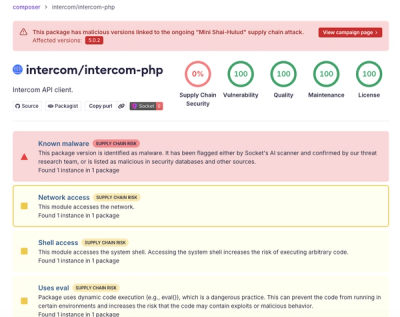
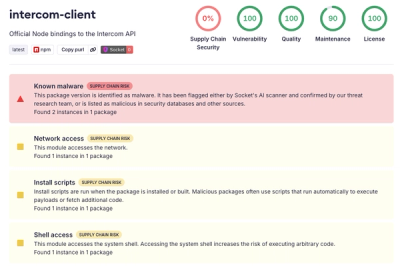
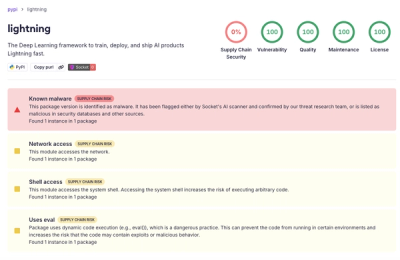
Beware of malware if you use code from places other than these two.
Made with ❤️ | PyThaiNLP Team 💻 | "We build Thai NLP" 🇹🇭