


Research
2025 Report: Destructive Malware in Open Source Packages
Destructive malware is rising across open source registries, using delays and kill switches to wipe code, break builds, and disrupt CI/CD.
By Kush Pandya - Dec 24, 2025
qtconsole
Advanced tools





A rich Qt-based console for working with Jupyter kernels, supporting rich media output, session export, and more.
The Qtconsole is a very lightweight application that largely feels like a terminal, but provides a number of enhancements only possible in a GUI, such as inline figures, proper multiline editing with syntax highlighting, graphical calltips, and more.
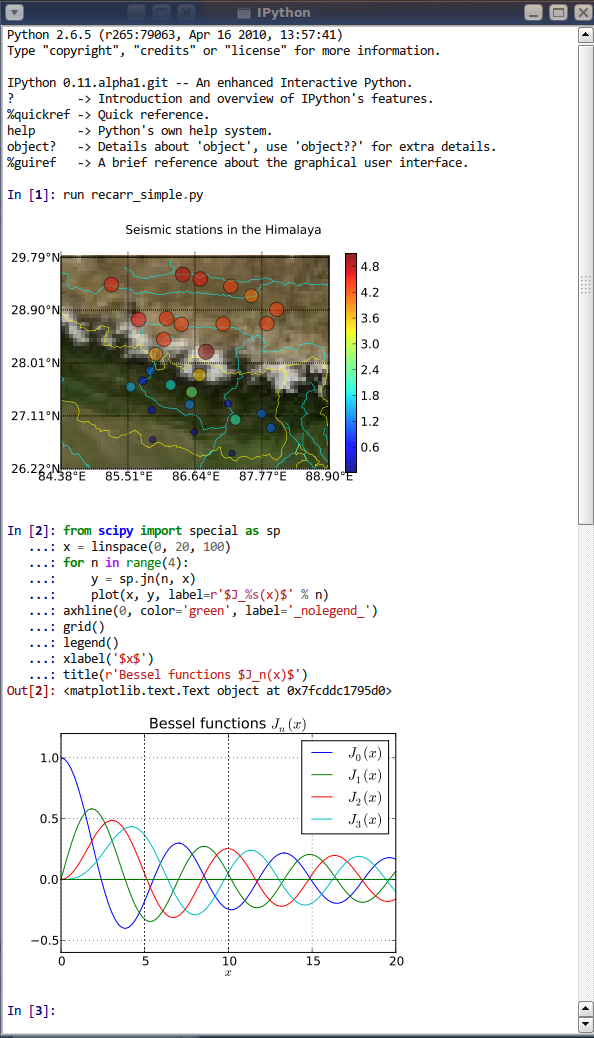
The Qtconsole requires Python bindings for Qt, such as PyQt6, PySide6, PyQt5 or PySide2.
Although pip and conda may be used to install the Qtconsole, conda is simpler to use since it automatically installs PyQt5. Alternatively, the Qtconsole installation with pip needs additional steps since pip doesn't install the Qt requirement.
To install:
conda install qtconsole
Note: If the Qtconsole is installed using conda, it will automatically install the Qt requirement as well.
To install:
pip install qtconsole
Note: Make sure that Qt is installed. Unfortunately, Qt is not installed when using pip. The next section gives instructions on doing it.
You can install PyQt5 with pip using the following command:
pip install pyqt5
or with a system package manager on Linux. For Windows, PyQt binary packages may be used.
Note: Additional information about using a system package manager may be found in the qtconsole documentation.
More installation instructions for PyQt can be found in the PyQt5 documentation and PyQt4 documentation
Source packages for Windows/Linux/MacOS can be found here: PyQt5 and PyQt4.
To run the Qtconsole:
jupyter qtconsole
FAQs
Jupyter Qt console
We found that qtconsole demonstrated a healthy version release cadence and project activity because the last version was released less than a year ago. It has 3 open source maintainers collaborating on the project.
Did you know?

Socket for GitHub automatically highlights issues in each pull request and monitors the health of all your open source dependencies. Discover the contents of your packages and block harmful activity before you install or update your dependencies.
Research
Destructive malware is rising across open source registries, using delays and kill switches to wipe code, break builds, and disrupt CI/CD.

Security News
Socket CTO Ahmad Nassri shares practical AI coding techniques, tools, and team workflows, plus what still feels noisy and why shipping remains human-led.

Research
/Security News
A five-month operation turned 27 npm packages into durable hosting for browser-run lures that mimic document-sharing portals and Microsoft sign-in, targeting 25 organizations across manufacturing, industrial automation, plastics, and healthcare for credential theft.