

Security News
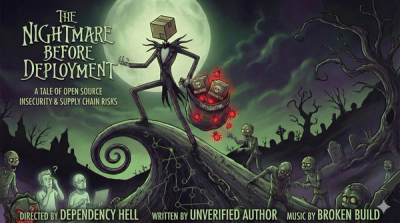
The Nightmare Before Deployment
Season’s greetings from Socket, and here’s to a calm end of year: clean dependencies, boring pipelines, no surprises.
By Ahmad Nassri - Dec 16, 2025
selectools
Advanced tools
Build AI agents that call your custom Python functions. Connect LLMs to tools, APIs, and databases with any provider (OpenAI, Anthropic, Gemini, Ollama).



Build AI agents that can call your custom Python functions and search your knowledge bases. Selectools is a production-ready framework that combines tool calling with RAG (Retrieval-Augmented Generation) to create powerful, context-aware AI agents. Connect LLMs (OpenAI, Anthropic, Gemini, Ollama) to your tools, embed and search your documents, and let the AI retrieve relevant information before answering. Works with any provider, includes 4 vector stores, supports 4 embedding providers, and tracks costs automatically.
Unlike other tool-calling libraries that lock you into a single provider's API, this library provides a unified interface across OpenAI, Anthropic, Gemini, and local providers. Switch providers with a single line change—no refactoring required. Your tool definitions remain identical regardless of the backend.
Built for real-world reliability:
@tool decorator with automatic schema inference from Python type hintsToolRegistry for organizing and discovering toolsSELECTOOLS_BBOX_MOCK_JSON)Built-in Retrieval-Augmented Generation with production-ready components:
RAGAgent.from_directory()Not a framework that takes over your application—a library that integrates into your existing code. Use as much or as little as you need. No magic globals, no hidden state, no framework lock-in.
# Core package (includes NumPy for basic RAG)
pip install selectools

# With all RAG features (ChromaDB, Pinecone, Voyage, Cohere, PyPDF)
pip install selectools[rag]

# With optional provider dependencies
pip install selectools[providers]  # Includes Anthropic and Gemini

# Everything (recommended for full features)
pip install selectools[rag,providers]
git clone https://github.com/johnnichev/selectools.git
cd selectools
python3 -m venv .venv
source .venv/bin/activate
pip install -e .
# or: pip install -r requirements.txt
from selectools import OpenAIProvider
from selectools.embeddings import OpenAIEmbeddingProvider
from selectools.models import OpenAI
from selectools.rag import RAGAgent, VectorStore

# 1. Set up embedding and vector store
embedder = OpenAIEmbeddingProvider(model=OpenAI.Embeddings.TEXT_EMBEDDING_3_SMALL.id)
vector_store = VectorStore.create("memory", embedder=embedder)

# 2. Create RAG agent from your documents
agent = RAGAgent.from_directory(
    directory="./docs",  # Your knowledge base
    provider=OpenAIProvider(default_model=OpenAI.GPT_4O_MINI.id),
    vector_store=vector_store,
    chunk_size=500,
    top_k=3
)

# 3. Ask questions
response = agent.run("What are the main features?")
print(response)

# 4. Check costs
print(agent.get_usage())  # Includes LLM + embedding costs
That's it! Your AI agent now searches your documents before answering.
export OPENAI_API_KEY="your-api-key-here"
export ANTHROPIC_API_KEY="your-api-key-here"  # Optional
export GEMINI_API_KEY="your-api-key-here"     # Optional
from selectools import Agent, AgentConfig, Message, Role, Tool, ToolParameter
from selectools.providers.openai_provider import OpenAIProvider

# Define a tool
search_tool = Tool(
    name="search",
    description="Search the web",
    parameters=[ToolParameter(name="query", param_type=str, description="query")],
    function=lambda query: f"Results for {query}",
)

# Use typed model constants for autocomplete
from selectools.models import OpenAI
provider = OpenAIProvider(default_model=OpenAI.GPT_4O.id)
agent = Agent(tools=[search_tool], provider=provider, config=AgentConfig(max_iterations=4))
response = agent.run([Message(role=Role.USER, content="Search for Backtrack")])
print(response.content)
Tool or @tool/ToolRegistry), pick a provider, run Agent.run([...]).image_path on Message when the provider supports it.SELECTOOLS_BBOX_MOCK_JSON=tests/fixtures/bbox_mock.json.scripts/smoke_cli.py for quick provider smokes; scripts/chat.py for the vision demo.image_url (e.g., gpt-4o); request timeout default 30s; retries/backoff via AgentConfig.ANTHROPIC_API_KEY.GEMINI_API_KEY.rate limit/429 and backs off + retries.AgentConfig.request_timeout (provider) and tool_timeout_seconds (per tool).model, temperature, max_tokens, max_iterations.max_retries, retry_backoff_seconds, rate-limit backoff, request_timeout.tool_timeout_seconds to bound tool runtime.stream=True to stream provider deltas; optional stream_handler callback.enable_analytics=True to track tool usage metrics, success rates, and performance.hooks dict for lifecycle callbacks (on_tool_start, on_llm_end, etc.).Use typed model constants for IDE autocomplete and type safety:
from selectools import Agent, OpenAIProvider
from selectools.models import OpenAI, Anthropic, Gemini, Ollama

# IDE suggests all available models when you type OpenAI.
provider = OpenAIProvider(default_model=OpenAI.GPT_4O_MINI.id)

# Or use in AgentConfig
agent = Agent(
    tools=[...],
    provider=provider,
    config=AgentConfig(model=OpenAI.GPT_4O.id)
)

# Access model metadata
model_info = OpenAI.GPT_4O
print(f"Cost: ${model_info.prompt_cost}/${model_info.completion_cost} per 1M tokens")
print(f"Context: {model_info.context_window:,} tokens")
print(f"Max output: {model_info.max_tokens:,} tokens")
Available model classes:
OpenAI - 65 models (GPT-5, GPT-4o, o-series, GPT-4, GPT-3.5, etc.)Anthropic - 18 models (Claude 4.5, 4.1, 4, 3.7, 3.5, 3)Gemini - 26 models (Gemini 3, 2.5, 2.0, 1.5, 1.0, Gemma)Ollama - 13 models (Llama, Mistral, Phi, etc.)All 120 models include pricing, context windows, and max token metadata. See selectools.models for the complete registry.
New in v0.7.0: Model registry with IDE autocomplete for 120 models! Coming in v0.8.0: Embedding models and RAG support
The simplest possible tool—great for testing your setup:
from selectools import Agent, AgentConfig, Message, Role, tool
from selectools.providers.openai_provider import OpenAIProvider

@tool(description="Echo input back to user")
def echo(text: str) -> str:
    return text

agent = Agent(tools=[echo], provider=OpenAIProvider(), config=AgentConfig(max_iterations=3))
resp = agent.run([Message(role=Role.USER, content="Hello, world!")])
print(resp.content)
Build a customer support agent that can search a knowledge base, check order status, and create tickets:
from selectools import Agent, AgentConfig, Message, Role, ToolRegistry
from selectools.providers.openai_provider import OpenAIProvider
import json

registry = ToolRegistry()

@registry.tool(description="Search the knowledge base for help articles")
def search_kb(query: str, max_results: int = 5) -> str:
    # Your knowledge base search logic here
    results = [
        {"title": "How to reset password", "url": "https://help.example.com/reset"},
        {"title": "Shipping information", "url": "https://help.example.com/shipping"}
    ]
    return json.dumps(results)

@registry.tool(description="Look up order status by order ID")
def check_order(order_id: str) -> str:
    # Your order lookup logic here
    return json.dumps({
        "order_id": order_id,
        "status": "shipped",
        "tracking": "1Z999AA10123456784",
        "estimated_delivery": "2025-12-10"
    })

@registry.tool(description="Create a support ticket")
def create_ticket(customer_email: str, subject: str, description: str, priority: str = "normal") -> str:
    # Your ticketing system integration here
    ticket_id = "TKT-12345"
    return json.dumps({
        "ticket_id": ticket_id,
        "status": "created",
        "message": f"Ticket {ticket_id} created successfully"
    })

from selectools.models import OpenAI

agent = Agent(
    tools=registry.all(),
    provider=OpenAIProvider(default_model=OpenAI.GPT_4O.id),
    config=AgentConfig(max_iterations=5, temperature=0.7)
)

# Customer inquiry
response = agent.run([
    Message(role=Role.USER, content="Hi, I ordered something last week (order #12345) and haven't received it yet. Can you help?")
])
print(response.content)
Detect and annotate objects in images using OpenAI Vision:
from selectools import Agent, AgentConfig, Message, Role
from selectools.examples.bbox import create_bounding_box_tool
from selectools.providers.openai_provider import OpenAIProvider

bbox_tool = create_bounding_box_tool()
from selectools.models import OpenAI

agent = Agent(
    tools=[bbox_tool],
    provider=OpenAIProvider(default_model=OpenAI.GPT_4O.id),
    config=AgentConfig(max_iterations=5)
)

# Analyze an image and find specific objects
response = agent.run([
    Message(
        role=Role.USER,
        content="Find the laptop in this image and draw a bounding box around it",
        image_path="assets/office_desk.jpg"
    )
])
print(response.content)
# Output: Detected laptop; output saved to assets/office_desk_with_bbox.png
Chain multiple tools to research a topic, summarize findings, and save results:
from selectools import Agent, AgentConfig, Message, Role, tool
from selectools.providers.openai_provider import OpenAIProvider
import json

@tool(description="Search academic papers and articles")
def search_papers(query: str, year_from: int = 2020) -> str:
    # Your search API integration (e.g., Semantic Scholar, arXiv)
    papers = [
        {"title": "Attention Is All You Need", "authors": "Vaswani et al.", "year": 2017},
        {"title": "BERT: Pre-training of Deep Bidirectional Transformers", "authors": "Devlin et al.", "year": 2018}
    ]
    return json.dumps(papers)

@tool(description="Extract key insights from text")
def extract_insights(text: str, num_insights: int = 5) -> str:
    # Your summarization logic
    insights = [
        "Transformers use self-attention mechanisms",
        "BERT uses bidirectional training",
        "Pre-training on large corpora improves performance"
    ]
    return json.dumps(insights)

@tool(description="Save research findings to a file")
def save_findings(filename: str, content: str) -> str:
    with open(filename, 'w') as f:
        f.write(content)
    return f"Saved findings to {filename}"

from selectools.models import OpenAI

agent = Agent(
    tools=[search_papers, extract_insights, save_findings],
    provider=OpenAIProvider(default_model=OpenAI.GPT_4O.id),
    config=AgentConfig(max_iterations=8, temperature=0.3)
)

response = agent.run([
    Message(role=Role.USER, content="Research transformer architectures, extract key insights, and save to research_notes.txt")
])
print(response.content)
Build responsive UIs with streaming responses:
from selectools import Agent, AgentConfig, Message, Role, tool
from selectools.providers.openai_provider import OpenAIProvider
import sys

@tool(description="Get current time in a timezone")
def get_time(timezone: str = "UTC") -> str:
    from datetime import datetime
    import pytz
    tz = pytz.timezone(timezone)
    return datetime.now(tz).strftime("%Y-%m-%d %H:%M:%S %Z")

def stream_to_console(chunk: str):
    """Print chunks as they arrive for responsive UX"""
    print(chunk, end='', flush=True)

from selectools.models import OpenAI

agent = Agent(
    tools=[get_time],
    provider=OpenAIProvider(default_model=OpenAI.GPT_4O.id),
    config=AgentConfig(stream=True, max_iterations=3)
)

response = agent.run(
    [Message(role=Role.USER, content="What time is it in Tokyo and New York?")],
    stream_handler=stream_to_console
)
print("\n")  # Newline after streaming completes
Keep sensitive credentials out of tool signatures using injected_kwargs:
from selectools import Agent, AgentConfig, Message, Role, Tool
from selectools.tools import ToolParameter
from selectools.providers.openai_provider import OpenAIProvider
import psycopg2

def query_database(sql: str, db_connection) -> str:
    """
    Execute a SQL query. The db_connection is injected, not exposed to the LLM.
    """
    with db_connection.cursor() as cursor:
        cursor.execute(sql)
        results = cursor.fetchall()
    return str(results)

# Create connection (not exposed to LLM)
db_conn = psycopg2.connect(
    host="localhost",
    database="myapp",
    user="readonly_user",
    password="secret"
)

# Tool only exposes 'sql' parameter to LLM
db_tool = Tool(
    name="query_db",
    description="Execute a read-only SQL query against the database",
    parameters=[
        ToolParameter(name="sql", param_type=str, description="SQL SELECT query to execute")
    ],
    function=query_database,
    injected_kwargs={"db_connection": db_conn}  # Injected at runtime
)

agent = Agent(
    tools=[db_tool],
    provider=OpenAIProvider(),
    config=AgentConfig(max_iterations=3)
)

response = agent.run([
    Message(role=Role.USER, content="How many users signed up last week?")
])
print(response.content)
Develop and test without API calls using the Local provider:
from selectools import Agent, AgentConfig, Message, Role, tool
from selectools.providers.stubs import LocalProvider

@tool(description="Format a todo item with priority")
def create_todo(task: str, priority: str = "medium", due_date: str = None) -> str:
    result = f"[{priority.upper()}] {task}"
    if due_date:
        result += f" (due: {due_date})"
    return result

agent = Agent(
    tools=[create_todo],
    provider=LocalProvider(),  # No network calls, no API costs
    config=AgentConfig(max_iterations=2, model="local")
)

response = agent.run([
    Message(role=Role.USER, content="Add 'finish project report' to my todos with high priority")
])
print(response.content)
Switch between providers without changing your tool definitions:
from selectools import Agent, AgentConfig, Message, Role, tool
from selectools.providers.openai_provider import OpenAIProvider
from selectools.providers.anthropic_provider import AnthropicProvider
from selectools.providers.gemini_provider import GeminiProvider
import os

@tool(description="Calculate compound interest")
def calculate_interest(principal: float, rate: float, years: int) -> str:
    amount = principal * (1 + rate/100) ** years
    return f"After {years} years: ${amount:.2f}"

# Choose provider based on environment or preference
from selectools.models import OpenAI, Anthropic, Gemini

provider_name = os.getenv("LLM_PROVIDER", "openai")
providers = {
    "openai": OpenAIProvider(default_model=OpenAI.GPT_4O.id),
    "anthropic": AnthropicProvider(default_model=Anthropic.SONNET_3_5_20241022.id),
    "gemini": GeminiProvider(default_model=Gemini.FLASH_2_0.id)
}

agent = Agent(
    tools=[calculate_interest],
    provider=providers[provider_name],
    config=AgentConfig(max_iterations=3)
)

response = agent.run([
    Message(role=Role.USER, content="If I invest $10,000 at 7% annual interest for 10 years, how much will I have?")
])
print(response.content)
Track token usage and estimated costs automatically:
from selectools import Agent, AgentConfig, Message, Role, tool
from selectools.providers.openai_provider import OpenAIProvider

@tool(description="Search for information")
def search(query: str) -> str:
    return f"Results for: {query}"

@tool(description="Summarize text")
def summarize(text: str) -> str:
    return f"Summary: {text[:50]}..."

# Enable cost tracking with optional warning threshold
from selectools.models import OpenAI

agent = Agent(
    tools=[search, summarize],
    provider=OpenAIProvider(default_model=OpenAI.GPT_4O.id),
    config=AgentConfig(
        max_iterations=5,
        cost_warning_threshold=0.10  # Warn if cost exceeds $0.10
    )
)

response = agent.run([
    Message(role=Role.USER, content="Search for Python tutorials and summarize the top result")
])

# Access usage statistics
print(f"Total tokens: {agent.total_tokens:,}")
print(f"Total cost: ${agent.total_cost:.6f}")
print("\nDetailed breakdown:")
print(agent.get_usage_summary())

# Output:
# 📊 Usage Summary
# Total Tokens: 1,234
# Total Cost: $0.012345
#
# Tool Usage:
#   - search: 1 calls, 567 tokens
#   - summarize: 1 calls, 667 tokens
Key Features:
agent.reset_usage()Skip the boilerplate and use production-ready tools from the toolbox:
from selectools import Agent, AgentConfig, Message, Role
from selectools.providers.openai_provider import OpenAIProvider
from selectools.toolbox import get_all_tools, get_tools_by_category

# Use all 22 tools from the toolbox
all_tools = get_all_tools()
agent = Agent(
    tools=all_tools,
    provider=OpenAIProvider(),
    config=AgentConfig(max_iterations=8)
)

# Or get specific categories
file_tools = get_tools_by_category("file")  # read_file, write_file, list_files, file_exists
data_tools = get_tools_by_category("data")  # parse_json, json_to_csv, csv_to_json, etc.
text_tools = get_tools_by_category("text")  # count_text, search_text, extract_emails, etc.
datetime_tools = get_tools_by_category("datetime")  # get_current_time, parse_datetime, etc.
web_tools = get_tools_by_category("web")  # http_get, http_post

# Complex multi-step task using multiple tool categories
response = agent.run([
    Message(
        role=Role.USER,
        content="""
        1. Get the current time in UTC
        2. Parse this JSON: {"users": [{"name": "Alice", "email": "alice@test.com"}]}
        3. Extract all email addresses from the JSON
        4. Write the results to a file called results.txt
        """
    )
])
print(response.content)
Available Tool Categories:
| Category | Tools | Description |
|---|---|---|
| File (4) | read_file, write_file, list_files, file_exists | File system operations |
| Data (5) | parse_json, json_to_csv, csv_to_json, extract_json_field, format_table | Data parsing and formatting |
| Text (7) | count_text, search_text, replace_text, extract_emails, extract_urls, convert_case, truncate_text | Text processing |
| DateTime (4) | get_current_time, parse_datetime, time_difference, date_arithmetic | Date/time utilities |
| Web (2) | http_get, http_post | HTTP requests |
See examples/toolbox_demo.py for a complete demonstration.
Build high-performance async applications with native async support:
import asyncio
from selectools import Agent, AgentConfig, Message, Role, tool, ConversationMemory
from selectools.providers.openai_provider import OpenAIProvider

# Async tools for I/O-bound operations
@tool(description="Fetch weather data")
async def fetch_weather(city: str) -> str:
    await asyncio.sleep(0.1)  # Simulate async API call
    return f"Weather in {city}: Sunny, 72°F"

# Sync tools work seamlessly alongside async tools
@tool(description="Calculate")
def calculate(a: int, b: int) -> str:
    return f"{a} + {b} = {a + b}"

async def main():
    # Conversation memory works with async
    memory = ConversationMemory(max_messages=20)

    agent = Agent(
        tools=[fetch_weather, calculate],
        provider=OpenAIProvider(),
        config=AgentConfig(max_iterations=5),
        memory=memory
    )

    # Use arun() instead of run()
    response = await agent.arun([
        Message(role=Role.USER, content="What's the weather in Seattle?")
    ])
    print(response.content)

asyncio.run(main())
FastAPI Integration:
from fastapi import FastAPI
from selectools import Agent, Message, Role, tool, OpenAIProvider

app = FastAPI()

@tool(description="Fetch data")
async def fetch_data(query: str) -> str:
    return f"Data for {query}"

@app.post("/chat")
async def chat(message: str):
    agent = Agent(tools=[fetch_data], provider=OpenAIProvider())
    response = await agent.arun([Message(role=Role.USER, content=message)])
    return {"response": response.content}
Key Async Features:
Agent.arun() for non-blocking executionasync defasyncio.gather()ToolRegistry or the @tool decorator to infer schemas from function signatures and register tools.injected_kwargs or config_injector when constructing a Tool.Tools can stream results progressively using Python generators, providing real-time feedback for long-running operations:
from typing import Generator
from selectools import tool, Agent, AgentConfig

@tool(description="Process large file line by line", streaming=True)
def process_file(filepath: str) -> Generator[str, None, None]:
    """Process file and yield results progressively."""
    with open(filepath) as f:
        for i, line in enumerate(f, 1):
            result = process_line(line)
            yield f"[Line {i}] {result}\n"

# Display chunks as they arrive
def on_tool_chunk(tool_name: str, chunk: str):
    print(f"[{tool_name}] {chunk}", end='', flush=True)

config = AgentConfig(hooks={'on_tool_chunk': on_tool_chunk})
agent = Agent(tools=[process_file], provider=provider, config=config)
Features:
Generator[str, None, None])AsyncGenerator[str, None])on_tool_chunk hookread_file_stream and process_csv_streamSee examples/streaming_tools_demo.py for complete examples.
v0.8.0 brings comprehensive RAG support for building agents that answer questions about your documents!
from selectools import OpenAIProvider
from selectools.embeddings import OpenAIEmbeddingProvider
from selectools.models import OpenAI
from selectools.rag import RAGAgent, VectorStore

# Set up components
embedder = OpenAIEmbeddingProvider(model=OpenAI.Embeddings.TEXT_EMBEDDING_3_SMALL.id)
vector_store = VectorStore.create("memory", embedder=embedder)

# Create RAG agent from your documents
agent = RAGAgent.from_directory(
    directory="./docs",
    glob_pattern="**/*.md",
    provider=OpenAIProvider(),
    vector_store=vector_store,
    chunk_size=1000,
    top_k=3
)

# Ask questions about your documents!
response = agent.run("What are the main features?")
Choose from 4 embedding providers with 10 models:
from selectools.embeddings import (
    OpenAIEmbeddingProvider,
    AnthropicEmbeddingProvider,  # Voyage AI
    GeminiEmbeddingProvider,
    CohereEmbeddingProvider
)
from selectools.models import OpenAI, Anthropic, Gemini, Cohere

# OpenAI embeddings
embedder = OpenAIEmbeddingProvider(model=OpenAI.Embeddings.TEXT_EMBEDDING_3_SMALL.id)

# Anthropic/Voyage embeddings
embedder = AnthropicEmbeddingProvider(model=Anthropic.Embeddings.VOYAGE_3_LITE.id)

# Gemini embeddings (free!)
embedder = GeminiEmbeddingProvider(model=Gemini.Embeddings.EMBEDDING_004.id)

# Cohere embeddings
embedder = CohereEmbeddingProvider(model=Cohere.Embeddings.EMBED_V3.id)
Choose from 4 vector store backends:
from selectools.rag import VectorStore

# 1. In-Memory (default, great for prototyping)
store = VectorStore.create("memory", embedder=embedder)

# 2. SQLite (persistent local storage)
store = VectorStore.create("sqlite", embedder=embedder, db_path="my_docs.db")

# 3. Chroma (advanced features, requires: pip install chromadb)
store = VectorStore.create("chroma", embedder=embedder, persist_directory="./chroma_db")

# 4. Pinecone (cloud-hosted, requires: pip install pinecone-client)
store = VectorStore.create("pinecone", embedder=embedder, index_name="my-index")
Load documents from various sources:
from selectools.rag import DocumentLoader, Document

# From text
docs = DocumentLoader.from_text("content", metadata={"source": "memory"})

# From file
docs = DocumentLoader.from_file("document.txt")

# From directory
docs = DocumentLoader.from_directory("./docs", glob_pattern="**/*.md")

# From PDF (requires: pip install pypdf)
docs = DocumentLoader.from_pdf("manual.pdf")

# Manual creation
docs = [
    Document(text="content", metadata={"source": "test.txt"}),
    Document(text="more content", metadata={"source": "test2.txt"})
]
Split large documents into smaller chunks:
from selectools.rag import TextSplitter, RecursiveTextSplitter

# Fixed-size chunking
splitter = TextSplitter(chunk_size=1000, chunk_overlap=200)
chunks = splitter.split_text(long_text)

# Recursive chunking (respects natural boundaries)
splitter = RecursiveTextSplitter(
    chunk_size=1000,
    chunk_overlap=200,
    separators=["\n\n", "\n", ". ", " ", ""]
)
chunks = splitter.split_text(long_text)
Embedding costs are automatically tracked:
# Usage stats now include embedding costs
print(agent.usage)

# Output:
# 📊 Usage Summary
# ============================================================
# Total Tokens: 5,432
#   - Prompt: 3,210
#   - Completion: 1,200
#   - Embeddings: 1,022
# Total Cost: $0.002150
#   - LLM: $0.002000
#   - Embeddings: $0.000150
# ============================================================
See examples/rag_basic_demo.py for a complete working example that demonstrates:
# Basic RAG with OpenAI embeddings (already included)
pip install selectools

# Full RAG support with all vector stores
pip install selectools[rag]

# This includes:
# - chromadb>=0.4.0
# - pinecone-client>=3.0.0
# - voyageai>=0.2.0
# - cohere>=5.0.0
# - pypdf>=4.0.0
NumPy is required for RAG features:
pip install --upgrade selectools
ChromaDB:
pip install selectools[rag] # Includes chromadb
If you get sqlite3 errors on older systems:
pip install pysqlite3-binary
Pinecone:
pip install selectools[rag]
export PINECONE_API_KEY="your-key"
export PINECONE_ENVIRONMENT="your-env"
OpenAI:
OPENAI_API_KEY is settext-embedding-3-small for cost efficiencyGemini (Free):
GEMINI_API_KEY or GOOGLE_API_KEYAnthropic/Voyage:
pip install voyageai
export VOYAGE_API_KEY="your-key"
Cohere:
pip install cohere
export COHERE_API_KEY="your-key"
pip install pypdf
For complex PDFs with images:
pip install pypdf[crypto]
Use persistent storage instead of in-memory:
# Instead of "memory", use "sqlite"
store = VectorStore.create("sqlite", embedder=embedder, db_path="docs.db")
Adjust chunk size:
agent = RAGAgent.from_directory(
    directory="./docs",
    chunk_size=500,  # Smaller chunks = less memory
    top_k=2  # Fewer results
)
For in-memory store:
For SQLite:
Monitor costs:
print(agent.usage) # Shows LLM + embedding costs
Use free/cheaper options:
Tune parameters:
rag_tool = RAGTool(
    vector_store=store,
    top_k=5,  # More results
    score_threshold=0.5  # Minimum similarity
)
Improve chunking:
splitter = RecursiveTextSplitter(
    chunk_size=1000,
    chunk_overlap=200,  # More overlap = better context
    separators=["\n\n", "\n", ". ", " "]
)
embed_texts() instead of multiple embed_text() callsexamples/ directorypython tests/test_framework.py
The project ships a pyproject.toml with console scripts and a src layout. Adjust version/metadata before publishing to PyPI.
CI workflow (.github/workflows/ci.yml) runs tests, build, and twine check. Tags matching v* attempt TestPyPI/PyPI publishes when tokens are provided.
This project is licensed under the GNU Lesser General Public License v3.0 or later (LGPL-3.0-or-later).
✅ You CAN:
✅ You MUST:
❌ You CANNOT:
In Practice: You can build and sell proprietary applications using this library via normal import/usage. Only if you modify the library's source code itself must you share those modifications. This is the same license used by popular projects like Qt and GTK.
For the full license text, see the LICENSE file.
python examples/search_weather.py - Simple tool with local mock providerpython examples/async_agent_demo.py - Async/await usage with FastAPI patternspython examples/conversation_memory_demo.py - Multi-turn conversation with memorypython examples/cost_tracking_demo.py - Token counting and cost tracking (v0.5.0)python examples/toolbox_demo.py - Using pre-built tools from toolbox (v0.5.1)python examples/v0_5_2_demo.py - Tool validation & observability hooks (v0.5.2)python examples/ollama_demo.py - Local LLM execution with Ollama (v0.6.0)python examples/tool_analytics_demo.py - Track and analyze tool usage (v0.6.0)python examples/streaming_tools_demo.py - Progressive tool results with streaming (v0.6.1)python examples/customer_support_bot.py - Multi-tool customer support workflowpython examples/data_analysis_agent.py - Data exploration and analysis toolspython scripts/smoke_cli.py - Quick provider smoke tests (skips missing keys)python scripts/test_memory_with_openai.py - Test memory with real OpenAI APIWe're actively developing new features to make Selectools the most production-ready tool-calling library. See ROADMAP.md for the complete development roadmap, including:
✅ Completed in v0.4.0:
Agent.arun(), async tools, async providers✅ Completed in v0.5.0:
✅ Completed in v0.5.1:
✅ Completed in v0.5.2:
✅ Completed in v0.6.0:
✅ Completed in v0.6.1:
on_tool_chunk hook for real-time chunk callbacksread_file_stream and process_csv_stream for large files✅ Completed in v0.7.0:
🚀 Next: v0.8.0 (Embeddings & RAG):
🟡 Coming in v0.8.x:
🚀 Future (v0.9.0+):
@compose decoratorSee ROADMAP.md for detailed feature descriptions, status tracking, and implementation notes.
Want to help build these features? See CONTRIBUTING.md for guidelines. We'd love contributions for:
See the full comparison with LangChain in docs/LANGCHAIN_COMPARISON.md.
FAQs
Build AI agents that call your custom Python functions. Connect LLMs to tools, APIs, and databases with any provider (OpenAI, Anthropic, Gemini, Ollama).
We found that selectools demonstrated a healthy version release cadence and project activity because the last version was released less than a year ago. It has 1 open source maintainer collaborating on the project.
Did you know?

Socket for GitHub automatically highlights issues in each pull request and monitors the health of all your open source dependencies. Discover the contents of your packages and block harmful activity before you install or update your dependencies.
Security News
Season’s greetings from Socket, and here’s to a calm end of year: clean dependencies, boring pipelines, no surprises.

Research
/Security News
Impostor NuGet package Tracer.Fody.NLog typosquats Tracer.Fody and its author, using homoglyph tricks, and exfiltrates Stratis wallet JSON/passwords to a Russian IP address.

Security News
Deno 2.6 introduces deno audit with a new --socket flag that plugs directly into Socket to bring supply chain security checks into the Deno CLI.