Security News
curl Shuts Down Bug Bounty Program After Flood of AI Slop Reports
A surge of AI-generated vulnerability reports has pushed open source maintainers to rethink bug bounties and tighten security disclosure processes.
spirack
Advanced tools
The SPI Rack is a modular electronic instrumentation platform developed by QuTech. It has been developed to perform measurements on nanoelectronic devices, but is not limited to this. Design priority was the minimization of noise and interference signals on the wires connected to the measured device (sample). To learn more about the SPI Rack, use cases and the available modules, browse the homepage.
This repository contains the Python code to interface with the hardware. All the low level communication is handled by the classes and the user is presented with an easy interface to control the modules. Here is a simple example on how to use the D5a (16 channel 18-bit DAC module) to show how easy it is to get going:
# Import parts of the SPI Rack library
from spirack import SPI_rack, D5a_module
# Instantiate the controller module
spi = SPI_rack(port="COM4", baud=9600, timeout=1)
# Unlock the controller for communication to happen
spi.unlock()
# Instantiate the D5a module using the controller module
# and the correct module address
D5a = D5a_module(spi, module=2)
# Set the output of DAC 1 to the desired voltage
D5a.set_voltage(0, voltage=2.1)
More examples can be found as Jupyter notebooks in examples or at the website.
Windows 7&8 users: before connecting the SPI-rack for the first time, install the drivers located
in drivers.zip. On 64-bit systems run SPI-Rack_x64, on 32-bit systems
run SPI-Rack_x86. This is not necessary anymore for Windows 10 systems.
For a basic install use: pip install spirack. For more details see the website here.
Qcodes wrappers for certain modules are available from https://github.com/QCoDeS/Qcodes
See License.
FAQs
Drivers for the QuTech SPI-rack
We found that spirack demonstrated a healthy version release cadence and project activity because the last version was released less than a year ago. It has 1 open source maintainer collaborating on the project.
Did you know?

Socket for GitHub automatically highlights issues in each pull request and monitors the health of all your open source dependencies. Discover the contents of your packages and block harmful activity before you install or update your dependencies.

Security News
A surge of AI-generated vulnerability reports has pushed open source maintainers to rethink bug bounties and tighten security disclosure processes.

Product
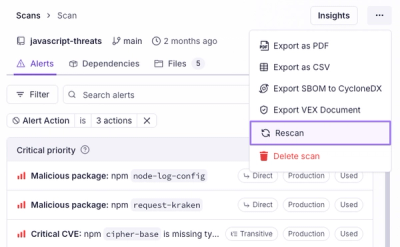
Scan results now load faster and remain consistent over time, with stable URLs and on-demand rescans for fresh security data.

Product
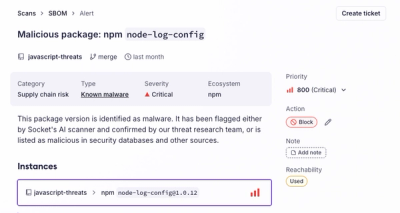
Socket's new Alert Details page is designed to surface more context, with a clearer layout, reachability dependency chains, and structured review.