

Security News
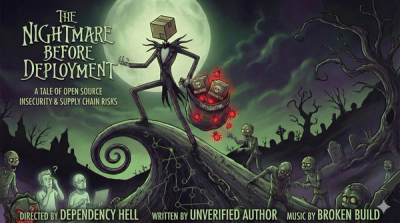
The Nightmare Before Deployment
Season’s greetings from Socket, and here’s to a calm end of year: clean dependencies, boring pipelines, no surprises.
By Ahmad Nassri - Dec 16, 2025
string-obfuscator
Advanced tools
This module provides easy, out-of-the-box obfuscation solution for Python dicts. It provides simple obfuscation algorithm to hide important information contained inside simple or nested dictionaries. Works by replacing strings '*'. This module obfuscates strings, integers, list items.
This module was developed with easy-of-use in mind, so it's pretty straightforward:
Step-by-step guide:
from string_obfuscator.obfuscate import obfuscateobfuscate(dict_to_obfuscate, fields=list_with_keys_to_obfuscate)The fields argument can be a list, an enum, a string or 0.
If the argument provided is 0 and payload is str (Eg. document number), obfuscate returns obfuscated payload(str). If the argument provided is of type string, only the existing dict items with keys matching the string will be obfuscated. If the argument provided is of type list or enum, all the fields with corresponding keys in the dict_to_obfuscate will be obfuscated.
This module was tested in Python 3.7, 3.8.5, 3.9
FAQs
A simple string obfuscator for obfuscating strings inside nested dicts.
We found that string-obfuscator demonstrated a healthy version release cadence and project activity because the last version was released less than a year ago. It has 1 open source maintainer collaborating on the project.
Did you know?

Socket for GitHub automatically highlights issues in each pull request and monitors the health of all your open source dependencies. Discover the contents of your packages and block harmful activity before you install or update your dependencies.
Security News
Season’s greetings from Socket, and here’s to a calm end of year: clean dependencies, boring pipelines, no surprises.

Research
/Security News
Impostor NuGet package Tracer.Fody.NLog typosquats Tracer.Fody and its author, using homoglyph tricks, and exfiltrates Stratis wallet JSON/passwords to a Russian IP address.

Security News
Deno 2.6 introduces deno audit with a new --socket flag that plugs directly into Socket to bring supply chain security checks into the Deno CLI.