Security News
curl Shuts Down Bug Bounty Program After Flood of AI Slop Reports
A surge of AI-generated vulnerability reports has pushed open source maintainers to rethink bug bounties and tighten security disclosure processes.
tinycss2
Advanced tools
tinycss2 is a low-level CSS parser and generator written in Python: it can parse strings, return objects representing tokens and blocks, and generate CSS strings corresponding to these objects.
Based on the CSS Syntax Level 3 specification, tinycss2 knows the grammar of CSS but doesn't know specific rules, properties or values supported in various CSS modules.
tinycss2 has been created and developed by Kozea (https://kozea.fr). Professional support, maintenance and community management is provided by CourtBouillon (https://www.courtbouillon.org).
Copyrights are retained by their contributors, no copyright assignment is required to contribute to tinycss2. Unless explicitly stated otherwise, any contribution intentionally submitted for inclusion is licensed under the BSD 3-clause license, without any additional terms or conditions. For full authorship information, see the version control history.

FAQs
A tiny CSS parser
We found that tinycss2 demonstrated a healthy version release cadence and project activity because the last version was released less than a year ago. It has 2 open source maintainers collaborating on the project.
Did you know?

Socket for GitHub automatically highlights issues in each pull request and monitors the health of all your open source dependencies. Discover the contents of your packages and block harmful activity before you install or update your dependencies.

Security News
A surge of AI-generated vulnerability reports has pushed open source maintainers to rethink bug bounties and tighten security disclosure processes.

Product
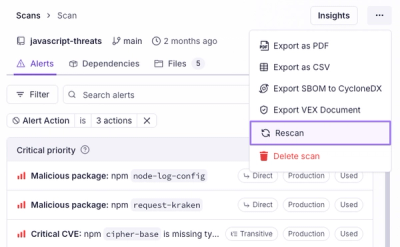
Scan results now load faster and remain consistent over time, with stable URLs and on-demand rescans for fresh security data.

Product
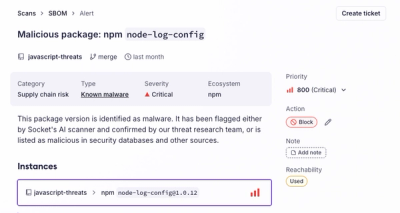
Socket's new Alert Details page is designed to surface more context, with a clearer layout, reachability dependency chains, and structured review.