

Product
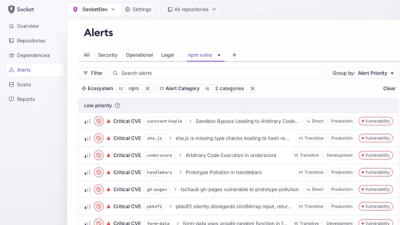
Introducing Custom Tabs for Org Alerts
Create and share saved alert views with custom tabs on the org alerts page, making it easier for teams to return to consistent, named filter sets.
By André Staltz - Jan 20, 2026


Micro is a runtime for microservice development.
Micro addresses the key requirements for building scalable systems. It takes the microservice architecture pattern and transforms it into a set of tools which act as the building blocks of a platform. Micro deals with the complexity of distributed systems and provides simple abstractions already understood by developers.

Technology is constantly evolving. The infrastructure stack is always changing. Micro is a pluggable platform which addresses these issues. Plug in any stack or underlying technology. Build future-proof systems using micro.
Follow us on Twitter or join the Slack community.
The runtime is composed of the following features:
api: An api gateway. A single entry point with dynamic request routing using service discovery. The API gateway allows you to build a scalable microservice architecture on the backend and consolidate serving a public api on the frontend. The micro api provides powerful routing via discovery and pluggable handlers to serve http, grpc, websockets, publish events and more.
broker: A message broker allowing for async messaging. Microservices are event driven architectures and should provide messaging as a first class citizen. Notify other services of events without needing to worry about a response.
network: Build multi-cloud networks with the micro network service. Simply drop-in and connect the network services across any environment and create a single flat network to route globally. The micro network dynamically builds routes based on your local registry in each datacenter ensuring queries are routed based on locality.
new: A service template generator. Create new service templates to get started quickly. Micro provides predefined templates for writing micro services. Always start in the same way, build identical services to be more productive.
proxy: A transparent service proxy built on Go Micro. Offload service discovery, load balancing, fault tolerance, message encoding, middleware, monitoring and more to a single a location. Run it standalone or alongside your service.
registry: The registry provides service discovery to locate other services, store feature rich metadata and endpoint information. It's a service explorer which lets you centrally and dynamically store this info at runtime.
store: State is a fundamental requirement of any system. We provide a key-value store to provide simple storage of state which can be shared between services or offload long term to keep microservices stateless and horizontally scalable.
web: The web dashboard allows you to explore your services, describe their endpoints, the request and response formats and even query them directly. The dashboard also includes a built in CLI like experience for developers who want to drop into the terminal on the fly.
Additionally micro provides a Go development framework:
From source
# enable go modules
export GO111MODULE=on
go get github.com/micro/micro
Docker image
docker pull micro/micro
Latest release binaries
# MacOS
curl -fsSL https://micro.mu/install.sh | /bin/bash

# Linux
wget -q https://micro.mu/install.sh -O - | /bin/bash

# Windows
powershell -Command "iwr -useb https://micro.mu/install.ps1 | iex"
Boot the entire development environment locally
micro --local
# enable go modules
export GO111MODULE=on

# generate a service (follow instructions in output)
micro new example

# run the service
go run example/main.go

# list services
micro list services

# call a service
micro call go.micro.srv.example Example.Call '{"name": "John"}'
See all the options
micro --help
See the docs for detailed information on the architecture, installation and use of the platform.
FAQs
Unknown package
Did you know?

Socket for GitHub automatically highlights issues in each pull request and monitors the health of all your open source dependencies. Discover the contents of your packages and block harmful activity before you install or update your dependencies.
Product
Create and share saved alert views with custom tabs on the org alerts page, making it easier for teams to return to consistent, named filter sets.
Product
Socket’s Rust and Cargo support is now generally available, providing dependency analysis and supply chain visibility for Rust projects.

Security News
Chrome 144 introduces the Temporal API, a modern approach to date and time handling designed to fix long-standing issues with JavaScript’s Date object.