


Security News
Deno 2.6 + Socket: Supply Chain Defense In Your CLI
Deno 2.6 introduces deno audit with a new --socket flag that plugs directly into Socket to bring supply chain security checks into the Deno CLI.
By Sarah Gooding - Dec 12, 2025
Pakt Official SDK for AI and Developer Integration to the API of Prompt-to-Build businesses

PAKT SDK is a comprehensive software development kit for building applications on the PAKT Operating System. It provides a complete suite of tools for project collaboration, blockchain payments, user management, and more.collaboration, blockchain payments, user management, and more.
To install PAKT SDK, simply
npm install pakt-sdk
# OR
yarn add pakt-sdk
# OR
pnpm add pakt-sdk
import { PaktSDK } from "pakt-sdk";

const sdk = await PaktSDK.init({
  baseUrl: "https://api.pakt.world", // Required: API base URL
  verbose: true, // Optional: Enable detailed logging
  testnet: false, // Optional: Use testnet environment
});

// Now you can use all SDK features
const loginResponse = await sdk.auth.login({
  email: "user@example.com",
  password: "yourpassword",
});
The authentication module provides complete user registration, login, password management, and OAuth integration.
import { LoginPayload } from "pakt-sdk";

const loginData: LoginPayload = {
  email: "user@example.com",
  password: "yourpassword",
};

const sdkInit = await PaktSDK.init(configData);
const response = await sdk.auth.login(loginData);

if (response.status === "success") {
  console.log("Logged in successfully");
  console.log("User data:", response.data);
  // Token is automatically stored for subsequent requests
}
import { LoginTwoFAPayload } from "pakt-sdk";

const loginData: LoginTwoFAPayload = {
  code: "123456",
  tempToken:
    "eyJhbGciOiJIUzI1NiIsInR5cCI6IkpXVCJ9.eyJpZCI6IjY1OWJlYTQRmZWQ4IiwiaWF0IjoxNzA0Nzg3MjkwLCJleHAiOjE3Nzc4NjAwMzB9.cPkZ-",
};

const sdkInit = await PaktSDK.init(configData);
const response = await sdk.auth.loginTwoFa(loginData);

if (response.status === "success") {
  console.log("Logged in successfully");
  console.log("User data:", response.data);
  // Token is automatically stored for subsequent requests
}
import { RegisterPayload } from "pakt-sdk";

const registrationData: RegisterPayload = {
  firstName: "John",
  lastName: "Doe",
  email: "john@example.com",
  password: "securepassword",
  confirmPassword: "securepassword",
  referral: "optional-referral-code", // Optional
  type: "talent", // Optional: "talent" or "business"
};

const sdkInit = await PaktSDK.init(configData);

const response = await sdk.auth.register(registrationData);

if (response.status === "success") {
  // Registration successful, but account needs verification
  console.log("Registration successful, check email for verification");
}
After registration, users need to verify their account:
const verificationResponse = await sdk.auth.verifyAccount({
  tempToken: "token-from-registration",
  token: "verification-token-from-email",
});

if (verificationResponse.status === "success") {
  console.log("Account verified successfully");
  // User is now fully authenticated
}
// Send password reset email
await sdk.auth.resetPassword({
  email: "user@example.com",
});

// Change password with reset token
await sdk.auth.changePassword({
  token: "reset-token-from-email",
  tempToken: "temp-token",
  password: "newpassword",
});
If the initial password reset email is not received, you can resend it:
import { ResetPasswordPayload, ResponseDto, ResetDto } from "pakt-sdk";

const resendData: ResetPasswordPayload = {
  email: "user@example.com",
};

const response: ResponseDto<ResetDto> = await sdk.auth.resendResetPassword(resendData);

if (response.status === "success") {
  console.log("Reset password email resent successfully");
  console.log("Temp token:", response.data.tempToken.token);
  console.log("Token type:", response.data.tempToken.token_type);
  console.log("Expires in:", response.data.tempToken.expiresIn);
}
// Step 1: Generate OAuth URL
const oauthResponse = await sdk.auth.googleOAuthGenerateState();
const { googleAuthUrl, state } = oauthResponse.data;

// Redirect user to googleAuthUrl

// Step 2: Validate OAuth callback
const validationResponse = await sdk.auth.googleOAuthValidateState({
  state: "state-from-step-1",
  code: "authorization-code-from-callback",
});

if (validationResponse.data.type === "sign_up") {
  // New user registered via Google
} else {
  // Existing user signed in
}
const referralResponse = await sdk.auth.validateReferral("referral-token");

if (referralResponse.data.valid) {
  console.log(`Valid referral from user ${referralResponse.data.userId}`);
  console.log(
    `Referral counts: ${referralResponse.data.referralCounts}/${referralResponse.data.totalAllowedReferrals}`,
  );
}
const userProfile = await sdk.account.getUser();
console.log("Current user:", userProfile.data);
import { UpdateUserDto } from "pakt-sdk";

const profileUpdate: UpdateUserDto = {
  profile: {
    contact: {
      city: "New York",
      state: "NY",
      country: "USA",
      phone: "+1234567890",
    },
    bio: {
      title: "Full-Stack Developer",
      description: "Experienced developer with expertise in React and Node.js",
    },
    talent: {
      availability: "available", // "available" | "busy" | "working"
      tags: ["React", "Node.js", "TypeScript"],
      tagsIds: ["tag-id-1", "tag-id-2"],
      tagsCategory: "development",
      about: "I love building scalable web applications",
    },
    socials: {
      github: "https://github.com/username",
      linkedin: "https://linkedin.com/in/username",
      twitter: "https://twitter.com/username",
    },
  },
  isPrivate: false,
};

const response = await sdk.account.updateAccount(profileUpdate);
Complete the initial onboarding process:
import { UserOnboardDto } from "pakt-sdk";

const onboardingData: UserOnboardDto = {
  profile: {
    bio: {
      title: "Software Developer",
      description: "Building amazing applications",
    },
    talent: {
      availability: "available",
      tags: ["JavaScript", "React"],
      tagsCategory: "development",
    },
  },
};

await sdk.account.onboardEndpoint(onboardingData);
// Initiate 2FA setup
const twoFAResponse = await sdk.account.initate2FA({
  type: "google_auth", // or "email"
  password: "current-password",
});

// For Google Authenticator, use the provided QR code
console.log("QR Code:", twoFAResponse.data.qrCode);

// Activate 2FA with verification code
await sdk.account.activate2FA({
  code: "123456", // Code from authenticator app
  type: "google_auth",
});
// When 2FA is enabled, use email 2FA
await sdk.account.sendEmailTwoFA({
  type: "email",
  tempToken: "temp-token-from-login",
});
```

### User Search and Discovery

````typescript
import { FilterUserDto } from "pakt-sdk";

const searchFilters: FilterUserDto = {
  tags: ["React", "Node.js"],
  type: "talent",
  scoreRange: { min: 80, max: 100 },
  limit: 20,
  offset: 0,
};

const users = await sdk.account.getUsers(searchFilters);
Collections are the core entity representing projects, jobs, or collaborative work in the PAKT ecosystem.
import { CreateCollectionDto } from "pakt-sdk";

const newCollection: CreateCollectionDto = {
  name: "E-commerce Website Development",
  description: "Build a modern e-commerce platform",
  collectionType: "development-project",
  isPrivate: false,
  deliveryDate: new Date("2024-12-31"),
  tags: ["React", "Node.js", "E-commerce"],
  maxParticipants: 3,
  budget: {
    amount: 5000,
    currency: "USD",
  },
};

const collection = await sdk.collection.create(newCollection);
console.log("Collection created:", collection.data._id);
// Get all collections with filters
const collections = await sdk.collection.getAll({
  status: "ongoing",
  limit: 10,
  offset: 0,
});

// Get specific collection
const collection = await sdk.collection.getById("collectionId");
import { UpdateCollectionDto } from "pakt-sdk";

const updates: UpdateCollectionDto = {
  description: "Updated project description",
  status: "ongoing",
  deliveryDate: new Date("2024-12-31"),
};

await sdk.collection.updateCollection("collection-id", updates);
```

### Collection Types

````typescript
// Get all available collection types
const types = await sdk.collection.getTypes();

// Get specific collection type
const type = await sdk.collection.getACollectionType("_id");
// Create multiple collections
const collectionsData = [
  /* array of CreateCollectionDto */
];
await sdk.collection.createMany(collectionsData);

// Update multiple collections
const updates = [
  /* array of updates with IDs */
];
await sdk.collection.updateManyCollections(updates);
Collection schemas define the structure and fields for custom data models in your collections. They allow you to create typed, validated data structures with field definitions.
import { filterCollectionSchemaDto } from "pakt-sdk";

const filters: filterCollectionSchemaDto = {
  page: "1",
  limit: "20",
  name: "user-profile", // Optional: filter by schema name
};

const schemas = await sdk.collectionSchema.getAll("your-auth-token", filters);

schemas.data.data.forEach((schema) => {
  console.log(`Schema: ${schema.name}`);
  console.log(`Reference: ${schema.reference}`);
  console.log(`Description: ${schema.description}`);
  console.log(`Fields: ${schema.schema.length}`);
});
const schema = await sdk.collectionSchema.getById("your-auth-token", "schema-id");

if (schema.status === "success") {
  console.log("Schema name:", schema.data.name);
  console.log("Schema reference:", schema.data.reference);
  console.log("Field definitions:", schema.data.schema);
}
import { CreateCollectionSchemaDto, FieldDefinitionDto } from "pakt-sdk";

// Define field structure
const fields: FieldDefinitionDto[] = [
  {
    name: "email",
    type: "string",
    required: true,
    unique: true,
    default: "",
  },
  {
    name: "fullName",
    type: "string",
    required: true,
    unique: false,
    default: "",
  },
  {
    name: "age",
    type: "number",
    required: false,
    unique: false,
    default: "0",
  },
  {
    name: "isActive",
    type: "boolean",
    required: false,
    unique: false,
    default: "true",
  },
];

const newSchema: CreateCollectionSchemaDto = {
  name: "User Profile Schema",
  description: "Schema for storing user profile information",
  schema: fields,
};

const createdSchema = await sdk.collectionSchema.create(newSchema);

if (createdSchema.status === "success") {
  console.log("Schema created with reference:", createdSchema.data.reference);
  console.log("Schema ID:", createdSchema.data._id);
}
import { UpdateCollectionSchemaDto, FieldDefinitionDto } from "pakt-sdk";

const updatedFields: FieldDefinitionDto[] = [
  {
    name: "email",
    type: "string",
    required: true,
    unique: true,
    default: "",
  },
  {
    name: "fullName",
    type: "string",
    required: true,
    unique: false,
    default: "",
  },
  {
    name: "phoneNumber",
    type: "string",
    required: false,
    unique: false,
    default: "",
  },
];

const schemaUpdate: UpdateCollectionSchemaDto = {
  description: "Updated user profile schema with phone number",
  schema: updatedFields,
};

await sdk.collectionSchema.update("schema-id", schemaUpdate);
const deleteResponse = await sdk.collectionSchema.delete("schema-id");

if (deleteResponse.status === "success") {
  console.log("Schema deleted successfully");
}
Collection schemas support various field types:
Each field can be configured with:
name: Field identifiertype: Data typerequired: Whether the field is mandatoryunique: Whether values must be unique across documentsdefault: Default value if not providedCollection stores manage actual data instances based on collection schemas. They provide a flexible, schema-based data storage system.
import { filterCollectionStoreDto } from "pakt-sdk";

const schemaReference = "user-profile"; // Reference from schema

const filters: filterCollectionStoreDto = {
  page: "1",
  limit: "20",
  // Add any custom filters based on your schema fields
  isActive: true,
};

const items = await sdk.collectionStore.getAll("your-auth-token", schemaReference, filters);

console.log(`Total items: ${items.data.total}`);
console.log(`Current page: ${items.data.page}`);
console.log(`Total pages: ${items.data.pages}`);

items.data.data.forEach((item) => {
  console.log("Item ID:", item._id);
  // Access custom fields based on your schema
  console.log("Custom data:", item);
});
const schemaReference = "user-profile";
const itemId = "item-id";

const item = await sdk.collectionStore.getById("your-auth-token", schemaReference, itemId);

if (item.status === "success") {
  console.log("Item found:", item.data);
  console.log("Created at:", item.data.createdAt);
  console.log("Updated at:", item.data.updatedAt);
}
import { filterCollectionStoreDto } from "pakt-sdk";

const schemaReference = "user-profile";

const filters: filterCollectionStoreDto = {
  isActive: true, // Custom filter based on schema
};

const count = await sdk.collectionStore.getCount("your-auth-token", schemaReference, filters);

if (count.status === "success") {
  console.log(`Total matching items: ${count.data}`);
}
import { CreateCollectionStoreDto } from "pakt-sdk";

const schemaReference = "user-profile";

// Create data matching your schema structure
const newItem: CreateCollectionStoreDto = {
  email: "john.doe@example.com",
  fullName: "John Doe",
  age: 30,
  isActive: true,
  // Add any additional fields defined in your schema
};

const createdItem = await sdk.collectionStore.create("your-auth-token", schemaReference, newItem);

if (createdItem.status === "success") {
  console.log("Item created with ID:", createdItem.data._id);
  console.log("Item data:", createdItem.data);
}
import { UpdateCollectionStoreDto } from "pakt-sdk";

const schemaReference = "user-profile";
const itemId = "item-id";

const updates: UpdateCollectionStoreDto = {
  age: 31,
  phoneNumber: "+1234567890",
  // Update any fields from your schema
};

const updatedItem = await sdk.collectionStore.update("your-auth-token", schemaReference, itemId, updates);

if (updatedItem.status === "success") {
  console.log("Item updated:", updatedItem.data);
}
const schemaReference = "user-profile";
const itemId = "item-id";

const deleteResponse = await sdk.collectionStore.delete("your-auth-token", schemaReference, itemId);

if (deleteResponse.status === "success") {
  console.log("Item deleted successfully");
}
Here's a complete workflow showing how to create a schema and manage data:
// Step 1: Create a schema
const userSchema = await sdk.collectionSchema.create({
  name: "User Profiles",
  description: "Store user profile information",
  schema: [
    { name: "email", type: "string", required: true, unique: true, default: "" },
    { name: "displayName", type: "string", required: true, unique: false, default: "" },
    { name: "bio", type: "string", required: false, unique: false, default: "" },
    { name: "verified", type: "boolean", required: false, unique: false, default: "false" },
  ],
});

const schemaRef = userSchema.data.reference;

// Step 2: Create items in the store
const user1 = await sdk.collectionStore.create("auth-token", schemaRef, {
  email: "alice@example.com",
  displayName: "Alice Smith",
  bio: "Software developer",
  verified: true,
});

const user2 = await sdk.collectionStore.create("auth-token", schemaRef, {
  email: "bob@example.com",
  displayName: "Bob Jones",
  bio: "Product manager",
  verified: false,
});

// Step 3: Query the store
const allUsers = await sdk.collectionStore.getAll("auth-token", schemaRef, {
  limit: "10",
});

// Step 4: Update an item
await sdk.collectionStore.update("auth-token", schemaRef, user2.data._id, {
  verified: true,
});

// Step 5: Get count
const verifiedCount = await sdk.collectionStore.getCount("auth-token", schemaRef, {
  verified: true,
});

console.log(`Verified users: ${verifiedCount.data}`);
Comprehensive blockchain-based payment system with multi-cryptocurrency support.
// Get all user wallets
const wallets = await sdk.wallet.getWallets();

wallets.data.forEach((wallet) => {
  console.log(`${wallet.coin.toUpperCase()}: $${wallet.balance.spendable} available`);
  console.log(`Locked: $${wallet.balance.locked}`);
});

// Get specific wallet by cryptocurrency
const usdcWallet = await sdk.wallet.getSingleWalletByCoin("usdc");
const avaxWallet = await sdk.wallet.getSingleWalletByCoin("avax");
import { ICreatePaymentDto } from "pakt-sdk";

// Create payment order
const paymentOrder: ICreatePaymentDto = {
  coin: "usdc", // or "avax"
  collectionId: "collectionId",
};

const payment = await sdk.payment.create(paymentOrder);

if (payment.status === "success") {
  console.log("Payment order created");
  console.log("Amount to pay:", payment.data.amount);
  console.log("Blockchain address:", payment.data.address);
  console.log("Required confirmations:", payment.data.confirmation);
}
// Validate payment transaction
const validation = await sdk.payment.validate({
  paymentId: "payment-id",
  transactionHash: "blockchain-tx-hash",
});

// Release escrowed payment (for collection completion)
await sdk.payment.release({
  collectionId: "collectionId",
  recipientId: "user-id",
});
// Get all transactions
const transactions = await sdk.wallet.getTransactions({
  limit: 50,
  offset: 0,
  type: "sent", // Optional: filter by transaction type
});

// Get specific transaction
const transaction = await sdk.wallet.getATransaction("transaction-id");

// Get transaction statistics
const stats = await sdk.wallet.getTransactionStats("usdc");
console.log("Total sent:", stats.data.totalSent);
console.log("Total received:", stats.data.totalReceived);
// Get current exchange rates
const exchange = await sdk.wallet.getExchange();

console.log("USDC to USD:", exchange.data.usdc.usd);
console.log("AVAX to USD:", exchange.data.avax.usd);
import { CreateWithdrawal } from "pakt-sdk";

const withdrawalRequest: CreateWithdrawal = {
  coin: "usdc",
  amount: 100.5,
  address: "0x742d35Cc6634C0532925a3b8D6cf1C4394c64DF8",
  password: "account-password",
};

const withdrawal = await sdk.withdrawal.createWithdrawal(withdrawalRequest);

// Check withdrawal status
const withdrawals = await sdk.withdrawal.fetchWithdrawal({
  limit: 10,
  offset: 0,
});
Direct deposits allow for streamlined collection funding and validation without going through the traditional escrow process.
import { ICreateDirectDepositPayload } from "pakt-sdk";

const directDepositData: ICreateDirectDepositPayload = {
  collectionType: "development-project",
  amount: 1000,
  coin: "usdc", // or "avax"
  name: "Project Direct Funding",
  description: "Direct deposit for project completion",
  owner: "user-id",
  systemDeposit: true,
};

const directDeposit = await sdk.directDeposit.createDirectDeposit({
  authToken: "your-auth-token",
  payload: directDepositData,
});

if (directDeposit.status === "success") {
  console.log("Direct deposit created");
  console.log("Collection ID:", directDeposit.data.collectionId);
  console.log("Payment address:", directDeposit.data.address);
  console.log("Amount to pay:", directDeposit.data.amountToPay);
  console.log("Expected fee:", directDeposit.data.expectedFee);
  console.log("Chain ID:", directDeposit.data.chainId);
}
import { IValidateDirectDepositPayload } from "pakt-sdk";

const validationData: IValidateDirectDepositPayload = {
  collection: "collection-id",
  method: "blockchain", // validation method
  status: "completed", // deposit status
  owner: "owner-user-id",
  meta: {
    transactionHash: "0x...",
    blockNumber: 123456,
  },
  release: true, // whether to release funds immediately
};

const validation = await sdk.directDeposit.validateDirectDeposit({
  authToken: "your-auth-token",
  payload: validationData,
});

if (validation.status === "success") {
  console.log("Direct deposit validated");
  console.log("Collection updated:", validation.data);
}
// Get available blockchain payment methods for direct deposits
const paymentMethods = await sdk.directDeposit.fetchPaymentMethods("your-auth-token");

paymentMethods.data.forEach((coin) => {
  console.log(`${coin.name} (${coin.symbol})`);
  console.log(`Contract: ${coin.contractAddress}`);
  console.log(`Chain ID: ${coin.rpcChainId}`);
  console.log(`Active: ${coin.active}`);
});
// Get current blockchain RPC server configuration
const rpcConfig = await sdk.directDeposit.fetchActiveRPC("your-auth-token");

if (rpcConfig.status === "success") {
  console.log("RPC Name:", rpcConfig.data.rpcName);
  console.log("Chain ID:", rpcConfig.data.rpcChainId);
  console.log("RPC URLs:", rpcConfig.data.rpcUrls);
  console.log("Block Explorer:", rpcConfig.data.blockExplorerUrls);
  console.log("Native Currency:", rpcConfig.data.rpcNativeCurrency);
}
Direct deposits offer several advantages over regular escrow payments:
Use direct deposits when:
Send and manage project collaboration invites:
import { SendInviteDto } from "pakt-sdk";

// Send invite
const inviteData: SendInviteDto = {
  receiverId: "user-id",
  collectionId: "project-id",
};

const invite = await sdk.invite.sendInvite(inviteData);

// Manage invites
await sdk.invite.acceptInvite("invite-id");
await sdk.invite.declineInvite("invite-id");
await sdk.invite.cancelInvite("invite-id");

// Get all invites
const invites = await sdk.invite.getAll({
  status: "pending",
  limit: 10,
});
// Get user messages/conversations
const messages = await sdk.chat.getUserMessages({
  limit: 50,
  offset: 0,
});

messages.data.forEach((conversation) => {
  console.log("Conversation with:", conversation.recipients);
  conversation.messages.forEach((message) => {
    console.log(`${message.sender}: ${message.content}`);
  });
});
// Get all notifications
const notifications = await sdk.notifications.getAll({
  limit: 20,
  offset: 0,
});

// Mark notifications as read
await sdk.notifications.markAll(); // Mark all as read
await sdk.notifications.markOneAsRead("notification-id"); // Mark specific notification
import { CreateFeedDto } from "pakt-sdk";

// Create feed entry
const feedEntry: CreateFeedDto = {
  type: "COLLECTION_CREATED",
  title: "New Project Created",
  description: "Started working on e-commerce platform",
  isPublic: true,
  data: "collectionId",
};

await sdk.feed.create(feedEntry);

// Get activity feeds
const feeds = await sdk.feed.getAll({
  limit: 10,
  isPublic: true,
});

// Dismiss feeds
await sdk.feed.dismissAFeed("feed-id");
await sdk.feed.dismissAllFeeds();
import { CreateFileUpload } from "pakt-sdk";

const fileData: CreateFileUpload = {
  file: fileBuffer, // or file data
  fileName: "document.pdf",
  fileType: "application/pdf",
};

const upload = await sdk.file.fileUpload(fileData);
console.log("File uploaded:", upload.data.url);
// Get all uploaded files
const files = await sdk.file.getFileUploads({
  limit: 20,
  offset: 0,
});

// Get specific file
const file = await sdk.file.getAFileUpload("file-id");
Complete identity verification system using third-party verification services.
import { ICreateSessionPayload } from "pakt-sdk";

const verificationData: ICreateSessionPayload = {
  firstName: "John",
  lastName: "Doe",
  dateOfBirth: "1990-01-01",
  address: {
    street: "123 Main St",
    city: "New York",
    state: "NY",
    postalCode: "10001",
    country: "US",
  },
  documentType: "passport", // or "driving_license", "national_id"
  documentCountry: "US",
};

const session = await sdk.userVerification.createSession(verificationData);
console.log("Verification session created:", session.data.sessionId);
import { ISendSessionMedia } from "pakt-sdk";

// Upload document photo
const documentMedia: ISendSessionMedia = {
  sessionId: "session-id",
  mediaType: "document",
  file: documentImageBuffer,
};

await sdk.userVerification.sendSessionMedia(documentMedia);

// Upload face photo for verification
const faceMedia: ISendSessionMedia = {
  sessionId: "session-id",
  mediaType: "face",
  file: facePhotoBuffer,
};

await sdk.userVerification.sendSessionMedia(faceMedia);
// Get verification attempts
const attempts = await sdk.userVerification.getSessionAttempts({
  limit: 10,
  offset: 0,
});

// Get user verification status
const verifications = await sdk.userVerification.getUserVerifications({
  limit: 5,
  offset: 0,
});

verifications.data.forEach((verification) => {
  console.log("Status:", verification.status);
  console.log("Provider:", verification.provider);
  console.log("Document verified:", verification.documentVerified);
  console.log("Face verified:", verification.faceVerified);
});
import { createBookMarkDto } from "pakt-sdk";

// Create bookmark
const bookmark: createBookMarkDto = {
  data: "collectionId", // or feed-id, user-id, invite-id
  type: "collection", // or "feed", "user", "invite"
};

await sdk.bookmark.create(bookmark);

// Get bookmarks
const bookmarks = await sdk.bookmark.getAll({
  type: "collection",
  limit: 10,
});

// Delete bookmark
await sdk.bookmark.delete("bookmark-id");
import { AddReviewDto } from "pakt-sdk";

// Add review for completed collection
const reviewData: AddReviewDto = {
  collectionId: "collection-id",
  receiverId: "user-id",
  rating: 5, // 1-5 scale
  text: "Excellent work, highly recommended!",
};

await sdk.review.addReview(reviewData);

// Get reviews
const reviews = await sdk.review.viewAll({
  collectionId: "collection-id",
  limit: 10,
});
import { CreateConnectionFilterDto } from "pakt-sdk";

// Create automatic connection filter
const filter: CreateConnectionFilterDto = {
  event: "CREATE_CONVERSATION",
  key: "afroScore",
  value: "80",
  decider: "greater_than", // Only connect with users having score > 80
};

await sdk.connectionFilter.create(filter);

// Get user's connection filters
const filters = await sdk.connectionFilter.getForAUser("user-id");
All SDK methods return a consistent response format:
interface ResponseDto<T> {
  status: "success" | "error";
  message: string;
  data: T;
  statusCode?: number;
  code?: number;
}

// Example error handling
try {
  const response = await sdk.auth.login(loginData);

  if (response.status === "error") {
    console.error("Login failed:", response.message);
    return;
  }

  // Success - use response.data
  console.log("User:", response.data);
} catch (error) {
  console.error("Network or unexpected error:", error);
}
The SDK is built with TypeScript and provides comprehensive type definitions:
import { PaktSDK, LoginPayload, RegisterPayload, CreateCollectionDto, IUser, IWalletDto, ResponseDto } from "pakt-sdk";

// All interfaces and types are available for import
const loginPayload: LoginPayload = {
  email: "user@example.com",
  password: "password",
};

const response: ResponseDto<LoginDto> = await sdk.auth.login(loginPayload);
interface PaktConfig {
  baseUrl: string; // Required: API base URL
  testnet?: boolean; // Optional: Use testnet environment (default: false)
  verbose?: boolean; // Optional: Enable detailed logging (default: false)
}

const sdk = await PaktSDK.init({
  baseUrl: "https://api.pakt.world",
  testnet: false,
  verbose: true,
});
BSD-3-Clause © PAKT
FAQs
Pakt Official SDK for AI and Developer Integration to the API of Prompt-to-Build businesses
We found that @pakt/sdk demonstrated a healthy version release cadence and project activity because the last version was released less than a year ago. It has 4 open source maintainers collaborating on the project.
Did you know?

Socket for GitHub automatically highlights issues in each pull request and monitors the health of all your open source dependencies. Discover the contents of your packages and block harmful activity before you install or update your dependencies.
Security News
Deno 2.6 introduces deno audit with a new --socket flag that plugs directly into Socket to bring supply chain security checks into the Deno CLI.
Security News
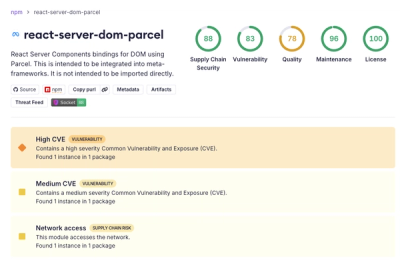
New DoS and source code exposure bugs in React Server Components and Next.js: what’s affected and how to update safely.

Security News
Socket CEO Feross Aboukhadijeh joins Software Engineering Daily to discuss modern software supply chain attacks and rising AI-driven security risks.