Research
/Security News
Malicious Chrome Extension Performs Hidden Affiliate Hijacking
A Chrome extension claiming to hide Amazon ads was found secretly hijacking affiliate links, replacing creators’ tags with its own without user consent.
@proc/context
Advanced tools
A hierachical application context object. Create a parent context for the application and spawn child contexts for each request/process. Each gets a unique id and lifecycle.
Properties can be weakly attached to the context and the lifecycle events ensure they can be destroyed after a request, hopefully avoiding memory leaks by held resources.
The enhancer allows wrapping properties to the context without specifying
the implementations. This means you can create the interface (in Typescript)
and code against it, but leave the real implementation up the main library.
import createContext from "@proc/context";
const ctx = createContext();
const child = ctx.child();
ctx.waitForChildren().finally(() => {
console.log("child context finished");
});
someLongProcess(child).finally(() => {
child.done(); // causes console.log: child context finished
});
ctx.done(); // free all resources
FAQs
A Hierachical Application Context
The npm package @proc/context receives a total of 1 weekly downloads. As such, @proc/context popularity was classified as not popular.
We found that @proc/context demonstrated a not healthy version release cadence and project activity because the last version was released a year ago. It has 1 open source maintainer collaborating on the project.
Did you know?

Socket for GitHub automatically highlights issues in each pull request and monitors the health of all your open source dependencies. Discover the contents of your packages and block harmful activity before you install or update your dependencies.

Research
/Security News
A Chrome extension claiming to hide Amazon ads was found secretly hijacking affiliate links, replacing creators’ tags with its own without user consent.

Security News
A surge of AI-generated vulnerability reports has pushed open source maintainers to rethink bug bounties and tighten security disclosure processes.

Product
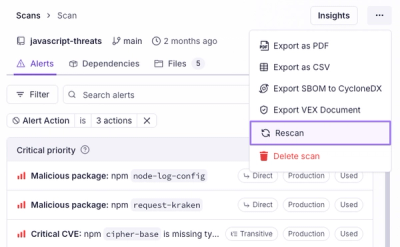
Scan results now load faster and remain consistent over time, with stable URLs and on-demand rescans for fresh security data.