

Product
Introducing Custom Tabs for Org Alerts
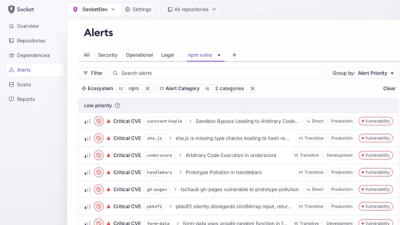
Create and share saved alert views with custom tabs on the org alerts page, making it easier for teams to return to consistent, named filter sets.
By André Staltz - Jan 20, 2026
@rwatt451/ordercloud-react
Advanced tools
THIS REPOSITORY IS NO LONGER MAINTAINED. NEW LOCATION IS [ordercloud-api/ordercloud-react-sdk](https://github.com/ordercloud-api/ordercloud-react-sdk) NEW PACKAGE SCOPE/LOCATION IS AVAILABLE VIA `npm i @ordercloud/react-sdk`.
THIS REPOSITORY IS NO LONGER MAINTAINED. NEW LOCATION IS ordercloud-api/ordercloud-react-sdk
NEW PACKAGE SCOPE/LOCATION IS AVAILABLE VIA npm i @ordercloud/react-sdk.
ISSUES SUBMITTED ON THIS REPOSITORY WILL BE IGRNORED.
This is a developer library for OrderCloud developers utilizing React for their frontend development. It is essentially a wrapper for Tanstack query, which provides a lot of good functionality out of the box for background refreshes, request de-duplication, and caching. You configure your API client settings on the OrderCloudProvider which will provide you with a global context accessible though the useOrderCloudContext() hook. In addition to this context hook, it provides "authenticated" versions of useQuery and useMutation for reading and manipulating OrderCloud data in an efficient manner.
To keep this package small, there are some required peer dependencies that are typical of an OrderCloud React application that utilizies tanstack libraries:
OrderCloudProviderIt is recommended that the OrderCloudProvider be configured as close to the root of your application as possible. At the very least it needs to wrap any part of your application that will need to communicate with the OrderCloud API.
stringThe OrderCloud base API URL for your marketplace. Usually found in the OrderCloud Portal.
stringThe OrderCloud API Client ID that will be used for authentication
string[]An array of OrderCloud API Roles that will be requested upon authentication
string[]An optional array of Custom Roles (strings) that will be requested upon authentication. Generally only needed if you are using Custom Roles in your marketplace's Security Profiles.
booleanTrue will enable anonymous authentication (when the API client is properly configured). False will remain unauthenticated until the login() method is called by your application.
OpenAPIV3.SchemaObjectAn optional Open API specification object containing one or more xp schema definitions for OrderCloud resources. Xp schemas will be used to generate resource property definitions in the useColumns hook as well as form fields in the useOcForm hook. In the absence of a provided resource schema, xp data types will be inferred by default for individual items when using the useOcForm hook.
(error:OrderCloudError) => voidAn optional callback function for globally handling OrderCloud errors in your application. Useful for wiring up toast-like feedback.
useOrderCloudContext() hookThis hook returns the OrderCloud context that the OrderCloudProvider sets up based on your provided options. If anonymous authentication is allowed the OrderCloud context will automatically be in an authenticated state on first page load (shortly after the first React lifecycle).
The OrderCloud context returns all of the information you configure on the OrderCloudProvider (baseApiUrl, clientId, etc.), along with some additional properties listed below.
booleanWhen false, there is no valid OrderCloud access token available. Not to be confused with isLoggedIn.
booleanWhen true, the currently active OrderCloud access token is a registered user (not anonymous).
(username:string, password:string, rememberMe:boolean) => Promise<AccessToken>An asyncrhonous callback method for building a login form for your application. When rememberMe is set to true, the OrderCloudProvider will attempt to store and use the refresh_token as long as it is valid. It is not necessary to do anything with the AccessToken response as this method will take care of managing the active token and authentication state for you.
() => voidA callback for logging out a registered user from your application. This will also clear the Tanstack query client cache for OrderCloud API calls, forcing any actively used queries to refetch once anonymous auth takes over again or the user logs back in.
useAuthQuery() hookThis is a wrapper for the useQuery Tanstack hook that utilizes the OrderCloud context to set enabled equal to isAuthenticated. It also checks for the presence of query.error and calls out to the supplied defaultErrorHandler if it was configured on the provider.
This hook supports all of the normal UseQueryOptions documented by Tanstack. In addition to these options, you can override the default error handler by passing a modified error handler as the second argument. Ultimately this hook will return the same UseQueryResult that is documented on Tanstack query.
Here is an example of using the useAuthQuery hook to create a hook that returns the current user.
import {
  Me,
  MeUser,
  OrderCloudError,
  RequiredDeep,
} from "ordercloud-javascript-sdk";
import { useAuthQuery } from "@rwatt451/ordercloud-react";
import { UseMutationResult, UseQueryResult } from "@tanstack/react-query";

export function useCurrentUser(): UseQueryResult<
  RequiredDeep<MeUser>,
  OrderCloudError
> {
  return useAuthQuery({
    queryKey: ["currentUser"],
    queryFn: async () => await Me.Get(),
    retry: false,
    refetchOnMount: false,
  });
}
Specifying the queryKey is important here as it is what controls the query client caching and de-deuplication. This allows you to use the useCurrentUser hook anywhere in your application and it will only ever be called once.
useAuthMutation() hookThis is a wrapper for the useMutation Tanstack hook that utilizes the OrderCloud context to set enabled equal to isAuthenticated - just like useAuthQuery.
This hook supports all of the normal UseMutationOptions documented by Tanstack. Because useMutation already has an option for onError, the wrapped useAuthMutation will utilize the defaultErrorHandler if configured at the provider level and a more specific onError callback hasn't been provided. This ultimately returns the same UseMutationRestult as Tanstack query.
Here is an example of using the useAuthMutation hook to create a UseMutationResult for modifying the current user.
import {
  Me,
  MeUser,
  OrderCloudError,
  RequiredDeep,
} from "ordercloud-javascript-sdk";
import { queryClient, useAuthMutation } from "@rwatt451/ordercloud-react";
import { UseMutationResult } from "@tanstack/react-query";

export function useMutateCurrentUser(): UseMutationResult<
  RequiredDeep<MeUser>,
  unknown,
  Partial<MeUser>,
  unknown
> {
  return useAuthMutation({
    mutationKey: ["currentUser"],
    mutationFn: async (userData: Partial<MeUser>) => await Me.Patch(userData),
    onSuccess: (data) => {
      queryClient.setQueryData(["currentUser"], data);
    },
  });
}
Specifying the mutationKey is important here as it is what controls the query client caching and de-deuplication. The onSuccess option provides an avenue for updating the queryClient qury data cache. That way, any componenent that had used useCurrentUser will automatically get the updated value no matter where/when mutate() is called.
useOcResourceList() hookReturns an OrderCloud resource list query result from the resource List operation defined on the OrderCloud OpenAPI spec. This hook supports all of the normal UseQueryOptions documented by Tanstack. Ultimately this hook will return the same UseQueryResult that is documented on Tanstack query.
stringThe name of the OrderCloud resource to make a list call with.
ServiceListOptionsAn optional listOptions object for the OrderCloud list call.
{ [key: string]: string }An optional parameters object for the OrderCloud list call.
UseQueryOptionsAn optional UseQueryOptions object. It is recommended to use a staleTime value .
Here is an example of using the useOcResourceList hook to create a UseQueryResult for modifying the current user.
import { useOcResourceList } from "@rwatt451/ordercloud-react";

const dataQuery = useOcResourceList(
  "Orders",
  { IsSubmitted: true },
  { direction: "Incoming" },
  {
    staleTime: 300000, // 5 min
  },
);
useOcResourceGet() hookReturns an OrderCloud resource get query result from the resource Get operation defined on the OrderCloud OpenAPI spec. This hook supports all of the normal UseQueryOptions documented by Tanstack. Ultimately this hook will return the same UseQueryResult that is documented on Tanstack query.
stringThe name of the OrderCloud resource to make a get call with.
{ [key: string]: string }An optional parameters object for the OrderCloud get call.
UseQueryOptionsAn optional UseQueryOptions object. It is recommended to use a staleTime value .
Here is an example of using the useOcResourceGet hook to create a UseQueryResult for modifying the current user.
import { useOcResourceGet } from "@rwatt451/ordercloud-react";

const dataQuery = useOcResourceGet(
  "Catalogs",
  { buyerID: "BuyerA" },
  {
    staleTime: "Infinity",
  },
);
useMutateOcResource() hookReturns an OrderCloud resource save or create query result from the resource Save or Create operation defined on the OrderCloud OpenAPI spec. This hook supports all of the normal UseMutationOptions documented by Tanstack. Ultimately this hook will return the same UseMutationResult that is documented on Tanstack query.
stringThe name of the OrderCloud resource to make a save or create call with.
{ [key: string]: string }An optional parameters object for the OrderCloud save or create call.
UseMutationOptionsAn optional UseMutationOptions object.
booleanAn optional boolean that indicates if an item is new. If new, the Create operation will be used.
Here is an example of using the useMutateOcResource hook to create a UseMutationResult for modifying the current user.
import { useMutateOcResource } from "@rwatt451/ordercloud-react";
import { useCallback } from "react";

const { mutateAsync: saveAsync } = useMutateOcResource("Products");

const onSubmit = useCallback(
  async (values: any) => {
    await saveAsync(values.body);
  },
  [saveAsync],
);
useDeleteOcResource() hookReturns an OrderCloud resource delete query result from the resource Delete operation defined on the OrderCloud OpenAPI spec. This hook supports all of the normal UseMutationOptions documented by Tanstack. Ultimately this hook will return the same UseMutationResult that is documented on Tanstack query.
stringThe name of the OrderCloud resource to make a delete call with.
{ [key: string]: string }An optional parameters object for the OrderCloud delete call.
UseMutationOptionsAn optional UseMutationOptions object.
Here is an example of using the useDeleteOcResource hook to create a UseMutationResult for modifying the current user.
import { useDeleteOcResource } from "@rwatt451/ordercloud-react";
import { useCallback } from "react";

const { mutateAsync: deleteAsync } = useDeleteOcResource("Orders", {
  direction: "Outgoing",
});

const onDelete = useCallback(
  async (values: any) => {
    await deleteAsync();
  },
  [saveAsync],
);
useListAssignments() hookReturns an OrderCloud resource delete query result from the resource Delete operation defined on the OrderCloud OpenAPI spec. This hook supports all of the normal UseMutationOptions documented by Tanstack. Ultimately this hook will return the same UseMutationResult that is documented on Tanstack query.
stringThe name of the OrderCloud resource to make a list call with.
stringOptional string to be included in the resource operation name. ex. List{User}Assignments
ServiceListOptionsAn optional listOptions object for the OrderCloud list call.
{ [key: string]: string }An optional parameters object for the OrderCloud list call.
UseQueryOptionsAn optional UseQueryOptions object. It is recommended to use a staleTime value .
Here is an example of using the useListAssignments hook to create a UseQueryResult for modifying the current user.
import { useOcResourceList } from "@rwatt451/ordercloud-react";

const dataQuery = useListAssignments(
  "Catalogs",
  { ID: "100|101|102" },
  {
    staleTime: 300000, // 5 min
  },
);
useMutateAssignment() hookReturns an OrderCloud resource save assignment query result from the resource SaveAssignment operation defined on the OrderCloud OpenAPI spec. This hook supports all of the normal UseMutationOptions documented by Tanstack. Ultimately this hook will return the same UseMutationResult that is documented on Tanstack query.
stringThe name of the OrderCloud resource to make a list call with.
stringOptional string to be included in the resource operation name. ex. Save{User}Assignments
{ [key: string]: string }An optional parameters object for the OrderCloud list call.
UseMutationOptionsAn optional UseMutationOptions object.
Here is an example of using the useMutateAssignment hook to create a UseMutationResult for modifying the current user.
import { useMutateAssignment } from "@rwatt451/ordercloud-react";
import { useCallback } from "react";

const { mutateAsync: saveAssignmentAsync } = useMutateAssignment("Categories", {
  catalogID: "DefaultCatalog",
  categoryID: "SoftGoods",
});

const onDelete = useCallback(
  async (values: any) => {
    await saveAssignmentAsync();
  },
  [saveAsync],
);
useDeleteAssignment() hookReturns an OrderCloud resource assignment delete query result from the resource DeleteAssignment operation defined on the OrderCloud OpenAPI spec. This hook supports all of the normal UseMutationOptions documented by Tanstack. Ultimately this hook will return the same UseMutationResult that is documented on Tanstack query.
stringThe name of the OrderCloud resource to make a delete call with.
stringOptional string to be included in the resource operation name. ex. Delete{User}Assignment
{ [key: string]: string }An optional parameters object for the OrderCloud delete call.
UseMutationOptionsAn optional UseMutationOptions object.
Here is an example of using the useDeleteAssignment hook to create a UseMutationResult for modifying the current user.
import { useDeleteAssignment } from "@rwatt451/ordercloud-react";
import { useCallback } from "react";

const { mutateAsync: deleteAsync } = useDeleteAssignment("Categories", {
  catalogID: "DefaultCatalog",
  categoryID: "SoftGoods",
});

const onDelete = useCallback(
  async (values: any) => {
    await deleteAsync();
  },
  [saveAsync],
);
useColumns() hookThis hook utilizes the Open API Spec to generate properties, table headers, and @tanstack/react-table column groupings for a given OrderCloud resource. The dynamicColumns object returned from this hook are meant to be used as the columns option in @tanstack/react-table's useReactTable() hook. If a resource's xp schema is included in the xpSchemas option for OrderCloudProvider, these properties will be included in the resource's returned properties and column definitions.
stringThe OrderCloud resource name used for generating column information.
string[]An optional list that will be used to sort table header order if provided.
(info: CellContext<unknown, unknown>, properties: OpenAPIV3.SchemaObject, resourceId: string) => JSX.ElementAn optional callback for defining custom elements for @tanstack/react-table table cells by data type.
useOcForm() hookThis hook returns a UseFormReturn methods object and a "shallowed" resource schema. If a resource's xp schema is included in the xpSchemas option for OrderCloudProvider, these properties will be included in the form fields.
stringThe OrderCloud resource name used for generating column information.
{ parameters?: {[key: string]: unknown}, body?: {[key: string]: unknown} }An optional object that contains initial parameter and body values for an item of a given resource ID. The absence of body values indicates a new item.
UseFormPropsAn optional react-hook-form useForm props object
useHasAccess() hookThis hook determines whether a user has read or admin access to an OrderCloud resource by comparing the user's token and application scope to the OAuth roles indicated on the OpenAPI spec.
stringThe OrderCloud resource name used for generating column information.
While it is not necessary to use the actual OrderCloud SDK to communicate with the OrderCloud API, it definitely makes things easier. The isAuthenticated state is based on the returned value of SDKs Tokens.GetValidToken() method and the OrderCloud SDK Configuration object is set up using the values passed into the OrderCloudProvider. Additonally, the SDK provides typed responses which make working with useAuthQuery and useMutationQuery generics easier.
On the flip side, it is also not entirely necessary to use the wrapped Tanstack hooks. If you want to just use the normal OrderCloud SDK, just be certain that you aren't making any calls when isAuthenticated is false. Though, in doing so you will miss out on all of the benefits that Tanstack provides.
FAQs
THIS REPOSITORY IS NO LONGER MAINTAINED. NEW LOCATION IS [ordercloud-api/ordercloud-react-sdk](https://github.com/ordercloud-api/ordercloud-react-sdk) NEW PACKAGE SCOPE/LOCATION IS AVAILABLE VIA `npm i @ordercloud/react-sdk`.
The npm package @rwatt451/ordercloud-react receives a total of 6 weekly downloads. As such, @rwatt451/ordercloud-react popularity was classified as not popular.
We found that @rwatt451/ordercloud-react demonstrated a healthy version release cadence and project activity because the last version was released less than a year ago. It has 1 open source maintainer collaborating on the project.
Did you know?

Socket for GitHub automatically highlights issues in each pull request and monitors the health of all your open source dependencies. Discover the contents of your packages and block harmful activity before you install or update your dependencies.
Product
Create and share saved alert views with custom tabs on the org alerts page, making it easier for teams to return to consistent, named filter sets.
Product
Socket’s Rust and Cargo support is now generally available, providing dependency analysis and supply chain visibility for Rust projects.

Security News
Chrome 144 introduces the Temporal API, a modern approach to date and time handling designed to fix long-standing issues with JavaScript’s Date object.